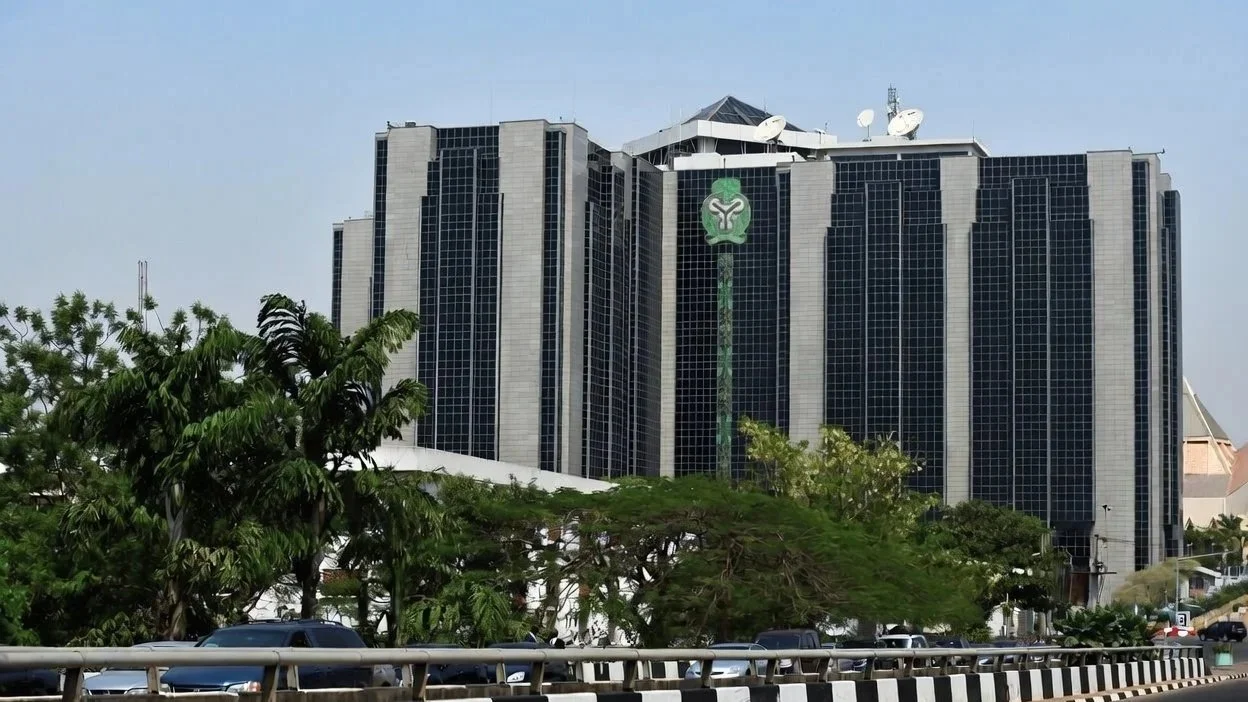
The Central Bank of Nigeria
The Central Bank of Nigeria (CBN) is offering ₦800 billion in Nigerian Treasury Bills (NTBs) as banks’ placements with the apex bank approach ₦7 trillion, highlighting the scale of liquidity circulating within the financial system and the government’s efforts to attract funds into domestic securities.
The auction, scheduled for Wednesday, 28 October 2026, comes as placements at the CBN’s Standing Deposit Facility (SDF) reached ₦6.98 trillion on Tuesday, 27 October. The Financial Markets Dealers Association (FMDA) also projected ₦2.81 trillion in financial-system inflows during the week, largely driven by maturing Open Market Operations (OMO) bills.
/ You Might Also Like /




The CBN is conducting the auction on behalf of the Debt Management Office (DMO). The offer comprises ₦100 billion in 91-day bills, ₦100 billion in 182-day bills and ₦600 billion in 364-day bills.
The 364-day instrument accounts for 75% of the total offer, reflecting the government’s emphasis on longer-tenor Treasury bills. Settlement is scheduled for Thursday, 29 October.
Maturing Securities Return Funds to the Banking System
The auction coincides with substantial inflows from maturing financial instruments. The FMDA projects ₦2.41 trillion from OMO maturities, alongside ₦263.58 billion in Federal Government bond coupon payments and ₦130.72 billion from Treasury bill maturities.
These inflows could support demand for the new Treasury bills as banks and other investors decide where to reinvest their funds.
However, the amount of liquidity remaining available for investment will depend on other transactions and the CBN’s continuing monetary operations. The apex bank uses OMO bills and other instruments to manage liquidity and influence short-term interest rates.
The Treasury bill auction therefore provides another opportunity for the government to absorb funds from the market. If the DMO allots the full ₦800 billion, the offer would exceed scheduled Treasury bill maturities of ₦130.72 billion by ₦669.28 billion, although the overall effect on liquidity will also depend on other inflows and withdrawals.
One-Year Treasury Bills Dominate the Offer
The ₦600 billion allocated to 364-day Treasury bills represents the largest portion of the auction. The remaining ₦200 billion is split equally between the 91-day and 182-day instruments.
The concentration on one-year bills comes amid continued investor interest in government securities. At the 7 October auction, the DMO offered ₦900 billion in Treasury bills, while the 14 October auction saw investors submit ₦1.032 trillion in bids. The DMO accepted ₦269.06 billion at the latter auction, rejecting approximately 74% of subscriptions.
The high level of subscriptions indicates that investors remain interested in Treasury bills, although strong demand does not automatically mean the government will accept all bids or maintain the same yields.
The latest auction will provide a further indication of investor appetite for government debt and the rates investors require to commit funds.
What the Liquidity Position Means for Lending
Large balances at the CBN do not necessarily mean that banks are ready to expand lending to households and businesses. Banks assess credit risk, capital requirements, liquidity needs and expected returns when deciding how to deploy their funds.
Treasury bills offer a relatively short-term investment in government securities, while private-sector lending exposes banks to borrower-specific risks and longer repayment periods. Banks may therefore prefer government instruments when the returns adequately compensate them for the risks and costs of lending to businesses.
This distinction matters for Nigeria’s property market. Developers often need substantial financing for land acquisition, construction and infrastructure, while homebuyers depend on mortgage products that match their incomes and repayment capacity.
If government securities continue to offer attractive returns, banks may have less incentive to expand lending to riskier borrowers unless property-related loans offer competitive risk-adjusted returns. However, Treasury bill yields alone do not determine mortgage rates or the volume of credit available to real estate.
The impact will also depend on banks’ funding costs, credit policies, borrower quality, the availability of long-term financing and the regulatory environment.
Treasury Bill Yields Remain Important to Investors
The auction will also test whether the recent movements in Treasury bill yields continue. Investor demand, the amount of funds available for reinvestment and the DMO’s decisions on allotments will influence the rates at which the government raises funds.
The DMO can reject bids it considers too expensive, even when subscriptions exceed the amount offered. As a result, the final allotment may differ from the advertised offer, and the stop rates will depend on the bids accepted at the auction.
For investors, the outcome will help indicate the returns available on short-term government securities. For businesses and property-market participants, those returns form part of the wider financial environment in which banks and investors assess competing uses of capital.
The key figures to watch are the final allotment, the stop rates across the three tenors and any subsequent changes in banking-system liquidity. Together, they will provide a clearer picture of how the government is absorbing funds and how financial conditions may evolve for borrowers and investors.
READ MORE