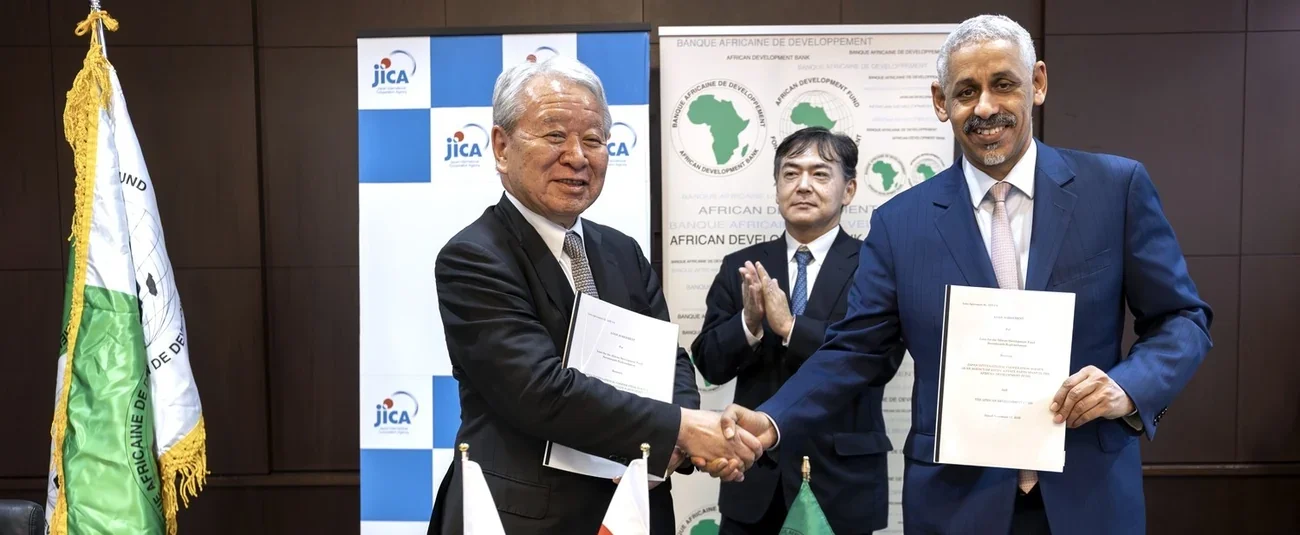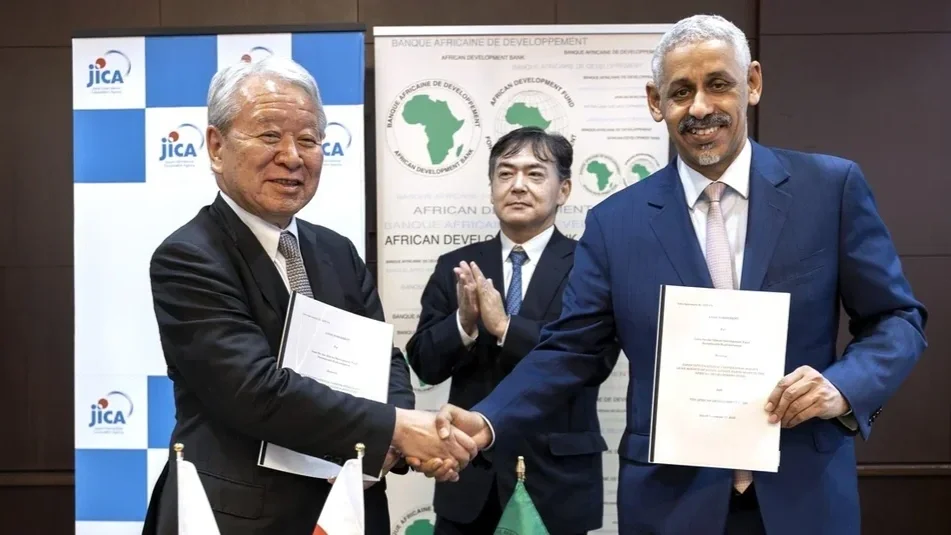
African Development Bank Group President Sidi Ould Tah and JICA President Akihiko Tanaka
The African Development Bank Group (AfDB) and the Japan International Cooperation Agency (JICA) have signed a $583.4 million concessional loan agreement to strengthen the African Development Fund's capacity to finance development programmes across 37 eligible African countries between 2026 and 2028.
/ You Might Also Like /




The agreement, equivalent to 86.6 billion Japanese yen, supports the Fund's seventeenth replenishment, known as ADF-17. The financing will expand access to long-term, affordable development resources for lower-income African countries, with priority areas including infrastructure, energy access, food security and regional integration.
AfDB President Sidi Ould Tah and JICA President Akihiko Tanaka signed the agreement in Tokyo on November 13, 2026. The financing represents JICA's largest-ever official development assistance loan contribution to the African Development Fund.
Japan commits $583.4 million to African Development Fund
The agreement fulfils a commitment made by Japan's Ministry of Finance during the ADF-17 replenishment pledging session in December 2025.
The loan will become part of the African Development Fund's general resources, which the institution will deploy to finance eligible development operations during the 2026–2028 replenishment period. It is not earmarked for a single country or individual infrastructure project.
The African Development Fund provides grants and low-interest loans to eligible African countries that face constraints in accessing commercial financing. Its support targets countries with significant development needs, particularly in infrastructure, social services and economic resilience.
Japan's latest contribution adds to its longstanding financial partnership with the AfDB Group. Its grants and compensation under the Multilateral Debt Relief Initiative have also contributed approximately $600 million to the Fund.
ADF-17 mobilises record $11 billion from development partners
The $583.4 million agreement forms part of a broader effort to increase the resources available to Africa's lowest-income countries.
Ould Tah said ADF-17 had mobilised a record $11 billion from 44 development partners. He also highlighted the Fund's intention to change how it mobilises and deploys development finance through a more investment-driven funding model.
The new approach combines traditional donor contributions with concessional loans and a market-borrowing framework. These instruments are intended to leverage existing resources and attract additional capital, allowing the Fund to support more development activities.
Japan's Deputy Vice Minister for International Affairs, Kazuki Watanabe, said the country expects the replenishment to deliver improvements in infrastructure quality, governance, institutional capacity and sustainable debt management.
The broader financing strategy reflects growing efforts among development institutions to increase the scale of available funding while maintaining affordable financing terms for countries with limited fiscal capacity.
Loan offers 40-year repayment period
The JICA financing carries an annual interest rate of 0.70 per cent, with a repayment period of 40 years and a 10-year grace period.
These concessional terms give the African Development Fund access to long-term financing at a cost substantially below typical commercial borrowing conditions.
The agreement covers 37 countries eligible for African Development Fund support. The resources will contribute to the Fund's operations throughout the ADF-17 period, which ends in December 2028.
The financing will support development priorities that include energy access, food security, human capital development, infrastructure expansion, climate resilience and employment creation.
Japan expands development cooperation with Nigeria
Although the $583.4 million agreement supports a continent-wide financing facility rather than a specific Nigerian project, Nigeria has benefited from other development cooperation initiatives involving Japan and JICA.
In August 2026, JICA committed ₦20 billion to support the expansion and rehabilitation of Nigeria's national electricity grid. The agency has also supported technology and innovation initiatives, including funding for innovation hubs and a proposed start-up hub in Abuja.
These initiatives reflect Japan's wider development engagement with African countries through infrastructure financing, technical assistance, private-sector support and human capital development.
For Nigeria, access to African Development Fund resources could provide opportunities for concessional financing of eligible development programmes, depending on project selection, country eligibility and the Fund's allocation decisions.
Implications for infrastructure investment and the built environment
The agreement has relevance for Africa's housing and real estate sectors through its focus on infrastructure, energy access and regional economic development.
Investment in electricity, transport infrastructure, water systems and other essential services can improve the conditions required for housing delivery, industrial expansion and commercial property development. Reliable infrastructure also influences development costs, property values and the attractiveness of locations to investors.
For Nigeria, concessional development financing can help support public infrastructure programmes that may otherwise face funding constraints. However, the latest JICA loan does not represent a direct allocation to Nigeria's housing sector, nor does it commit the African Development Fund to a specific Nigerian property or construction project.
The eventual impact will depend on how the Fund deploys its resources, the quality of projects financed and the ability of beneficiary governments to implement them effectively.
The agreement therefore strengthens the financing capacity available to eligible African countries, while placing greater importance on project selection, implementation and measurable development outcomes.
READ MORE