Adeleke’s Second Term Puts Osun Infrastructure Agenda in Focus
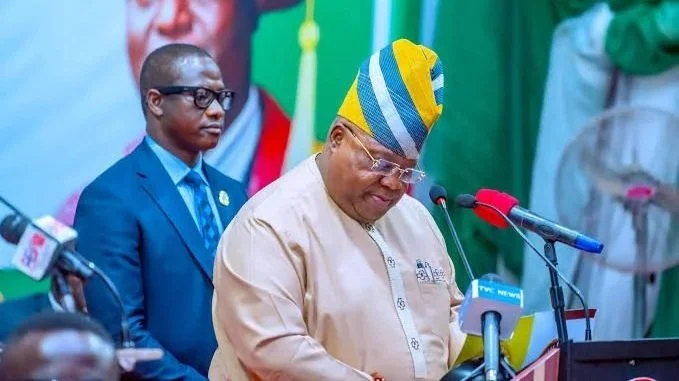
Adeleke begins second term with infrastructure agenda
Ademola Adeleke’s re-election as Osun State governor gives his administration another four years to consolidate its infrastructure programme, with roads, flyovers and urban connectivity expected to remain central to the state’s development agenda.
/ You Might Also Like /




The governor secured a second term after winning the August 15 governorship election with 511,067 votes, according to the Independent National Electoral Commission (INEC). His victory comes as his administration highlights major investments in road construction, transport infrastructure, healthcare and education during its first term.
Road infrastructure dominates development programme
Adeleke said before the election that his administration had constructed and rehabilitated about 350 kilometres of roads across the state.
The administration also highlighted the construction of three flyovers and the dualisation of six roads as part of efforts to improve connectivity between major towns and urban centres.
Projects have been concentrated in locations including Osogbo, Ile-Ife, Ilesa, Ila and Iwo, where improved road infrastructure could support greater movement of people and goods.
For Osun, sustained investment in transportation infrastructure could improve access between residential areas, commercial centres and economic corridors.
Second term creates room for project continuity
The governor's re-election provides an opportunity for the state government to complete ongoing projects and develop a longer-term infrastructure strategy.
Continuity will be particularly important for projects that require several years to deliver and generate economic benefits.
Rather than focusing solely on individual road projects, the next phase could place greater emphasis on integrating transportation infrastructure with urban planning, housing, industrial development and commercial activity.
Infrastructure could unlock new property corridors
Improved road connectivity can influence where residential and commercial development takes place.
When previously inaccessible areas receive better roads and transport links, they can become more attractive to developers, businesses and households.
For Osun's property market, sustained infrastructure investment could therefore open new development corridors beyond established urban centres.
However, increased accessibility can also push up land values. Without coordinated planning and affordable housing policies, infrastructure-led increases in land prices could make some emerging areas less accessible to lower-income households.
Industrial development could drive property demand
Adeleke has also indicated an intention to move Osun towards a more industrialised economy during his second term.
Industrial growth would require supporting infrastructure, including roads, electricity, water, logistics facilities and serviced industrial land.
If the state succeeds in attracting manufacturing and other businesses, increased economic activity could generate additional demand for warehouses, offices, retail facilities and worker accommodation.
This would create a stronger link between infrastructure investment and the state's property market.
Housing needs to accompany infrastructure expansion
The expansion of roads and other infrastructure also creates an opportunity to address housing needs in emerging areas.
New residential developments can be planned around improved transport corridors, allowing households to access employment and commercial centres more efficiently.
For this to translate into meaningful housing supply, however, infrastructure delivery would need to be accompanied by land reforms, effective urban planning, basic services and access to housing finance.
The state could also explore partnerships with private developers and institutional investors to increase housing delivery along emerging development corridors.
Infrastructure quality and maintenance remain important
The impact of Osun's infrastructure programme will ultimately depend not only on the number of projects delivered but also on their quality and long-term maintenance.
Roads and flyovers require sustained funding for maintenance to preserve their economic value and prevent infrastructure deterioration.
A coordinated approach to maintenance would also protect property investments that depend on reliable transport connections.
Second term brings new development expectations
With a fresh four-year mandate, the administration faces expectations to demonstrate measurable improvements in infrastructure and economic development.
For the property sector, the focus will be on whether improved connectivity attracts new private investment and supports the development of well-planned residential and commercial communities.
The state will also need to ensure that infrastructure expansion is accompanied by adequate drainage, water supply, electricity and other services required for sustainable urban growth.
Outlook
Adeleke's second-term victory provides continuity for Osun's infrastructure agenda, but the next phase will require the government to move beyond individual projects towards integrated urban and economic planning.
For the housing and real estate sector, the greatest opportunity lies in using improved connectivity to unlock new development corridors while ensuring that rising land values do not undermine affordability.
If infrastructure investment is successfully combined with industrial development, housing delivery and stronger urban planning, Osun could create a broader foundation for property-market growth during Adeleke's second term.
READ MORE