
FEC Approves ₦58.47tn 2026 Budget, Revises FX Assumption to ₦1,400/$
FEC Approves ₦58.47tn 2026 Budget, Revises FX Assumption to ₦1,400/$
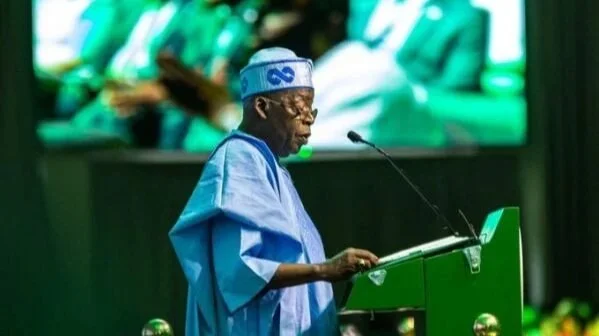
Nigeria’s Federal Executive Council (FEC) has approved a ₦58.47 trillion federal budget proposal for the 2026 fiscal year, alongside an amendment to the Medium-Term Expenditure Framework (MTEF), setting the stage for formal presentation to the National Assembly by President Bola Ahmed Tinubu. The approval reflects the administration’s attempt to balance macroeconomic stabilisation with development priorities under the Renewed Hope Agenda.
Nigeria’s Federal Executive Council (FEC) has approved a ₦58.47 trillion federal budget proposal for the 2026 fiscal year, alongside an amendment to the Medium-Term Expenditure Framework (MTEF), setting the stage for formal presentation to the National Assembly by President Bola Ahmed Tinubu. The approval reflects the administration’s attempt to balance macroeconomic stabilisation with development priorities under the Renewed Hope Agenda.
Expenditure Framework
Tanimu Yakubu, Director-General of the Budget Office, outlined the major components of the 2026 spending plan. Statutory transfers are projected at ₦4.1 trillion, while debt service is estimated at ₦15.52 trillion, reflecting the continued weight of interest payments and legacy obligations on public finances. Included in the debt service provision are ₦3.38 trillion and an additional ₦188.54 billion allocated to the sinking fund for retiring maturing bonds owed to domestic contractors and creditors.
Personnel costs, including pensions, are projected at ₦10.75 trillion, a seven per cent increase year-on-year, with ₦1.02 trillion earmarked for government-owned enterprises. Overhead expenditure is set at ₦2.22 trillion.
Capital expenditure stands at ₦25.68 trillion, approximately 1.8 per cent lower than the 2025 allocation. Officials said the moderation reflects a strategic shift towards completing ongoing projects rather than initiating new ones. Of the capital allocation, ₦11.3 trillion is assigned to ministries, departments and agencies, ₦2.052 trillion will be funded through multilateral and bilateral loans, and ₦1.8 trillion will come from the capital component of the development levy.
Role of GOEs and Donor Funding
The 2026 budget framework also incorporates ₦4.98 trillion in projected spending by government-owned enterprises, alongside ₦1.37 trillion for grant- and donor-funded projects. These components highlight the growing role of extra-budgetary and quasi-fiscal actors in delivering infrastructure and social programmes.
Revenue Outlook and Fiscal Deficit
While total revenues are expected to decline slightly on a year-on-year basis, the Budget Office noted a significant structural shift in Nigeria’s revenue profile. Non-oil revenues are projected to account for roughly two-thirds of total receipts, driven primarily by corporate income tax, value-added tax, customs duties, and independent revenues. This trend signals a gradual reduction in oil dependence, even as hydrocarbon revenues remain vulnerable to production constraints and price volatility.
Yakubu explained that the wider fiscal deficit embedded in the 2026 framework reflects long-standing fiscal rigidities rather than deliberate policy loosening. Financing is expected to rely mainly on domestic borrowing, complemented by concessional multilateral loans to limit external vulnerability.
The approval of the 2026 budget comes amid ongoing efforts to recalibrate Nigeria’s fiscal architecture, including tax reforms and expenditure rationalisation. For investors and development partners, the revised exchange rate assumption and emphasis on non-oil revenues provide clearer signals on the government’s macroeconomic stance, even as debt service continues to absorb a substantial share of public resources.
Conclusion
As President Tinubu prepares to transmit the ₦58.47 trillion proposal to the National Assembly, legislative scrutiny will focus on the realism of revenue assumptions, the sustainability of debt servicing, and the execution capacity for capital projects. The 2026 budget ultimately represents a test of the administration’s ability to translate fiscal consolidation and reform rhetoric into measurable economic outcomes under the Renewed Hope Agenda
