Tinubu Govt Reveals Breakdown of N15.8trn Fuel Subsidy Savings
Tinubu Govt Explains How N15.8trn Fuel Subsidy Savings Were Shared
The Federal Government has disclosed that the removal of the petrol subsidy generated N15.8 trillion in resources for the Federation between June 2023 and December 2025, with the funds distributed among the Federal Government, states and local governments.
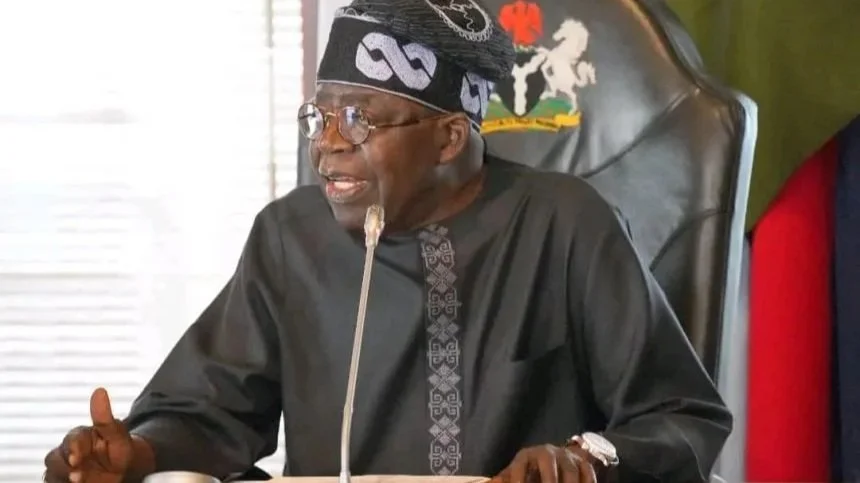
Finance Minister and Coordinating Minister of the Economy, Taiwo Oyedele, disclosed the figures at a press conference on Wednesday while presenting an account of the financial impact of the Tinubu administration’s economic reforms.
/ You Might Also Like /




Federal Government Received N5.43trn
According to Oyedele, the N15.8 trillion generated through subsidy removal was reflected in the resources available to the Federation rather than as a separate cash reserve labelled “subsidy savings”.
The Federal Government received N5.43 trillion from the amount, while state governments received N6.52 trillion and local governments received N3.88 trillion.
The combined allocation to states and local governments amounted to N10.4 trillion, according to figures reported from the minister’s briefing.
Oyedele explained that the savings effectively increased the resources available through the Federation Account by reducing the financial burden associated with maintaining the petrol subsidy.
Subsidy Savings Did Not Create a Cash Surplus
The minister also provided figures showing that the subsidy savings did not translate into a large surplus for the government.
During the period, the Federal Government recorded N3.12 trillion in additional independent revenue and raised N11.85 trillion through additional borrowing. Together with the subsidy-related resources, these sources brought incremental resources to about N20.4 trillion.
However, incremental expenditure during the same period reached N30.64 trillion.
The figures indicate that the government continued to face significant financing requirements despite the reduction in subsidy-related spending. Oyedele said the savings reduced the amount of additional borrowing that would otherwise have been required.
Reform Costs Remain Significant
The finance minister linked the subsidy reform to the broader economic restructuring undertaken by the Tinubu administration.
The removal of the petrol subsidy and the unification of the foreign exchange market represented major policy changes intended to address what the government described as long-standing distortions in the Nigerian economy.
However, the reforms have also placed pressure on households and businesses through higher transportation, energy and operating costs.
Oyedele acknowledged that the reforms came with significant costs, while maintaining that the measures were necessary to reduce pressure on public finances and correct structural weaknesses in the economy.
Implications for Infrastructure and Housing
The distribution of additional resources to the three tiers of government has implications for infrastructure and housing delivery, particularly because states and local governments remain responsible for significant portions of public infrastructure and urban development.
Additional Federation Account resources can strengthen the capacity of governments to fund roads, water infrastructure, public housing, schools and other services that support communities and property development.
However, the size of the resources available does not automatically translate into improved housing or infrastructure delivery. The effectiveness of the funds will depend on budget priorities, project execution, procurement practices and the ability of governments to convert additional revenue into productive investment.
For the housing sector, sustained public investment remains important as Nigeria faces a significant shortage of affordable and adequate housing. Greater fiscal capacity at the state and local government levels could support land servicing, infrastructure provision and partnerships that make housing development more viable.
Fiscal Reform and Real Estate Investment
The government's latest disclosure also provides context for investors assessing Nigeria's fiscal environment.
Reducing the cost of petrol subsidies can create more predictable public finances over time and potentially improve the government's ability to direct resources towards infrastructure and productive sectors.
At the same time, higher energy and transportation costs continue to affect construction costs, household purchasing power and property operating expenses. Developers therefore face the challenge of balancing potential improvements in public-sector finances against the immediate cost pressures created by the broader economic reforms.
The long-term impact on real estate will depend partly on whether improved fiscal resources translate into infrastructure that lowers development and transaction costs.
Government Spending Remains Under Scrutiny
The disclosure comes amid continuing debate over how the financial benefits of subsidy removal have been used.
While the government has presented the N15.8 trillion as resources mobilised for the Federation, the accompanying expenditure and borrowing figures demonstrate that Nigeria's fiscal pressures remain substantial.
The Federal Government's explanation provides a clearer picture of the relationship between subsidy removal, Federation Account resources, additional revenue, borrowing and expenditure.
For policymakers and investors, the key issue will now be how effectively the additional resources are converted into infrastructure, public services and economic activity.
Outlook
The Federal Government's disclosure that fuel subsidy removal generated N15.8 trillion for the Federation between June 2023 and December 2025 provides a clearer account of the fiscal effect of one of the Tinubu administration's most significant economic reforms.
With N10.4 trillion going to states and local governments and N5.43 trillion going to the Federal Government, the distribution creates opportunities for increased investment in infrastructure and public services.
For Nigeria's housing and real estate sector, the broader benefit will depend on whether governments channel stronger revenues into infrastructure, land development and housing programmes capable of supporting more affordable and sustainable urban growth.
READ MORE