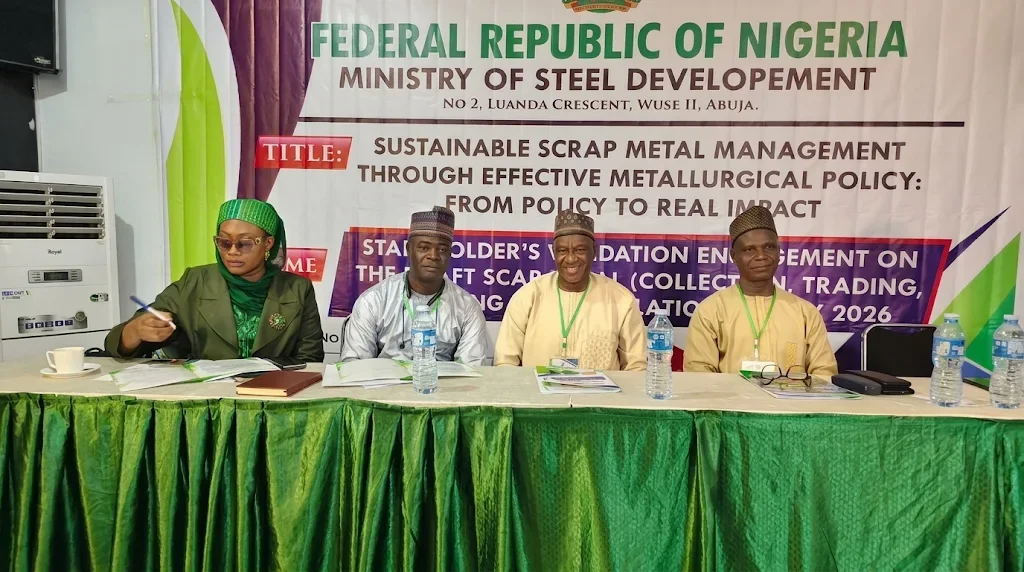
Federal Government moves to regulate Nigeria’s scrap metal industry
The Federal Government has intensified efforts to regulate Nigeria’s scrap metal industry through a proposed framework aimed at curbing infrastructure vandalism, improving recycling practices and protecting legitimate businesses.
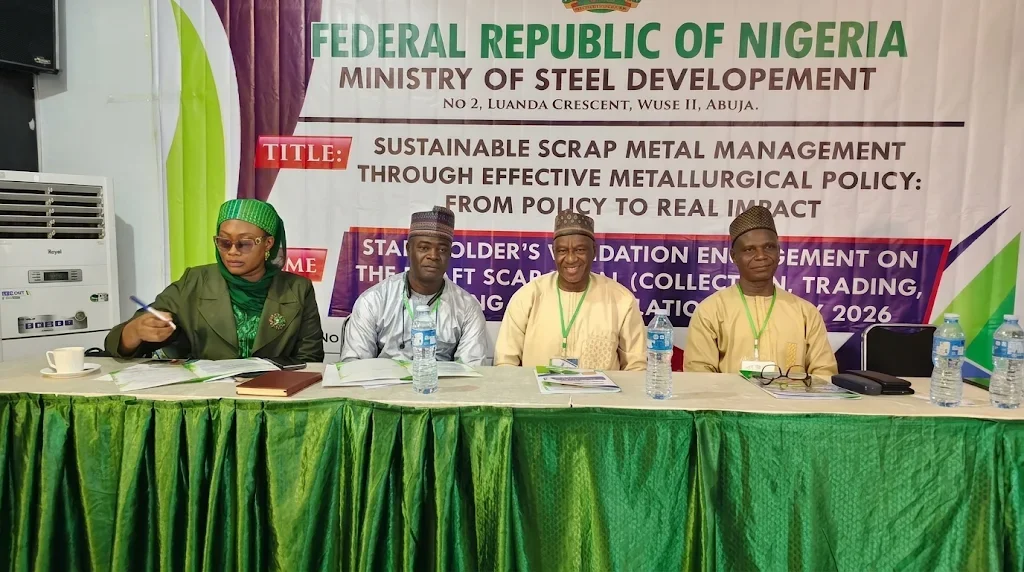
The Minister of Steel Development, Shuaibu Audu, announced the move during the second phase of stakeholders’ engagement on the Draft Scrap Metal (Collection, Trading, Recycling and Regulation) Regulations Policy 2026, held in Kano on 24 November.
/ You Might Also Like /




The proposed regulations seek to establish a more organised system for collecting, trading, processing and recycling scrap metals, with stronger oversight of operators and facilities across the value chain.
Audu, represented by the Director of the Steel and Non-ferrous Metals Department, Umar Tsoho, said effective regulation would help secure raw materials for Nigeria’s steel industry, support employment and promote sustainable industrial development.
He warned that weak oversight of the sector could encourage the theft of public and private infrastructure, unsafe dismantling practices, environmental degradation and significant economic losses.
FG Plans Licensing and Monitoring of Scrap Metal Operators
Under the proposed framework, scrap metal collectors, traders and recyclers would operate within a structured regulatory system involving licensing, supervision and transaction monitoring.
The regulations are expected to introduce controls covering collection centres, aggregation facilities and recycling operations. They would also establish requirements for tracking scrap metal transactions and enforcing environmental and occupational safety standards.
The government intends to improve the traceability of materials moving through the industry, making it easier to identify illegally acquired metals and prevent their sale through legitimate recycling channels.
Audu said the framework would distinguish between different categories of operators, with requirements proportionate to the scale and risks of their activities.
Small-scale collectors and traders would have practical pathways to formalise their businesses, while larger aggregation, processing and recycling facilities would be required to meet more extensive operational standards.
The minister stressed that the policy was not designed to eliminate legitimate commercial activities or undermine the livelihoods of Nigerians who depend on scrap metal collection and trading.
Government Targets Theft of Cables, Railway Components
The proposed regulations also seek to address the theft and illegal sale of metallic materials taken from public infrastructure, industrial facilities and other protected assets.
The minister identified electrical cables, railway components and manhole covers among the materials frequently targeted by vandals.
He said the theft of such components extends beyond the loss of materials, as it disrupts essential services, threatens public safety and increases the cost of maintaining infrastructure.
The government intends to strengthen monitoring and enforcement to prevent stolen metals from entering the recycling market.
The Nigeria Security and Civil Defence Corps (NSCDC) has also expressed support for the initiative. Its Kano State Commandant, Mohammed Hassan Agalama, who represented the Commandant-General, Ahmed Audi, reaffirmed the corps' commitment to working with the Ministry of Steel Development and other institutions to protect critical national assets.
The proposed framework is expected to involve collaboration among government agencies, security organisations, environmental regulators and industry operators.
Scrap Metal Regulation Linked to Nigeria’s Steel Industry Development
The Federal Government considers scrap metal an important raw material for steel production, foundry operations and other manufacturing activities.
An organised recycling industry could provide domestic manufacturers with a more reliable supply of recovered metals, reduce material wastage and support local industrial production.
The minister said Nigeria's ambition to develop a competitive steel industry depended partly on ensuring that scrap materials were lawfully sourced, properly documented, safely handled and supplied to legitimate industrial users.
The framework is therefore intended to balance two objectives: protecting infrastructure from theft while improving the availability of recyclable materials for domestic manufacturing.
The National Steel Council has also backed the proposed regulations, describing an organised scrap metal industry as important to industrial growth, employment generation and economic development.
Kano Consultation Follows Earlier Engagement in Lagos
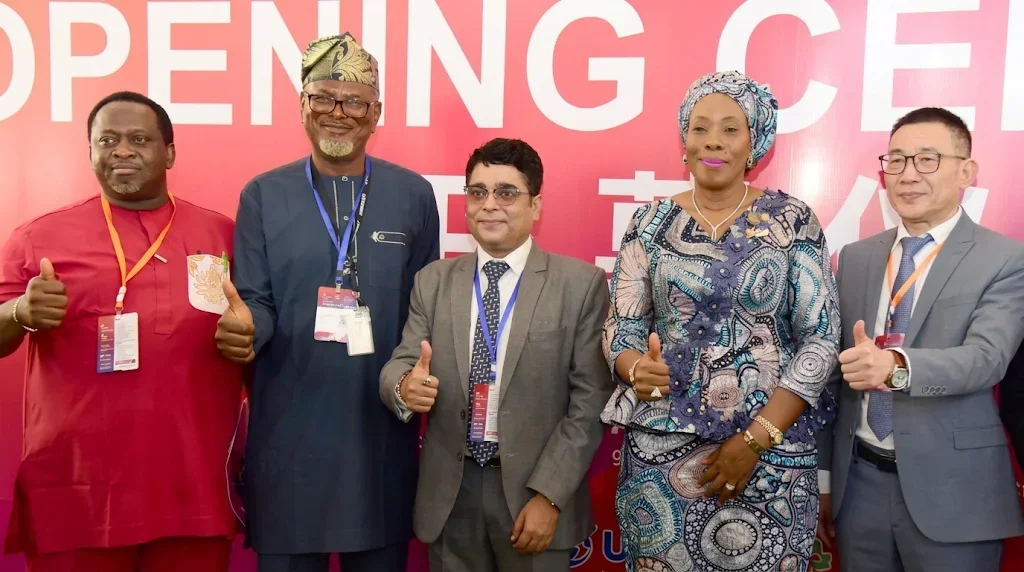
The Kano meeting represents the second phase of consultations on the draft regulations, following an earlier stakeholders’ engagement held in Lagos from 9 to 10 November.
The Lagos discussions examined provisions relating to licensing, operator classification, transaction traceability, collection and sorting facilities, environmental compliance, occupational safety, security and enforcement.
The Kano consultation was organised to incorporate additional regional and operational perspectives, particularly from stakeholders in northern Nigeria.
Audu urged participants to submit practical recommendations on licensing arrangements, operator requirements, security, environmental protection and enforcement challenges.
The ministry said contributions from both engagements would be reviewed and harmonised as part of efforts to refine the proposed regulatory framework.
The regulations remain at the draft and stakeholder-validation stage. The government has not announced a final implementation date or provided a detailed timetable for enforcement.
READ MORE