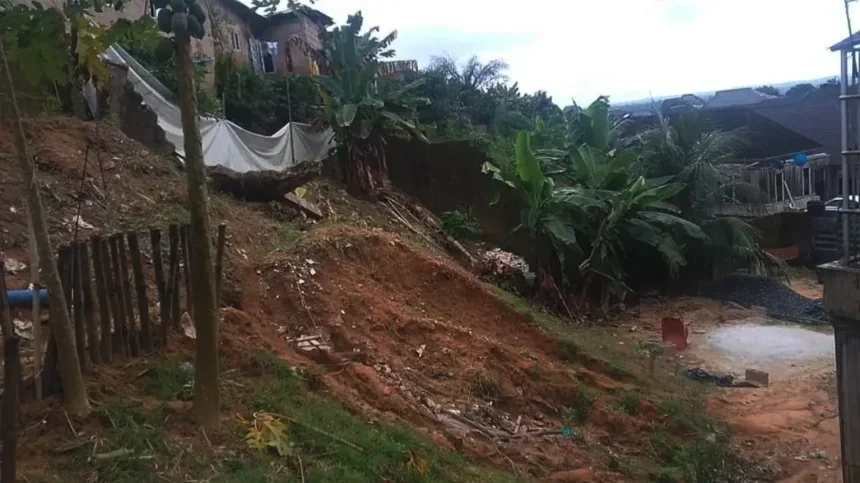
Gully erosion threatens homes and livelihoods in Akai Effa, Calabar, Cross River State
Gully erosion in Akai Effa community, Calabar Municipality, Cross River State, has put more than 200 houses at risk and destroyed fish farms, poultry farms and other investments estimated at over ₦100 million, raising fresh concerns about residential safety, land stability and the need for urgent environmental intervention.
/ You Might Also Like /




The erosion has expanded over several years, with heavy rainfall worsening the damage, swallowing farmland and cutting off access roads. Some residents have reportedly abandoned their homes, while others face the prospect of losing their properties if the gullies continue to advance.
Village Head of Akai Effa, Henrietta Effa-Akpere, raised the alarm after leading community elders on an assessment of two major erosion sites. She appealed to the Federal Government, Cross River State Government and relevant environmental agencies to intervene before the damage results in further displacement or loss of life.
Erosion Puts Homes and Residential Land at Risk
The erosion reportedly began more than five years ago as small gullies but has since widened into deep craters. Recent heavy rainfall has accelerated the damage, threatening homes and making parts of the community increasingly difficult to access.
The scale of the threat highlights the vulnerability of residential properties in areas where erosion-control measures and drainage infrastructure cannot adequately manage surface water.
For affected homeowners, the consequences extend beyond visible damage to buildings. Erosion can undermine foundations, destabilise surrounding land, destroy access routes and reduce the usability of adjoining plots. As the gullies expand, residents may face costly repairs, forced relocation or the complete loss of their homes.
The immediate concern in Akai Effa is to assess the most endangered properties, establish safe zones where necessary and begin protective works before further rainfall worsens the situation.
Farm Destruction Pushes Losses Beyond Housing
The crisis has also damaged the community’s productive assets. Effa-Akpere said heavy rainfall destroyed fish ponds and poultry farms belonging to residents, including Surilaco Farms and Dr Henry Onwe, contributing to estimated losses exceeding ₦100 million.
The destruction of these businesses threatens income, food production and employment, particularly for residents whose livelihoods depend on farming and related activities.
The losses also demonstrate how environmental damage can affect several parts of a local economy simultaneously. When erosion destroys agricultural investments, threatens houses and cuts off access roads, residents face not only property damage but also reduced income and disruption to daily commercial activity.
For households already facing the financial pressure of securing alternative accommodation or repairing damaged buildings, the loss of livelihoods could make recovery more difficult.
Residents Seek Urgent Government Intervention
According to the village head, the community had previously reported the erosion to the Nigeria Erosion and Watershed Management Project (NEWMAP), whose officials visited the affected locations for an inspection. She said residents were still waiting for remedial work.
The community is now calling for intervention by the Federal Government, Cross River State Government and relevant ecological agencies to prevent further damage.
Residents have also urged the Ecological Fund Office, the National Emergency Management Agency, the Cross River State Emergency Management Agency and the state Ministry of Environment to assess the affected sites and begin emergency remediation.
An effective response would require more than temporary measures. Authorities would need to establish the extent and movement of the gullies, assess the stability of threatened properties, manage stormwater flows and implement erosion-control works suited to the area's terrain and soil conditions.
Where buildings face imminent danger, emergency evacuation and temporary accommodation may also be necessary to protect residents while technical assessments and remediation proceed.
Erosion Control Is Critical to Housing Safety
The situation in Akai Effa underscores the importance of integrating environmental risk management into housing development and urban planning. Drainage, land stability and the management of stormwater can determine whether residential areas remain safe as settlements expand.
Poorly managed runoff can accelerate soil erosion, particularly where drainage channels are inadequate or water flows concentrate along vulnerable ground. Unchecked erosion can then threaten homes, roads, utility infrastructure and nearby businesses.
For property owners and prospective buyers, the crisis is a reminder that evaluating a location requires more than considering the price of land or proximity to commercial centres. Drainage conditions, erosion history, soil stability and the availability of protective infrastructure are also important considerations.
For developers and planning authorities, the priority is to identify vulnerable areas early, enforce appropriate development standards and ensure that drainage and erosion-control systems can manage local environmental conditions.
Emergency Action Needed to Prevent Further Losses
Akai Effa's worsening erosion presents an immediate risk to residents and a longer-term challenge for property protection and community recovery. With more than 200 houses reportedly threatened and losses to farms and other investments estimated at over ₦100 million, delays could deepen the damage.
The priority is to protect residents facing immediate danger and begin technically sound erosion-control work. Authorities must also clarify the responsibilities of the agencies involved, establish a clear intervention plan and monitor implementation to ensure that the problem does not continue unchecked.
For the affected community, a successful response would mean more than stabilising the gullies. It would help protect homes, restore access, safeguard livelihoods and reduce the risk of further displacement.
READ MORE