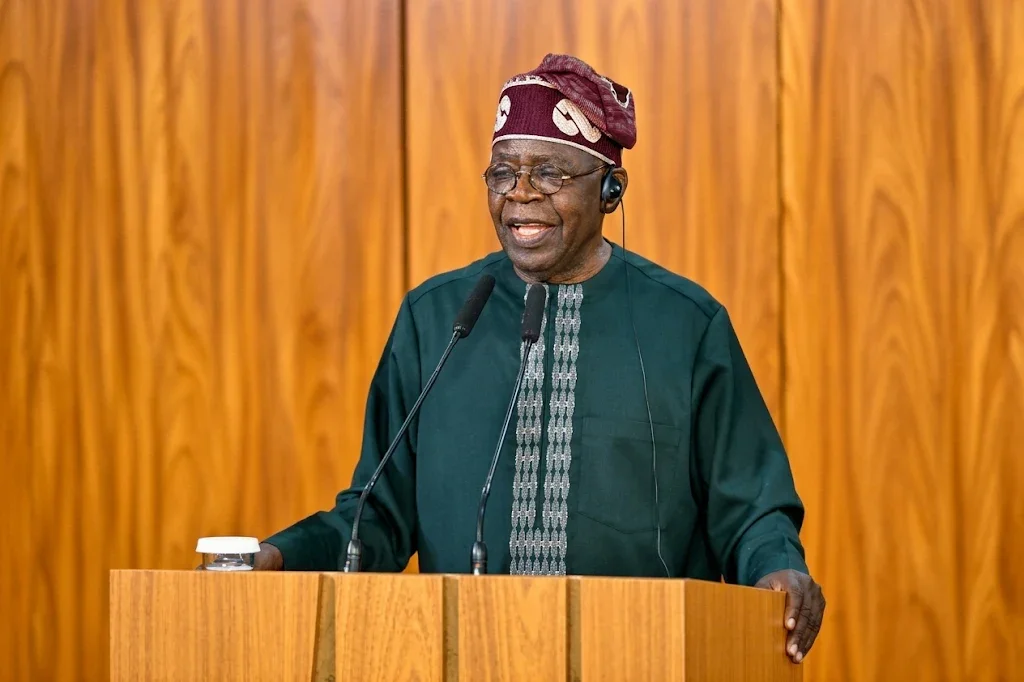
President Bola Tinubu
President Bola Tinubu has called for stronger corporate governance, improved institutional accountability and strategic economic positioning to strengthen Nigeria’s competitiveness and support the country's ambition of becoming a $1 trillion economy by 2030.
/ You Might Also Like /




Tinubu made the call on Tuesday, 10 November 2026, at the Chartered Institute of Directors Nigeria (CIoD) Annual Directors Conference in Lagos. The President was represented by the Chairman of the Federal Civil Service Commission, Tunji Olaopa.
Speaking against the backdrop of changes in global trade, technology and investment flows, Tinubu said Nigeria must strengthen its economic institutions and business environment to compete more effectively in the changing global economy.
He identified the reorganisation of global supply chains, digital technology, trade tensions, climate risks and changing capital flows as developments reshaping investment decisions and creating new competitive pressures for countries.
Tinubu said Nigeria must respond by improving macroeconomic stability, ensuring predictable policies, expanding energy and transport infrastructure, increasing local value addition and diversifying exports.
He also urged the country to take advantage of the African Continental Free Trade Area (AfCFTA) to connect Nigerian producers to larger regional markets while developing the skills required by an evolving economy.
Stronger Governance Needed to Attract Investment
The President said investors consider not only the availability of business opportunities but also the quality of institutions responsible for protecting investments and ensuring predictable business conditions.
He argued that effective corporate governance reduces operational risks, improves investor confidence, strengthens access to capital and supports long-term organisational performance.
Tinubu warned that weak oversight, conflicts of interest, poor accountability and inadequate governance structures could undermine otherwise promising businesses.
He urged directors in both public and private organisations to uphold integrity, transparency, accountability and professionalism in their responsibilities.
He also called on corporate boards to strengthen oversight, challenge management decisions where necessary, protect institutional assets and ensure that organisational decisions serve the interests of stakeholders.
Public Institutions and State-Owned Enterprises Under Scrutiny
Tinubu extended his call for stronger governance to public institutions and state-owned enterprises, stressing that government resources must deliver measurable value.
He said public institutions should operate with greater accountability and ensure that those entrusted with leadership responsibilities answer for their decisions and results.
The Secretary to the Government of the Federation, George Akume, also urged directors to take their responsibilities seriously by questioning weak assumptions, demanding reliable information and looking beyond immediate financial performance.
Akume, represented by the Director of the Nigerian National Volunteer Service, Imaobong Ekwere, said the stability of organisations affected employees, investors, suppliers and host communities.
He encouraged directors to consider these wider interests when making decisions about organisational strategy and sustainability.
Business Leaders Call for Infrastructure and Regulatory Reforms
Other speakers at the conference highlighted the role of effective leadership, infrastructure and a predictable regulatory environment in supporting Nigeria's economic ambitions.
CIoD Nigeria President Adetunji Oyebanji said achieving the $1 trillion economy target by 2030 would require faster economic growth and more productive capital allocation.
He noted that directors had important responsibilities in supporting enterprise development, managing risks and creating long-term economic value. He also emphasised the need to strengthen small businesses through better governance, access to capital and wider market opportunities.
Emmanuel Ocholi, Chairman of Charterhouse Capital Plc, said businesses needed predictable regulations, credible public institutions, functional infrastructure and access to capital to remain competitive.
He added that developments in artificial intelligence, global supply chains, climate risks and geopolitical uncertainty required corporate boards to reconsider traditional governance practices.
Meanwhile, Udoma Udo Udoma, Chairman of Seplat Energy, urged companies to integrate environmental, social and governance (ESG) principles into their operations. He also highlighted the importance of board diversity, corporate responsibility and adapting to technological change.
Implications for Nigeria's Investment and Real Estate Environment
The emphasis on corporate governance and infrastructure has implications for Nigeria's property and construction sectors, which depend on long-term capital, regulatory certainty and effective public institutions.
Real estate investors and developers require predictable land administration, transparent approval processes, reliable infrastructure delivery and confidence that contractual and property rights will receive institutional protection.
Stronger governance in public institutions could improve the management of infrastructure projects, reduce procurement risks and strengthen confidence among private-sector partners.
However, achieving these outcomes will require translating policy commitments into measurable improvements in institutional performance, infrastructure provision and the broader business environment.
For Nigeria's $1 trillion economy ambition, the challenge extends beyond attracting investment. It also requires institutions capable of managing capital effectively, supporting productive businesses and delivering infrastructure that enables economic activity.
READ MORE