UK Investors Account for 65% of Nigeria’s Foreign Capital Inflows in 2025
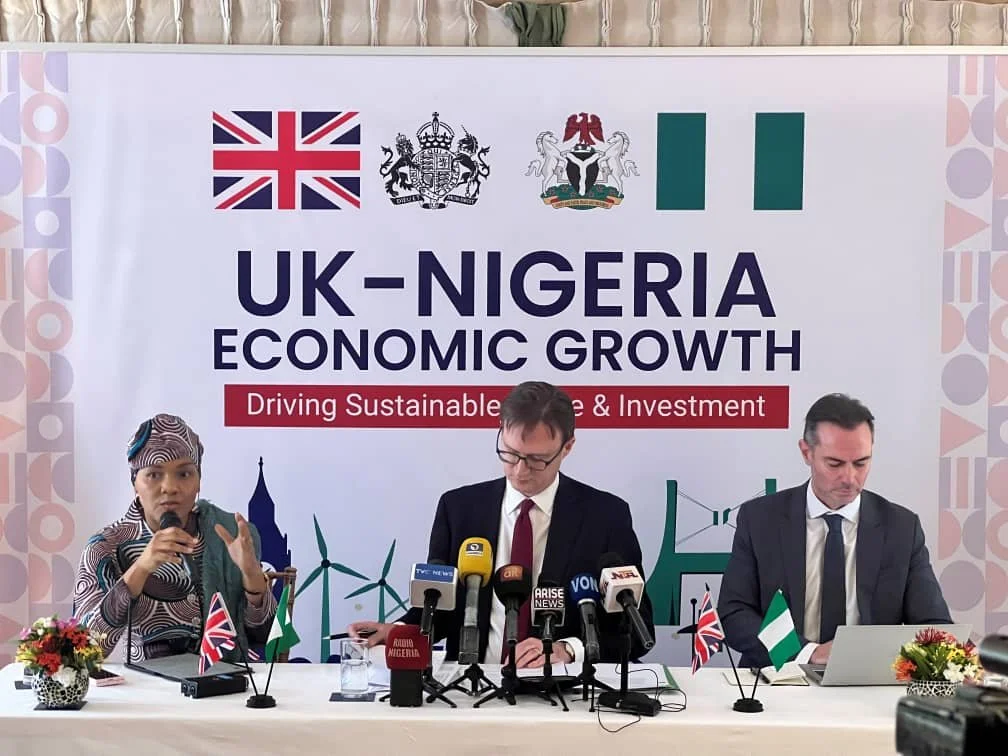
The United Kingdom emerged as Nigeria’s leading source of foreign investment in 2025,
The United Kingdom emerged as the primary source of new foreign investment into Nigeria in 2025, contributing approximately 65% of the country's recent capital inflows. According to a policy document released by the Federal Ministry of Industry, Trade and Investment (FMITI) titled “2025: A Defining Year for Nigeria’s Industry, Trade and Investment,” this surge follows the activation of the UK-Nigeria Enhanced Trade and Investment Partnership (ETIP) and a series of domestic macroeconomic reforms.
Headline Deals: Agriculture and Industrial Expansion
The ministry's report highlights two significant funding commitments from the UK's development finance institution, British International Investment (BII), totaling $48 million. These investments are directed toward critical sectors of the Nigerian economy:
Johnvents Industries ($40.5 Million): This investment supports the refurbishment and expansion of the cocoa processing facility in Ile-Oluji, Ondo State. The project aims to double production capacity to 30,000 metric tonnes annually, enhancing Nigeria’s non-oil export competitiveness.
Babban Gona ($7.5 Million): A debt facility awarded to the agritech social enterprise to scale its model in Northern Nigeria. The funding is expected to improve yields and climate resilience for approximately 140,000 smallholder farmers by 2029.
The ETIP Framework and Policy Drivers
The UK-Nigeria Enhanced Trade and Investment Partnership, signed in February 2024, has served as a catalyst for these inflows. The agreement focuses on reducing regulatory barriers and improving market access across legal services, financial services, and agriculture.
The FMITI document attributes the 2025 performance to a structural shift in Nigeria’s investment facilitation architecture. Under the leadership of Dr Jumoke Oduwole, the ministry transitioned from passive promotion to an active, systems-driven model. This approach prioritizes "de-risked" investment pipelines, which currently exceed $5 billion across priority sectors including solid minerals, digital trade, and the creative economy.
Macroeconomic Context and Trade Performance
The ministry noted that 2025 represented a "decisive inflection point" for the Nigerian economy under President Bola Tinubu’s Renewed Hope Agenda. Key indicators cited in the report include:
Non-Oil Export Growth: A 21% increase, reaching $12.8 billion in the first half of 2025.
Trade Surplus: Nigeria recorded a ₦12 trillion trade surplus during the same period.
Stock Market Performance: The Nigerian Exchange (NGX) ranked among the top five globally in 2025, further bolstered by foreign portfolio investments.
Conclusion
The dominance of UK capital in Nigeria’s 2025 investment landscape underscores the growing efficacy of bilateral trade frameworks and domestic structural adjustments. By successfully converting $13.7 billion worth of previous Memoranda of Understanding (MoU) into active projects a conversion rate exceeding 25% FMITI has demonstrated a clear move toward execution-driven economic policy. As the ministry transitions into 2026, the focus remains on sustaining this momentum through sector-specific "investor playbooks" and the operationalisation of the new National Industrial Policy.