Persistent Sit-at-Home Disruptions Threaten South East Nigeria’s ₦5.7 Trillion 2026 Fiscal Plans
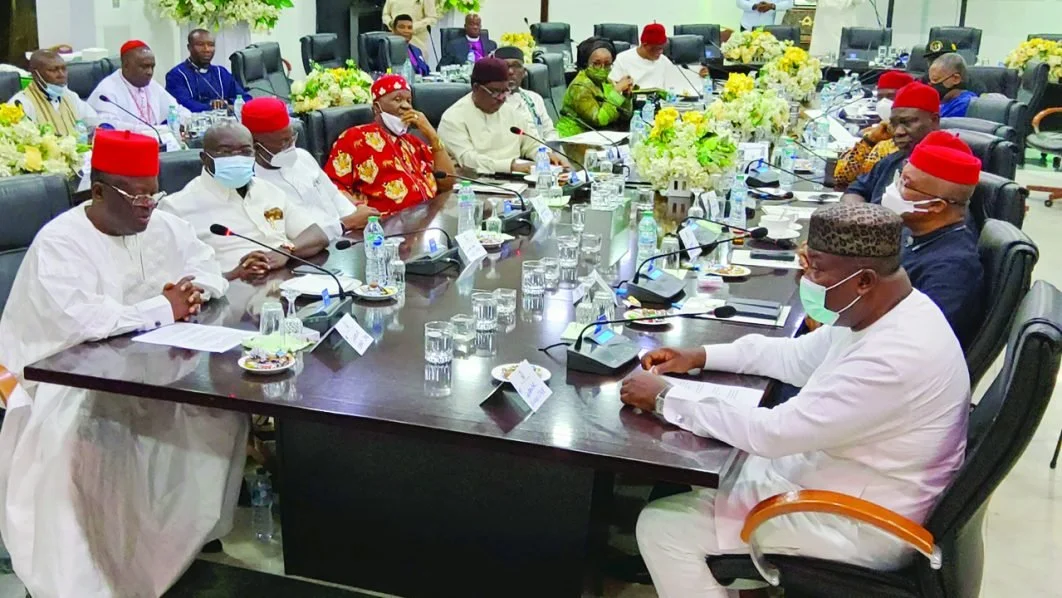
South East Nigeria’s ₦5.7 trillion budget for 2026 faces significant risk as Monday sit-at-home orders persist.
The ambitious ₦5.7 trillion consolidated budget proposed by the five South East governors for the 2026 fiscal year is facing significant implementation risks due to the continued observance of Monday sit-at-home orders. Despite the legal resolution of high-profile cases including the life imprisonment of IPOB leader Nnamdi Kanu in November 2025 and the six-year sentencing of Simon Ekpa in Finland commercial activity remains paralyzed across major hubs every Monday. This voluntary and enforced inactivity threatens the region’s projection of ₦1.3 trillion in Internally Generated Revenue (IGR), a figure vital for the survival of the 2026 fiscal plan.
Regional Budgetary Outlook: The Trillion-Naira Ambition
For the first time in history, multiple states within the South East have presented budgets exceeding the trillion-naira threshold. The 2026 appropriations emphasize massive capital expenditure to catalyze a regional industrial renaissance.
2026 South East Budget Breakdown:
State Total Appropriation Projected IGR
Enugu ₦1.62 Trillion ₦870 Billion
Imo ₦1.44 Trillion ₦44.3 Billion
Abia ₦1.02 Trillion ₦223.4 Billion
Ebonyi ₦884.0 Billion ₦97.16 Billion
Anambra ₦757.9 Billion ₦60.0 Billion
Total: ₦5.72 Trillion ₦1.29 Trillion
The IGR Gap: A 300% Revenue Leap Required
To fund these expenditures, states are targeting a nearly 300% spike in revenue mobilisation. Enugu State, for instance, aims to raise ₦870 billion internally, an audacious target considering the state's historical averages. Financial analysts note that to meet these goals, the region must generate approximately ₦2.3 billion in revenue daily. However, the loss of Mondays, described by commercial lawyers as the most critical day for business survival, effectively removes 14% of the productive week, creating a cumulative annual loss that experts previously estimated at ₦7.6 trillion over four years.
Business Relocation and Economic Erosion
The "perception of insecurity" has triggered a steady migration of businesses from the South East to neighboring Delta, Akwa Ibom, Rivers, and Lagos. This exodus has kneecapped the revenue-driving capacity of the region. While governors like Peter Mbah of Enugu and Charles Soludo of Anambra have implemented "Economic Empowerment Days" and increased security presence, the private sector remains hesitant. Reports from early January 2026 indicate that many federal offices, motor parks, and private markets still observe the shutdown for fear of splinter-group attacks.
Divergent Perspectives on Resolution
The crisis is compounded by a deep divide between government officials and grassroots movements. Civil society organizations, such as the Civil Liberties Organisation (CLO), argue that the sit-at-home has evolved into a "voluntary sacrifice" for the Biafran cause that cannot be ended by fiscal policy alone. Conversely, management consultants emphasize that collecting revenue on "activities that never happened" is impossible, warning that the governors may have to rely on heavy taxation or increased debt if commercial normalcy is not restored.
Conclusion
The South East’s 2026 fiscal plan is a bold statement of developmental intent, yet its success is inextricably linked to the region’s security climate. With ₦1.3 trillion in IGR hanging in the balance, the 12-month window for budget implementation provides little room for the "ghost town" Mondays that currently define the regional landscape. Unless a synergy between security agencies, state governments, and community leaders effectively collapses the sit-at-home culture, the region risks a significant fiscal deficit and the stalling of critical infrastructure projects.