Nigeria’s Cement Stocks Surge to ₦20.97 Trillion as Investor Confidence Grows
The cement sector’s performance mirrored a historic broader market rally.
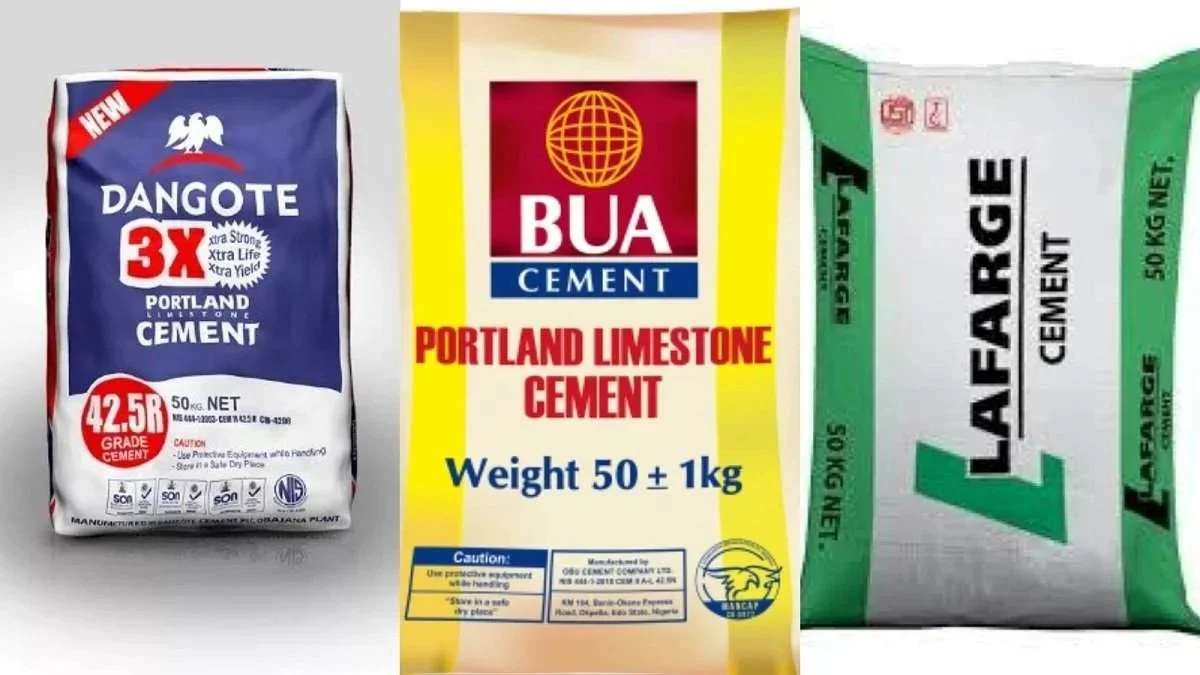
The Nigerian cement sector concluded 2025 as a primary anchor of the Nigerian Exchange (NGX), with the combined market valuation of the industry’s three major players reaching ₦20.97 trillion. Data from the NGX Group confirms that Dangote Cement Plc, BUA Cement Plc, and Lafarge Africa Plc collectively added ₦8.54 trillion in value over the 12 months, representing a staggering 68.7% growth. This industrial rally served as a hedge for investors navigating a fiscal year characterised by 14.45% inflation (as of November 2025) and significant exchange rate fluctuations.
BUA Cement Leads Sector Re-Rating
BUA Cement Plc recorded the most aggressive growth within the industrial goods segment. The company’s market capitalization escalated from ₦3.15 trillion in January to ₦8.53 trillion by December 31, 2025. This surge was underpinned by a sharp increase in share price to ₦2,270, reflecting a fundamental re-rating by institutional investors. Analysts point to the company’s capacity expansion and superior net profit margins which reached 31.17% in the first half of the year as the primary drivers of this valuation spike.
Strategic Gains for Dangote and Lafarge
Dangote Cement Plc maintained its position as the sector’s heavyweight, closing the year with a market value of ₦10.28 trillion. Despite its massive base, the company added ₦2.12 trillion to its capitalization in 2025, supported by an "export-to-import" strategy and robust domestic demand.
Lafarge Africa Plc similarly reported a strong recovery, with its market cap rising to ₦2.17 trillion from an opening value of ₦1.13 trillion. Market operators have labeled Lafarge a "comeback story," citing the elimination of foreign exchange losses and improved operational efficiency as key factors that boosted its share price to ₦134.50 by year-end.
Broad Market Drivers and 2026 Outlook
The cement sector’s performance mirrored a historic broader market rally. The NGX All-Share Index (ASI) advanced by 51.19% in 2025, closing at a record 155,613.03 points. According to Temi Popoola, Group Managing Director and CEO of NGX Group, this resilience was fueled by purposeful policy reforms and strategic collaboration within the financial ecosystem.
Looking toward 2026, market participants anticipate that industrial stocks will remain central to the exchange’s performance. Several factors support this outlook:
Infrastructure Spend: Increased federal commitment to housing and road projects.
Economic Growth: CBN projections of 4.49% GDP growth for 2026.
Digital Integration: Ongoing investments in market technology to enhance transparency and liquidity.
Conclusion
The 2025 performance of the cement sector underscores the maturing nature of the Nigerian capital market, which has transitioned from crisis management to a fundamentals-driven landscape. For investors and policymakers, the industry's ₦20.97 trillion valuation is a significant indicator of the sector's role in Nigeria’s long-term economic stability. As the 2026 fiscal year begins with a bullish momentum, the focus remains on whether these industrial giants can sustain their high margins amidst cooling inflation and a stabilizing Naira.