President Tinubu Lauds NGX ₦100 Trillion Milestone, Urges Local Investment
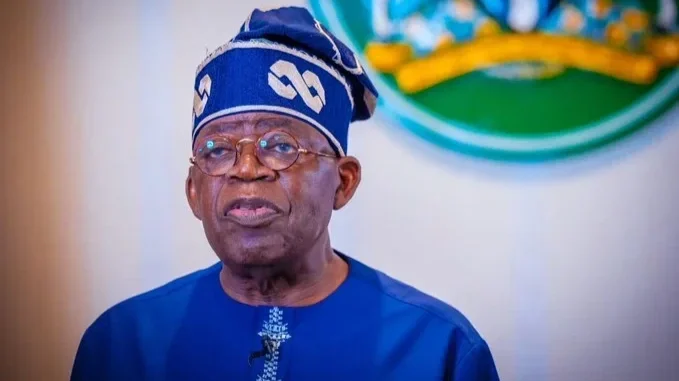
The President expressed confidence that 2026 would serve as an "epochal year" for the Nigerian economy.
President Bola Ahmed Tinubu has lauded the Nigerian Exchange Group (NGX Group), corporate leaders, and the broader investment community for propelling the Nigerian stock market past the historic ₦100 trillion market capitalisation threshold. Describing the milestone as a "signal to the world" of Nigeria’s economic rejuvenation, the President issued a call to action on Thursday, January 8, 2026, urging citizens to deepen their participation in the local capital market to capitalise on the administration’s ongoing fiscal reforms.
Global Performance and Market Dynamics
The Nigerian Exchange has emerged as a global frontrunner in equity returns. According to data cited by the Presidency, the NGX All-Share Index (ASI) concluded 2025 with a full-year return of 51.19%, a significant increase from the 37.65% recorded in 2024. This performance positioned Nigeria ahead of major international benchmarks, including the S&P 500 and the FTSE 100, and surpassed several emerging-market peers.
The market's ascent to the ₦100 trillion mark was driven by a confluence of factors:
Sectoral Resilience: Strong earnings from "industrial blue chips," technology-driven firms, and a banking sector undergoing recapitalisation.
Macroeconomic Stabilisation: A sustained decline in headline inflation, which dropped from a peak of 34.8% in December 2024 to 14.45% by November 2025.
Foreign Reserve Growth: Nigeria’s foreign reserves exceeded $45 billion in late 2025, with projections to surpass $50 billion in the first quarter of 2026
Regulatory Oversight and Strategic Reforms
Institutional leaders have attributed the market’s record-breaking depth to deliberate policy shifts. The Director-General of the Securities and Exchange Commission (SEC), Dr Emomotimi Agama, credited the Investments and Securities Act (ISA) 2025 for strengthening the commission's supervisory and enforcement framework. Agama noted that the ₦100 trillion milestone reflects a "direct result" of increased transparency and investor protection.
Supporting this sentiment, Temi Popoola, Group Managing Director/CEO of NGX Group, emphasised that the achievement validates the Exchange's focus on market depth and innovation. Popoola highlighted that closer alignment between policymakers and market operators has enhanced liquidity, making Nigeria a "compelling investment destination" rather than a mere frontier market.
2026 Outlook: Prosperity and New Listings
The President expressed confidence that 2026 would serve as an "epochal year" for the Nigerian economy. He pointed to a robust pipeline of indigenous energy companies, telecommunications operators, and infrastructure-related entities preparing for listing on the Exchange. These anticipated listings are expected to further democratise ownership of the Nigerian economy and bolster market capitalisation.
Government projections also indicate a strengthening external position, with the current account surplus expected to rise to $18.81 billion in 2026. This optimism is further supported by a 48% surge in non-oil exports and a 97% increase in exports to other African nations by the third quarter of 2025.
Conclusion
The ₦100 trillion milestone on the NGX is more than a numerical achievement; it represents a structural shift in Nigeria’s financial landscape. As the administration’s tax and fiscal reforms which took full effect on January 1, 2026 continue to permeate the economy, the focus remains on sustaining this momentum. For local and global investors, the mensaje from the Presidency is clear: Nigeria is open for business, and the capital market remains the primary vehicle for discovering and creating value in West Africa's largest economy.