
Lagos Assembly Passes N4.4 Trillion 2026 Budget: Breakdown of Capital vs Recurrent Spend
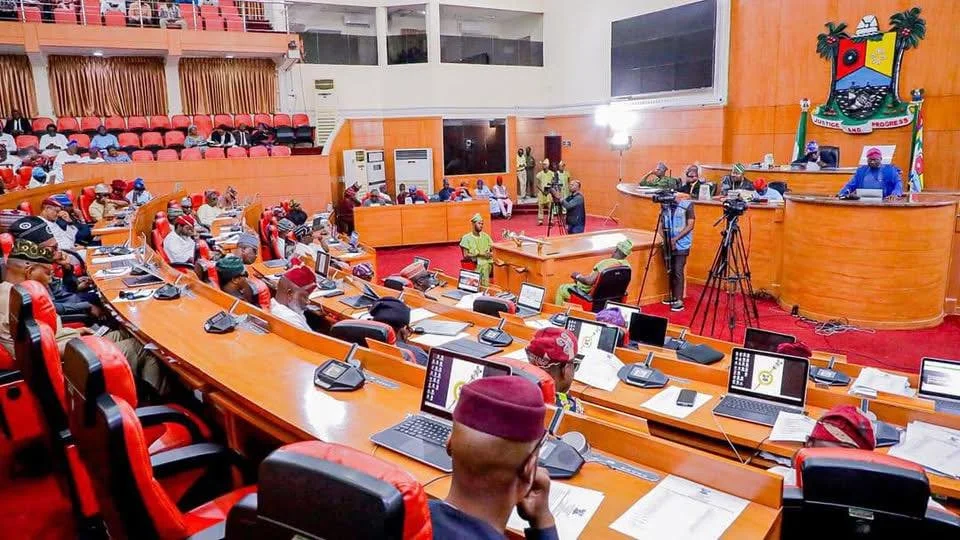
In a landmark legislative move on Wednesday, January 7, 2026, the Lagos State House of Assembly, led by Speaker Mudashiru Obasa, officially passed the N4.425 trillion 2026 Appropriation Bill.
This record-breaking budget, significantly higher than the initial N3.005 trillion proposal presented by Governor Babajide Sanwo-Olu in late 2025, represents a bold fiscal roadmap for Nigeria’s economic hub. Titled the “Budget of Consolidation,” it aims to complete major infrastructure projects while cushioning the effects of national economic reforms on the residents of Lagos.
The N4.4tn Breakdown: Capital vs. Recurrent Expenditure
The most striking feature of the 2026 budget is the heavy tilt toward infrastructure and long-term assets. The Assembly’s approval follows weeks of rigorous "budget defense" sessions by various Ministries, Departments, and Agencies (MDAs).
Total Approved Budget: N4,425,735,468,142
Capital Expenditure: N2,512,189,451,556 (approx. 57%)
Recurrent Expenditure: N1,913,546,016,586 (approx. 43%)
By allocating over N2.5 trillion to Capital Expenditure, the Lagos State Government is doubling down on its T.H.E.M.E.S+ Agenda, prioritizing transportation, healthcare, and education.
Strategic Sectoral Allocations for 2026
1. Transportation and the "Red Line" Completion
A significant portion of the capital budget is earmarked for the Lagos Rail Mass Transit (LRMT) system. With the Blue Line already operational, 2026 is the year Lagosians expect the full optimization of the Red Line and the commencement of Phase 2 of the Blue Line. Investment in the Opebi-Ojota Link Bridge and various last-mile road projects are also high on the priority list.
2. Social Protection and Food Security
Amidst rising inflation, the 2026 budget includes expanded funding for the "Ounje Eko" (Lagos Food Markets) initiative. The state aims to subsidize essential food items through designated markets across the five divisions (IBILE) of Lagos to reduce the cost of living for vulnerable households.
3. Education and Digital Transformation
The Assembly approved increased funding for the Lagos State University (LASU) and the newly established specialized universities. A large chunk of the N3.52bn education-related capital spend will go toward digitizing primary school classrooms and expanding the EKOEXCEL program.
Why the Budget Size Increased: Legislative Insights
The jump from the proposed N3tn to the approved N4.4tn raised eyebrows among fiscal analysts. However, Speaker Mudashiru Obasa clarified that the increment was necessary to reflect the current inflationary realities and to ensure that ongoing "mega-projects" are not abandoned due to funding gaps.
"Lagos is a construction site," Obasa noted during the plenary. "We must ensure that the Fourth Mainland Bridge and our rail projects have the fiscal backing to move from paper to completion in 2026."
Economic Impact for the Nigeria Housing Market
The 2026 Lagos budget is a massive "Green Flag."
Increased Property Values: The focus on the Red Line and road infrastructure in areas like Agege, Mushin, and Alagbado will likely trigger a surge in property values in those corridors.
Urban Renewal: The budget provides for the Lagos State Urban Renewal Agency (LASURA) to begin retrofitting older settlements, potentially opening up new opportunities for "Brownfield" real estate developments.
Commercial Real Estate: With N2.5tn in capital spend, the demand for construction materials and professional services will boom, driving demand for office spaces and industrial warehouses in the Epe and Ibeju-Lekki axis.
What Residents and Businesses Should Expect
As the budget moves to Governor Sanwo-Olu for final assent, Lagosians should prepare for:
Aggressive Revenue Collection: To fund a N4.4tn budget, the Lagos State Internal Revenue Service (LIRS) is expected to deploy more digital tools to expand the tax net.
Improved Public Services: If execution follows the plan, the 2026 fiscal year could see the most significant improvement in Lagos public transportation and healthcare infrastructure in a decade.