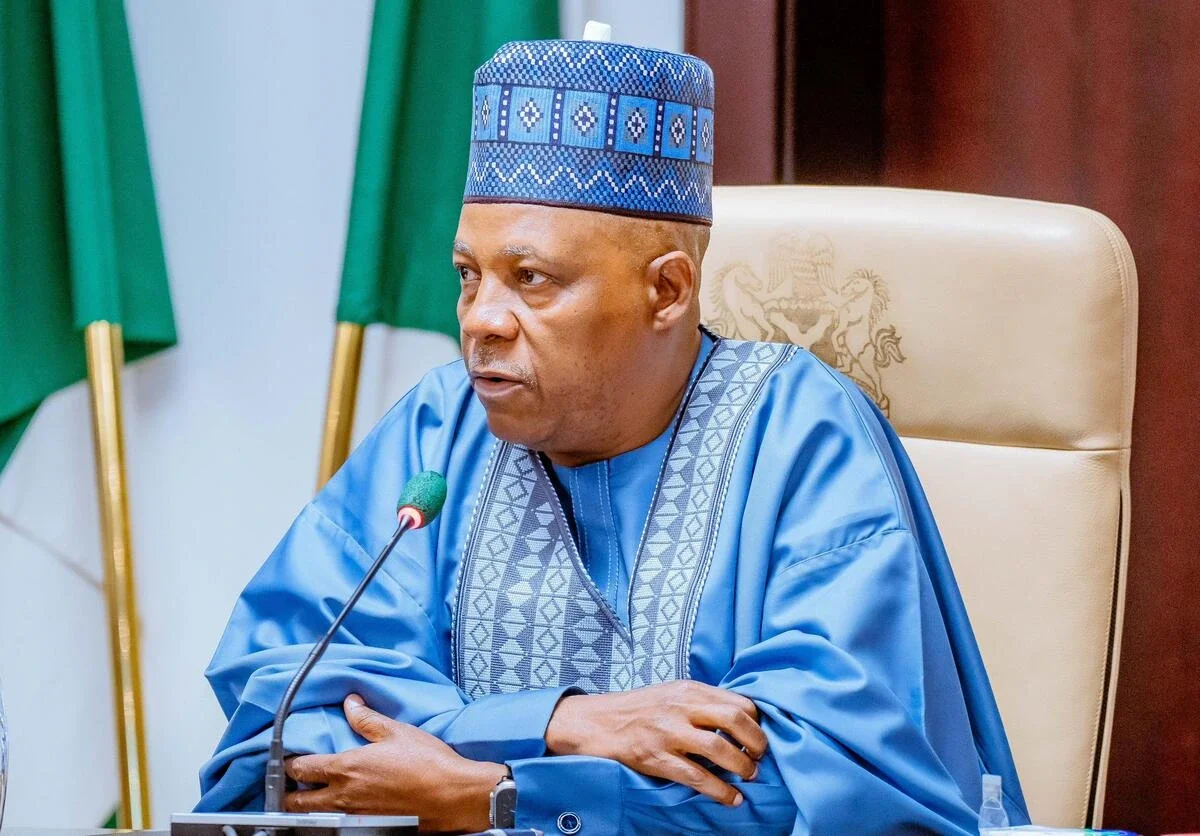
Vice President Kashim Shettima unveils Nigeria’s Capital Market Master Plan 2.0 in Abuja.
Nigeria has launched a 10-year capital market development plan targeting an increase in market capitalisation from approximately ₦250 trillion to ₦750 trillion by 2036, as the government seeks to mobilise long-term investment for infrastructure, business expansion and economic development.
/ You Might Also Like /




Vice-President Kashim Shettima unveiled the Nigerian Capital Market Master Plan 2.0 at the National Capital Market Conference 2026 in Abuja on 19 October. The Securities and Exchange Commission (SEC) developed the roadmap to expand investor participation, strengthen market infrastructure and position the capital market as a major source of funding for Nigeria’s development priorities.
Capital Market Plan Targets Threefold Expansion by 2036
The roadmap sets a target to triple Nigeria’s capital market value from its baseline of approximately ₦250 trillion to ₦750 trillion over the next decade.
Shettima described the capital market as a key instrument of economic policy, arguing that it should do more than generate returns for investors. He said it should help finance infrastructure, support businesses and give Nigerians broader opportunities to participate in national economic growth.
The plan also seeks to reduce excessive dependence on commercial bank lending and foreign borrowing by increasing the availability of long-term domestic capital.
A deeper capital market could allow businesses and public institutions to raise funds through equity and debt instruments, including shares and bonds, rather than relying predominantly on bank loans or government budget allocations.
However, achieving the target will depend on sustained investment, stronger participation by domestic investors, continued regulatory reforms and the availability of credible investment opportunities.
SEC Seeks Broader Investor Participation
The SEC has positioned the master plan as a framework for expanding access to the capital market and strengthening the institutions that support it.
The commission’s Director-General, Emomotimi Agama, said the plan would focus on increasing participation, broadening investment products and improving the integrity and infrastructure of the market.
The roadmap also includes implementation arrangements intended to translate its objectives into measurable actions. The launch included the inauguration of a Project Steering Committee and a Capital Market Master Plan Implementation Committee.
These structures are intended to support coordination and implementation over the plan’s 2026–2036 period.
For investors, the plan’s significance will depend on whether the proposed reforms improve market access, strengthen confidence in listed companies and create more opportunities to invest in productive sectors of the economy.
Government Looks to Capital Markets to Finance Infrastructure
The roadmap places long-term financing at the centre of Nigeria’s infrastructure and economic development strategy.
Government budgets and conventional borrowing alone cannot meet the country’s substantial infrastructure requirements. The capital market offers an additional channel for mobilising funds from pension funds, institutional investors, companies and individual savers.
Shettima said the government would work with state governors to encourage responsible use of the capital market, particularly through properly structured bonds, credible project pipelines and greater transparency.
State governments could use bond issuance to finance eligible infrastructure and development projects, provided they meet applicable regulatory requirements and demonstrate the capacity to manage repayment obligations.
For the housing and real estate sector, a more developed capital market could provide additional funding channels for residential developments, commercial property, infrastructure and housing-related businesses. Property companies and developers could potentially benefit from improved access to long-term capital, while well-structured debt instruments could help finance projects with extended development and repayment periods.
These benefits are not automatic. They would depend on whether the reforms translate into suitable funding instruments, credible projects and financing terms that align with the cash flows of housing and infrastructure investments.
National Savings Scheme to Encourage Domestic Investment
The capital market roadmap was launched alongside the National Savings Scheme, which aims to encourage savings and broaden participation in investment opportunities.
The initiative forms part of the government’s wider effort to mobilise domestic resources and direct more capital towards productive economic activities. Tax incentives are intended to support participation, although the scheme’s practical impact will depend on its final arrangements, eligibility requirements and uptake among households.
Expanding the pool of domestic savings could provide a more stable source of funding for businesses and public-sector projects. It could also help more Nigerians participate in financial markets through suitable savings and investment products.
For the housing sector, stronger domestic savings and investment channels could support the development of mortgage finance, real estate investment products and long-term funding structures. However, the scale of any benefit will depend on how effectively financial institutions and capital-market operators channel investment into housing and related infrastructure.
Nigeria’s $1 Trillion Economy Ambition
The master plan also supports Nigeria’s ambition to build a $1 trillion economy by 2030.
Finance Minister Taiwo Oyedele has argued that a stronger capital market is necessary to support that objective, particularly by providing businesses with access to funding beyond traditional bank lending.
The government’s economic strategy relies on attracting investment, improving market confidence and expanding the capacity of Nigerian businesses to finance growth.
A larger capital market could help companies raise equity, issue bonds and attract a broader range of investors. It could also provide a framework for financing infrastructure and productive assets that support economic activity.
Nevertheless, market capitalisation alone does not measure the full performance of the economy. Achieving the roadmap’s objectives will also require stronger investor participation, effective regulation, reliable corporate disclosures and productive use of funds raised through the market.
What the Roadmap Means for Housing and Real Estate
The proposed expansion has implications for Nigeria’s property market because real estate development requires substantial long-term financing.
Developers frequently face high borrowing costs, limited access to affordable credit and difficulties securing funding that matches the time needed to build and sell or lease properties. A deeper capital market could create more options for raising funds through listed property companies, bonds and other regulated investment vehicles.
Institutional investors could also have more opportunities to channel long-term funds into housing and infrastructure, provided the available products meet their investment requirements and risk standards.
For policymakers, the challenge will be to ensure that capital-market growth supports productive investment rather than concentrating solely on rising share prices. Clear disclosure requirements, sound project appraisal and credible governance arrangements will be important in directing capital towards developments that generate sustainable economic value.
The ₦750 trillion target does not itself guarantee lower mortgage rates, increased housing supply or more affordable homes. Those outcomes would depend on the specific financing mechanisms introduced and the extent to which investment reaches housing delivery and supporting infrastructure.
Outlook
Nigeria’s Capital Market Master Plan 2.0 sets a target to expand market capitalisation to ₦750 trillion by 2036 while increasing the market’s contribution to infrastructure financing and economic development.
Its success will depend on the implementation of proposed reforms, stronger domestic investor participation, improved transparency and the creation of credible investment opportunities. For the housing and real estate sector, the key measure will be whether a larger capital market translates into accessible long-term funding for property development, infrastructure and housing finance.
READ MORE