
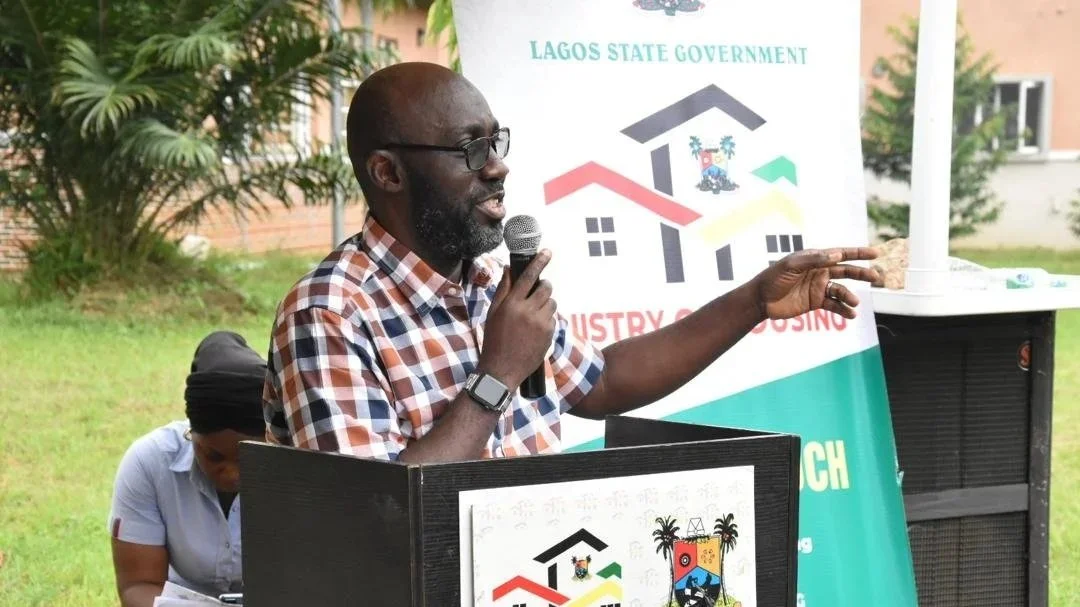
Permanent Secretary of the Ministry of Housing, Abdulhafis Toriola
The Lagos State Government has reaffirmed its commitment to bridging its three-million-unit housing deficit by leveraging robust Public Private Partnerships (PPP) and institutional innovation. Speaking during a performance review on 21 January 2026, the Permanent Secretary of the Ministry of Housing, Abdulhafis Toriola, revealed that the administration of Governor Babajide Sanwo-Olu has delivered approximately 11,000 housing units over the last six years, with a strategic roadmap to complete a total of 14,022 units by the first quarter of 2026.
This milestone underscores a shift in the state's housing policy, moving from sole reliance on direct budgetary funding to a "multi pronged" approach. By offering land as equity and providing 40% rebates on planning permits, the state has incentivised private developers to enter the affordable housing segment, a sector traditionally avoided due to high capital requirements and low margins.
Prioritising Completion and Asset Recovery
To meet the 2026 target, the Ministry of Housing has intensified oversight on several critical "high impact" sites. Key projects currently undergoing accelerated construction include:
Sangotedo Phase II: A 528 unit scheme in Eti Osa East.
Egan-Igando Clusters II and III: Projected to yield 576 homes.
Ibeshe Phase II: A 192-unit development in Igbogbo Baiyeku.
In a significant policy expansion, the government is also targeting "abandoned buildings" as a secondary source of housing stock. By leveraging the Lagos State Real Estate Regulatory Authority (LASRERA) Law, the state intends to facilitate the completion of derelict properties. This initiative aims to simultaneously increase inventory, improve urban aesthetics, and eliminate criminal hideouts.
Financing and Affordability Mechanisms
The state’s strategy hinges on making homeownership accessible through the "Lagos Home Ownership Mortgage Scheme" (Lagos HOMS) and Rent-To-Own programs. These initiatives are designed to bypass the high interest rates of commercial banks, which the Commissioner for Housing, Moruf Akinderu-Fatai, noted can reach 20–25%.
Under the Rent-To-Own model, first-time buyers can take possession with a 5% down payment, repaying the balance over 10 years at single digit rates. Furthermore, the Lagos Building Investment Company (LBIC) continues to provide up to 70% financing for qualified residents, ensuring that the ₦101.6 billion allocated for Housing in the 2025/2026 fiscal cycle translates into tangible residency for low-income earners.
Lagos State’s 2026 housing roadmap reflects a pragmatic acknowledgement that government resources alone cannot solve the housing crisis. The integration of private sector capital, coupled with aggressive asset recovery of abandoned structures, provides a scalable model for urban renewal. For investors and policymakers, the success of this strategy will depend on maintaining project timelines and ensuring that the "affordability" label remains consistent with the economic realities of Lagos residents.
