
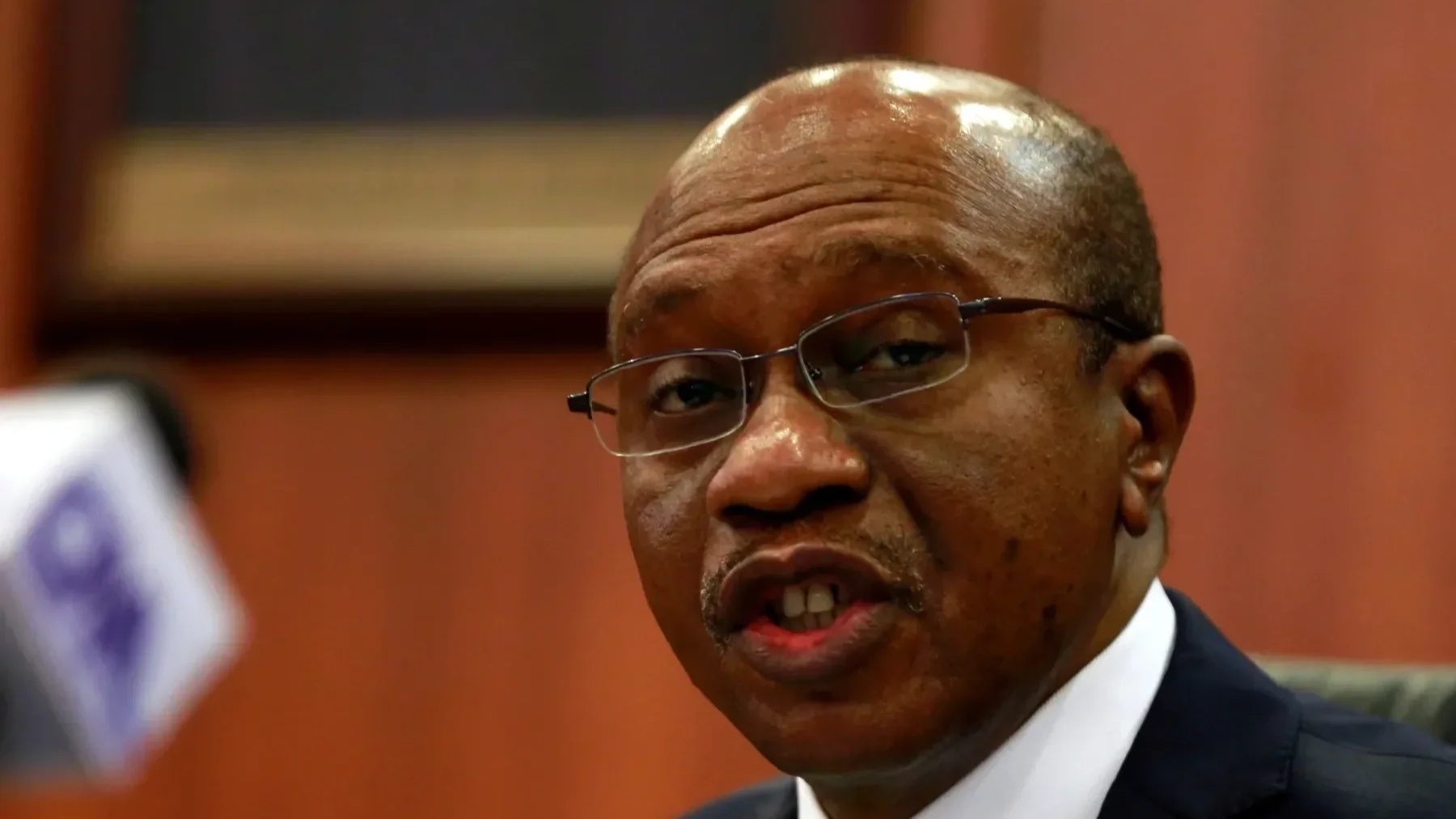
Godwin Emefiele, Former Governor of the Central Bank of Nigeria
A prosecution witness has provided detailed testimony regarding cash transfers in the ongoing ₦1.6 billion housing-related fraud trial involving the former Governor of the Central Bank of Nigeria (CBN), Godwin Emefiele. Testifying before the High Court of the Federal Capital Territory, the witness outlined a series of financial transactions allegedly linked to the procurement of properties, highlighting significant irregularities in the management of funds intended for housing developments.
Testimony on Financial Irregularities
During the court proceedings, the witness, an operative of the Economic and Financial Crimes Commission (EFCC), presented evidence of how funds were moved through multiple corporate accounts. According to the testimony, the sum of ₦1.6 billion was purportedly diverted under the guise of contracts for the provision of housing and office renovations.
The witness detailed specific instances where payments were made to contractors who, upon investigation, allegedly failed to execute the projects or channeled the funds back to entities controlled by associates of the former CBN Governor. These findings form the crux of the prosecution’s argument that public funds were systematically misappropriated through the real estate sector.
Implications for the Housing Sector
This trial underscores the critical vulnerabilities within Nigeria’s institutional housing finance and procurement frameworks. For policymakers and investors, the case highlights the necessity for heightened transparency and more rigorous auditing processes in government-led housing initiatives.
The diversion of ₦1.6 billion represents a significant loss of capital that could have otherwise addressed the national housing deficit, which currently requires trillions of naira in investment to bridge. The use of property acquisition as a vehicle for money laundering remains a primary concern for regulatory bodies, including the Nigeria Financial Intelligence Unit (NFIU).
Judicial Proceedings and Next Steps
Defence counsel maintained their position on the innocence of the accused, challenging the admissibility of certain documents presented by the prosecution. The court has adjourned the matter to allow for the cross examination of the witness and the presentation of further evidence.
The outcome of this trial is expected to set a precedent for corporate governance within Nigeria's apex financial institutions and the broader construction industry. It serves as a reminder that the integrity of the housing market is inextricably linked to the transparency of the financial systems that fund it.
As the ₦1.6 billion fraud trial progresses, the detailed evidence regarding cash transfers and property links provides a stark look at the intersection of high finance and real estate procurement. For the housing industry, the primary takeaway is the urgent need for structural reforms to ensure that funds earmarked for urban renewal and housing supply are protected from administrative malpractice.
