
FG Validates Updated National Policy to Combat Land Degradation and Desertification
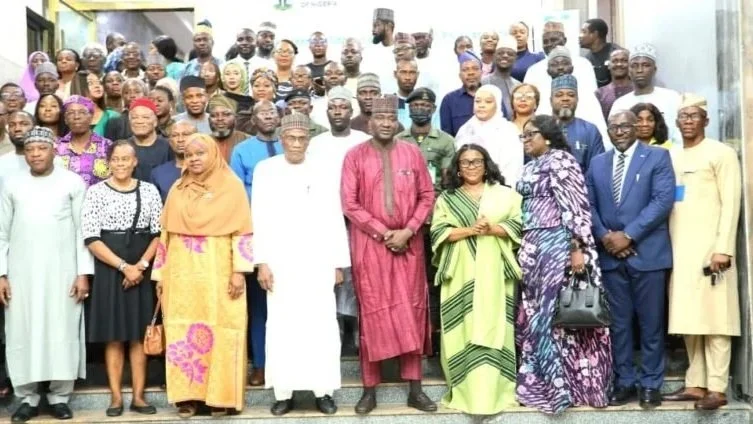
Federal Government of Nigeria has updated The National Policy designed to mitigate the escalating threats of desertification, land degradation, and drought
The Federal Government of Nigeria has officially validated an updated National Policy designed to mitigate the escalating threats of desertification, land degradation, and drought (DLDD). During a validation workshop held in Abuja on Tuesday, 20 January 2026, the Minister of Environment, Malam Balarabe Lawal, emphasised that the revised framework is essential for enhancing environmental sustainability and safeguarding the socio-economic stability of millions of Nigerians.
The validation marks a pivotal conclusion to a review process that commenced in July 2025. This updated policy is intended to replace aging frameworks, incorporating modern strategies to address emerging environmental risks. According to the Ministry of Environment, the policy focuses on building climate resilience, establishing robust early warning systems, and fostering coordinated institutional action to protect vulnerable ecosystems, particularly in the country’s arid and semi-arid regions.
Malam Balarabe Lawal, represented by the Permanent Secretary of the Ministry, Mr Mahmud Kambari, noted that land degradation is no longer an abstract concept but a pressing reality that directly impacts agricultural productivity and water availability. "For farming and pastoral communities, drought means failed harvests, loss of livestock, and increased poverty," Lawal stated. He further explained that the policy is designed to be inclusive, recognising the unique ecological challenges faced by different zones across the 36 states and the Federal Capital Territory.
The initiative received significant support from the Agro-Climatic Resilience in Semi-Arid Landscapes (ACReSAL) project. Mr Abdulhamid Umar, the National Project Coordinator for ACReSAL, highlighted that land degradation remains a primary focus of their collaboration with the World Bank. The Food and Agriculture Organization (FAO) also commended the move, noting that the policy aligns with Nigeria’s international commitments under the United Nations Convention to Combat Desertification (UNCCD) and several Sustainable Development Goals (SDGs), including SDG 13 (Climate Action) and SDG 15 (Life on Land).
The revised policy places a strong emphasis on multi-sectoral partnerships. While the Federal Government will provide leadership, the Minister underscored that successful implementation requires active participation from the private sector, civil society, and local communities. Mrs Regina Nwaneri, Director of Desertification, Land Degradation, and Drought Management, added that the update was long overdue, as climate challenges have evolved to include more frequent sand and dust storms which were not adequately covered in previous frameworks.
Looking forward, the validation of this policy is expected to streamline interventions aimed at restoring degraded landscapes and securing food systems. By integrating landscape restoration with socio-economic development, the Federal Government aims to provide a long-term roadmap that balances environmental health with the livelihood needs of the Nigerian populace. This framework is anticipated to serve as a cornerstone for future environmental budgetary allocations and international development partnerships.
