
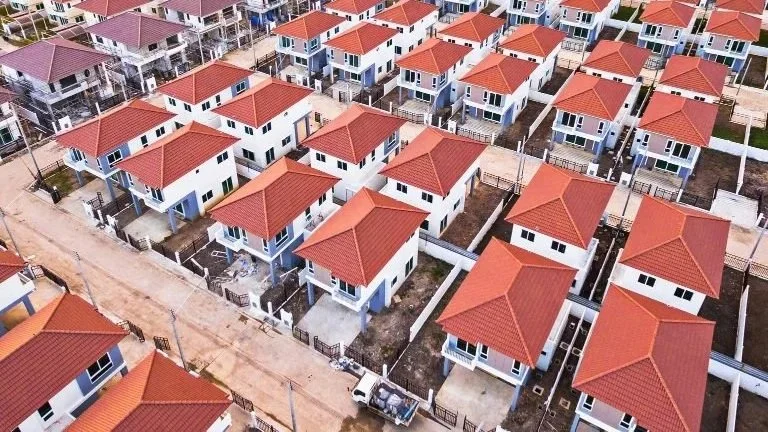
Nigeria Housing Estate
The Federal Government has expressed grave concern regarding Nigeria’s expanding housing deficit, warning that current shortfalls are deepening despite existing policy interventions. During recent stakeholder engagements within the built environment, government officials noted that the gap has reached critical levels, threatening social stability and national economic growth.
Drivers of the Housing Crisis
According to official data, Nigeria’s housing deficit currently extends into millions of units. This crisis is exacerbated by several compounding factors, primarily rapid urbanisation and a burgeoning population. In addition to demographic pressures, the sector is grappling with soaring construction costs and a lack of accessible, affordable housing finance for the average citizen.
The government highlighted that these deficiencies have intensified pressure on major urban centres. The results are increasingly visible through heightened housing insecurity, the proliferation of informal settlements, and severe overcrowding, particularly affecting low- and middle-income earners.
Strategic Interventions and Policy Reforms
To mitigate these challenges, the Federal Government maintains that a siloed approach is no longer viable. Addressing the deficit requires robust collaboration between the federal and state governments, private sector investors, and international development partners.
Key strategies currently being prioritised include:
Public-Private Partnerships (PPPs): Expanding the scope of private sector involvement to accelerate delivery.
Land Administration Reform: Improving systems to ensure easier access to land and title documentation.
Local Material Promotion: Reducing reliance on imports by incentivising the use of indigenous building materials to lower costs.
Urban Renewal: Implementing programmes aimed at revitalising decaying urban infrastructures.
Data and Sustainability
Government officials also emphasised the necessity of accurate housing data to inform policy decisions. Consistent data collection is viewed as a prerequisite for attracting long-term investment into the sector. Furthermore, reforms in housing finance are being streamlined to create a more sustainable environment for mortgage providers and developers alike.
The Federal Government has reaffirmed its commitment to implementing long-term solutions intended to bolster housing supply and improve urban planning across the federation. While the government is spearheading these reforms, it has called upon industry stakeholders to align their operations with national housing objectives to ensure every Nigerian has access to decent and affordable shelter. Looking forward, the success of these initiatives will depend heavily on the effective execution of land use reforms and the consistency of the current policy framework.
