
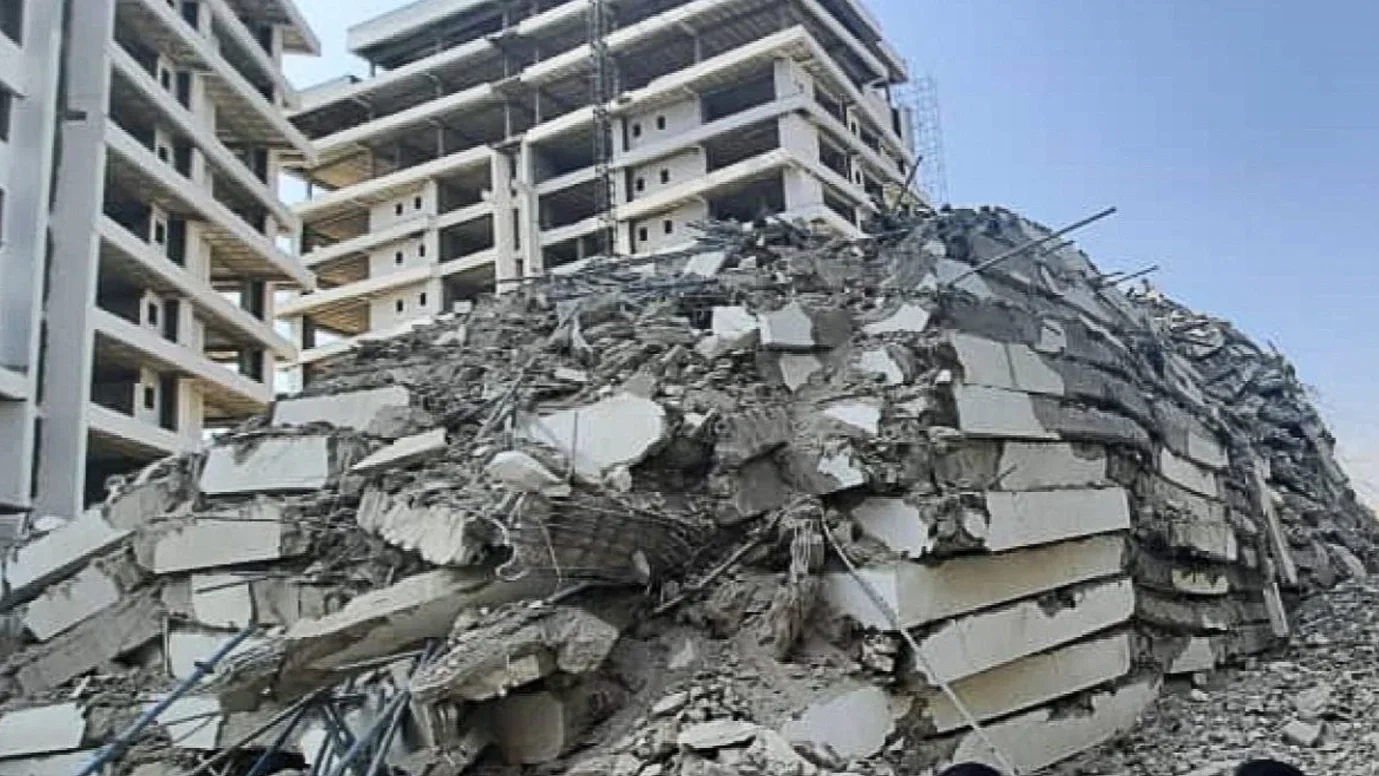
Structural Risks Rise as Developers Skip Soil Testing in Nigeria
Nigeria’s recurring building collapse incidents are increasingly linked to inadequate soil testing, with construction experts warning that weak geotechnical investigations continue to undermine the safety of urban developments across the country.
Industry professionals argue that many structural failures originate from poorly assessed foundations, where developers either skip soil testing entirely or rely on incomplete reports. Without accurate soil data, engineers cannot design foundations capable of supporting a building’s load, significantly increasing the risk of structural failure.
Soil Testing and the Foundation of Structural Safety
Soil testing is a critical scientific process used to determine the load-bearing capacity and composition of the ground before construction begins. The results guide engineers in selecting appropriate foundation systems capable of withstanding structural loads, groundwater conditions, and environmental pressures such as heavy rainfall or erosion.
When this process is ignored or conducted improperly, buildings may be erected on unstable soil conditions such as weak clay layers, loose sand, or waterlogged ground. Over time, these conditions can lead to uneven settlement, cracks in structural elements, and eventual collapse.
Experts emphasise that even neighbouring plots can have significantly different soil characteristics. As a result, assumptions based on nearby structures may lead to serious design errors if proper geotechnical investigation is not carried out.
Scale of the Building Collapse Problem
The impact of poor construction practices is evident in Nigeria’s building collapse statistics. According to the Building Collapse Prevention Guild (BCPG), the country recorded approximately 679 building collapse incidents between 1971 and 2025, resulting in at least 1,639 deaths.
Lagos State accounts for a large proportion of these incidents due to rapid urbanisation and intense construction activity. Between 2022 and September 2025, around 145 building collapses were reported nationwide, with Lagos again recording the highest number of cases.
Beyond the human toll, these incidents also carry significant economic consequences, including loss of property investments, displacement of residents, and declining confidence in the construction and real estate sectors.
Developer Negligence and Cost-Cutting Practices
Industry analysts point to cost-cutting behaviour by some developers as a major factor behind inadequate soil testing. In highly competitive real estate markets, pressure to reduce construction costs or accelerate project timelines can result in developers bypassing essential engineering procedures.
Geotechnical investigations often represent a small fraction of overall project costs. However, some developers still consider them unnecessary expenses and proceed with construction without the required analysis.
Structural engineers warn that ignoring soil testing effectively places buildings at risk from the outset. Without understanding soil composition and bearing capacity, foundations may be designed incorrectly, leading to gradual structural weakening.
Regulatory and Enforcement Challenges
Weak enforcement of building regulations has also contributed to the crisis. In many states, building control agencies lack the resources needed to effectively inspect projects and verify compliance with construction standards.
As a result, some projects receive approvals without rigorous verification of soil investigation reports or structural design compliance. In other cases, enforcement actions against unsafe buildings are delayed or inconsistently applied.
Experts argue that stronger regulatory oversight is necessary to ensure compliance with professional standards and prevent unsafe construction practices.
Capacity Issues Within the Construction Sector
Concerns have also been raised about the technical capacity of some firms conducting soil investigations. While Nigeria has many qualified geotechnical professionals, not all firms possess modern equipment or sufficient technical expertise.
In some cases, reports may be produced without proper field testing, a practice sometimes described as “table-top reporting.” Such reports can misrepresent soil conditions and lead engineers to design foundations based on inaccurate data.
This combination of regulatory gaps, developer pressure, and professional malpractice creates systemic risks within the construction sector.
Economic and Social Consequences
The consequences of building collapse extend far beyond structural damage. Each incident represents a serious public safety issue, often resulting in fatalities, injuries, and long-term trauma for affected families.
Economic losses are also substantial. Collapsed buildings destroy capital investments, disrupt commercial activity, and place financial strain on property owners and insurance systems. Repeated incidents can also damage investor confidence in Nigeria’s real estate and construction markets.
Policy and Industry Solutions
Construction experts increasingly advocate for stricter enforcement of geotechnical standards to reduce the risk of building collapse. A commonly proposed policy is a “No Soil Report, No Development Permit” framework, which would require verified soil investigation reports before construction approvals are granted.
Digital verification systems and stronger collaboration between professional bodies, engineers, and regulatory agencies could also improve transparency in the construction approval process.
Outlook
Nigeria’s building collapse crisis reflects broader structural challenges within the construction and urban development sectors. While poor soil testing is not the sole cause, it remains a critical factor that can determine whether a building’s foundation is capable of supporting long-term structural stability.
Experts argue that addressing the issue requires coordinated reforms involving developers, regulators, and professional institutions. Without stronger enforcement of geotechnical standards, Nigeria’s rapidly expanding cities may continue to face preventable structural failures that threaten lives and economic investment.
