
Experts Warn Lagos Faces Severe Flood Risks, Urge Immediate Climate Action
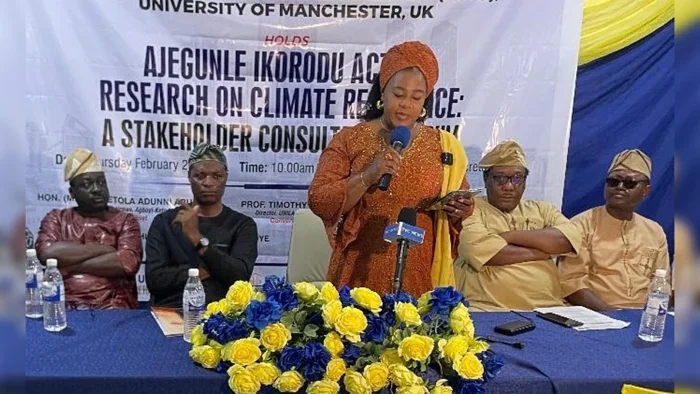
Researchers Highlight Rising Flood Threats in Lagos, Call for Resilience Measures
Climate and urban development researchers have issued a stark warning that flood risks in Lagos are intensifying, driven by shifting weather patterns, rapid urbanisation and inadequate infrastructure, and require urgent, coordinated climate-resilient action to protect vulnerable communities and infrastructure.
The alert was delivered at a stakeholders’ consultative forum on the Ajegunle-Ikorodu Action Research on Climate Resilience, hosted by the Centre for Housing and Sustainable Development (CHSD) at the University of Lagos (UNILAG) and the African Cities Research Consortium (ACRC) in the Agboyi-Ketu Local Council Development Area. Experts outlined evidence of burgeoning flood exposure and stressed the need for forward-looking mitigation planning.
Lagos at Growing Risk of Flood Hazards
According to the forum’s lead researchers, Lagos’s precipitation levels are projected to double by 2050, and climate-induced sea-level rise may place nearly half of the city under water by 2100 without significant adaptation measures. The most at-risk zones are low-lying coastal and lagoon-front communities such as Ajegunle-Ikorodu, where more than 44,000 residents and over 6,000 buildings remain exposed to severe flooding hazards.
Flooding in Lagos is not only driven by excessive rainfall. Experts cited a complex interplay of ocean backflow, blocked drainage systems, waste accumulation and rapid, unplanned urban growth as compounding factors that overload existing infrastructure capacity.
Infrastructure Stress and Urban Resilience Challenges
Current drainage designs in many parts of the metropolis are calibrated for limited storm events and are insufficient for projected future extremes under mid- and high-emissions climate scenarios. Researchers recommend that drainage channels be expanded, critical infrastructure be elevated, and urban development standards updated to accommodate more aggressive rainfall patterns and tidal surges.
These local conditions reflect broader climate challenges facing Lagos State. Earlier official assessments have highlighted the economic and social costs of climate inaction, with estimates suggesting that delayed adaptation could impose up to $22–$29 billion in climate-related losses on the state’s infrastructure and economy.
Flooding has also had significant human impacts. Recent reports indicate that inundation events have displaced thousands of residents and affected tens of thousands across the state, underscoring the urgency of structural resilience measures.
Policy and Community Response Imperatives
Experts at the forum emphasised that climate resilience in Lagos will require both top-down policy action and community-driven implementation. They called for targeted investment in upgraded drainage systems, flood early warning systems, flood-resilient housing solutions and strategic land-use planning supported by robust governance frameworks.
Community involvement in data collection and resilience planning was identified as particularly valuable; integrating local insights can improve the precision of risk assessments and tailor solutions to neighbourhood-scale vulnerabilities. Similar community-focused initiatives elsewhere in Lagos have illustrated how local knowledge and institutional partnerships can strengthen climate adaptation outcomes.
Strategic Investment for Climate Resilience
The forum’s findings underline that without urgent, coordinated action, Lagos’s flood exposure will continue to escalate, endangering lives, property and economic activity across the metropolis. Strengthening infrastructure, updating planning standards and fostering collaborative resilience strategies must be priorities for government, private sector stakeholders and civil society alike.
For investors, policymakers and urban planners, the evidence points to a clear imperative: proactive adaptation and climate-informed development must be integrated into Lagos’s long-term growth agenda to safeguard the city’s future.
