
Zulum Commissions 12 Staff Quarters for FUHSA in Azare to Strengthen Health Education Infrastructure
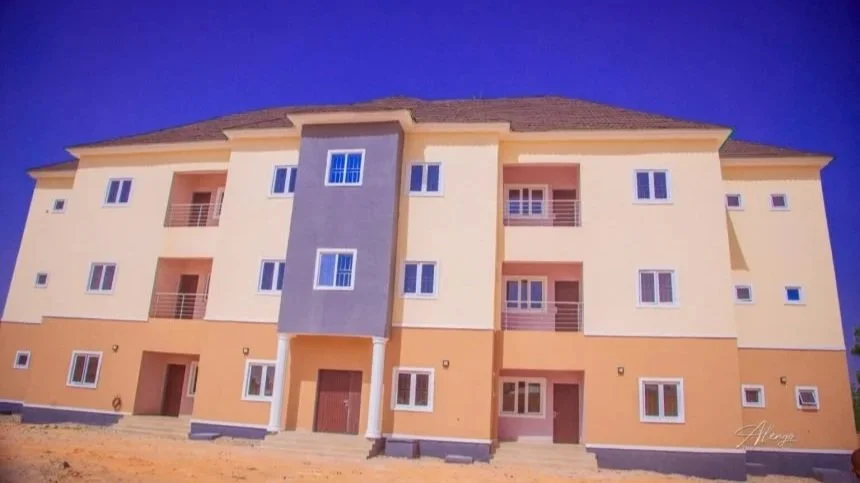
Zulum Strengthens Medical Education Capacity with Staff Housing Project in Azare
Babagana Umara Zulum has commissioned 12 newly constructed staff quarters at the Federal University of Health Sciences, Azare (FUHSA), reinforcing the Borno State Government’s commitment to expanding housing and institutional infrastructure in the education and health sectors. The commissioning took place in Azare, marking another milestone in collaborative development efforts between the state and federal institutions.
According to a report by Housing TV Africa, the project aims to improve staff welfare and support the operational capacity of the relatively new specialised health sciences university.
Enhancing Institutional Capacity Through Staff Housing
The 12 housing units are designed to provide on-campus residential accommodation for academic and administrative staff. The provision of dedicated staff quarters addresses a key challenge facing tertiary institutions in emerging regions: attracting and retaining qualified personnel.
Access to secure and proximate housing remains a critical factor in faculty recruitment, particularly for specialised institutions such as health sciences universities. By delivering purpose-built accommodation, the state government seeks to create a more enabling work environment that supports teaching, research, and clinical training.
Governor Zulum emphasised that infrastructure development in the education sector remains central to long-term human capital formation, particularly in northern Nigeria where healthcare capacity requires sustained investment.
Strategic Importance of FUHSA
The Federal University of Health Sciences, Azare was established to expand Nigeria’s medical education capacity and reduce the country’s doctor-to-patient ratio gap. Specialised universities such as FUHSA play a strategic role in training healthcare professionals in underserved regions.
Staff accommodation directly influences institutional stability. Universities that provide residential facilities for lecturers and senior staff typically report improved retention rates and stronger academic continuity. For policymakers, the linkage between housing and institutional performance remains a measurable development lever.
The commissioning of the quarters aligns with broader federal and state efforts to strengthen tertiary healthcare education and decentralise academic infrastructure beyond major metropolitan centres.
Public Infrastructure as a Development Tool
Governor Zulum’s administration has consistently prioritised infrastructure delivery across housing, education, and healthcare as part of its reconstruction and stabilisation agenda. Although FUHSA is located outside Borno State, intergovernmental collaboration reflects the broader regional development strategy in the North-East and surrounding states.
Investment in staff quarters may appear modest in scale 12 units but such projects carry multiplier effects. On-campus housing reduces transportation pressure, improves security oversight, and enhances community integration for faculty members.
For investors and development stakeholders, these interventions highlight a policy direction that links physical infrastructure with service delivery outcomes.
Implications for Education and Health Policy
Nigeria continues to face healthcare workforce shortages. According to data from the Federal Ministry of Health, the country’s doctor-to-population ratio remains significantly below World Health Organization recommendations. Expanding medical training institutions without parallel infrastructure investment risks limiting capacity utilisation.
Staff housing therefore becomes a structural enabler. It reduces attrition, stabilises faculty strength, and supports the scaling of enrolment capacity over time.
The FUHSA quarters represent a targeted intervention within this broader framework of institutional strengthening.
Conclusion
The commissioning of 12 staff quarters at the Federal University of Health Sciences, Azare underscores a deliberate approach to aligning housing infrastructure with education and healthcare delivery objectives. While modest in scale, the project reflects a policy emphasis on creating supportive environments for specialised institutions.
For policymakers and development observers, the initiative reinforces a critical insight: sustainable improvements in health and education outcomes require parallel investment in physical infrastructure, human capital, and institutional stability.
