The Busiest City in Africa: A 2026 Deep Dive into Urban Chaos and Opportunity
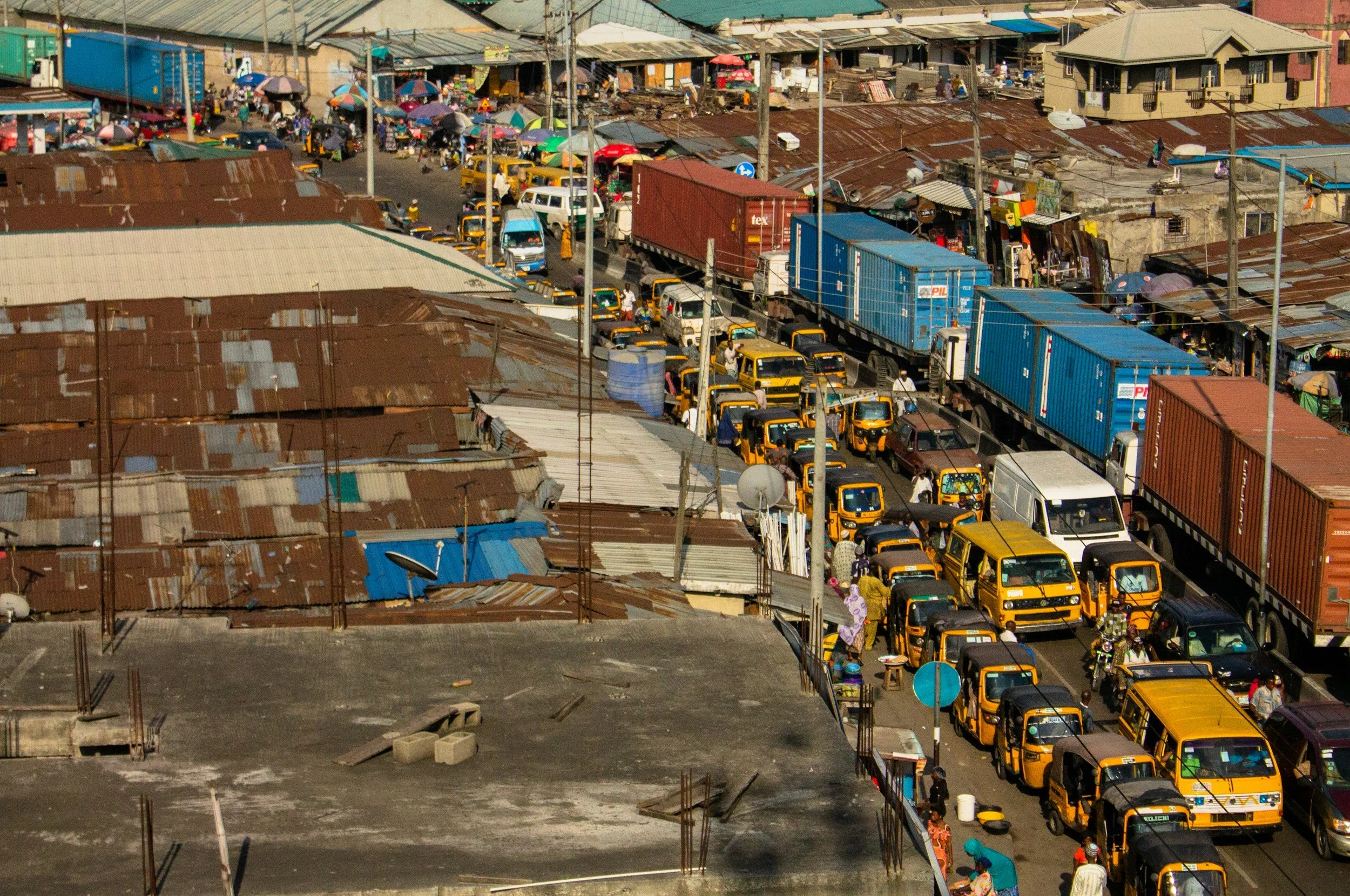
Africa is home to the fastest-growing urban centers on the planet. To ask which city is the "busiest" is to step into a whirlwind of sensory overload, where the answer depends entirely on whether you are looking at a census map, a traffic report, or a stock exchange.
As of 2026, the title of the busiest city in Africa is shared by three distinct titans: Lagos for its sheer human energy, Cairo for its massive population, and Johannesburg for its economic weight.
1. Lagos, Nigeria: The Unrivaled King of Congestion
If your definition of "busy" is the time spent in a car, Lagos takes the crown without question. According to the 2026 Traffic Index, Lagos remains the most congested city in Africa, with an average one-way commute exceeding 68 minutes.
With a metropolitan population pushing past 17.8 million, Lagos is a 24-hour economy. From the tech startups in Yaba to the massive ports of Apapa, the city’s pulse is dictated by the "hustle." The sheer density of people per square kilometer makes it feel significantly busier than its North African rivals.
2. Cairo, Egypt: The Megacity of the North
In terms of pure numbers, Cairo is the largest metropolis in Africa. By mid-2026, Cairo’s metropolitan population is estimated to have surpassed 23.5 million.
Cairo’s "busyness" is a blend of ancient history and modern franticness. The city’s metro system is one of the busiest in the world, moving millions daily to keep the Egyptian economy—which accounts for two-thirds of the country’s GDP—running. While Lagos is chaotic, Cairo is grandly overwhelming, with massive infrastructure projects like the New Administrative Capital attempting to siphon off some of the central city's relentless pressure.
3. Johannesburg, South Africa: The Economic Engine
If "busy" means where the money moves, Johannesburg is the undisputed leader. Known as the "City of Gold," Jo’burg is the wealthiest city in Africa. It houses the Johannesburg Stock Exchange (JSE), the largest on the continent, and serves as the primary transit hub for Sub-Saharan Africa via OR Tambo International Airport.
While it has a lower population than Lagos or Cairo (roughly 6 million in the city proper, though much higher in the greater Gauteng region), its infrastructure supports a level of corporate activity that is unmatched elsewhere.
| City | Country | Population (Metro) | Primary "Busy" Factor |
|---|---|---|---|
| Cairo | Egypt | 23.5M+ | Total Population & Tourism |
| Lagos | Nigeria | 17.8M+ | Traffic & Trade Volume |
| Kinshasa | DR Congo | 18.5M+ | Growth Rate & Informal Trade |
| Johannesburg | South Africa | 6.1M+ | Finance & Aviation |
| Nairobi | Kenya | 7.1M+ | Tech & "Silicon Savannah" |
The Rising Stars: Kinshasa and Nairobi
We cannot discuss the busiest cities without mentioning Kinshasa. Now the second-most populous city in Africa, the capital of the DRC is experiencing an urban explosion. Its informal economy is a massive, unrecorded engine of activity. Meanwhile, Nairobi has cemented its status as the "Silicon Savannah," where the busyness is digital and entrepreneurial, attracting global venture capital at record rates.
Summary: Which One Wins?
For Traffic and Hustle: Lagos is the busiest.
For Population and Size: Cairo is the busiest.
For Business and Wealth: Johannesburg is the busiest.
Navigating these cities requires more than just a GPS; it requires a deep appreciation for the resilience and pace of the African spirit. Whether you are stuck in a Lagos "go-slow" or navigating a Cairo bazaar, you are witnessing the future of global urbanization.