
Tinubu Says Governors No Longer Borrow to Pay Salaries
President Bola Ahmed Tinubu has said Nigeria has overcome significant economic challenges under his administration, stating that state governments no longer rely on bank loans to pay workers’ salaries.
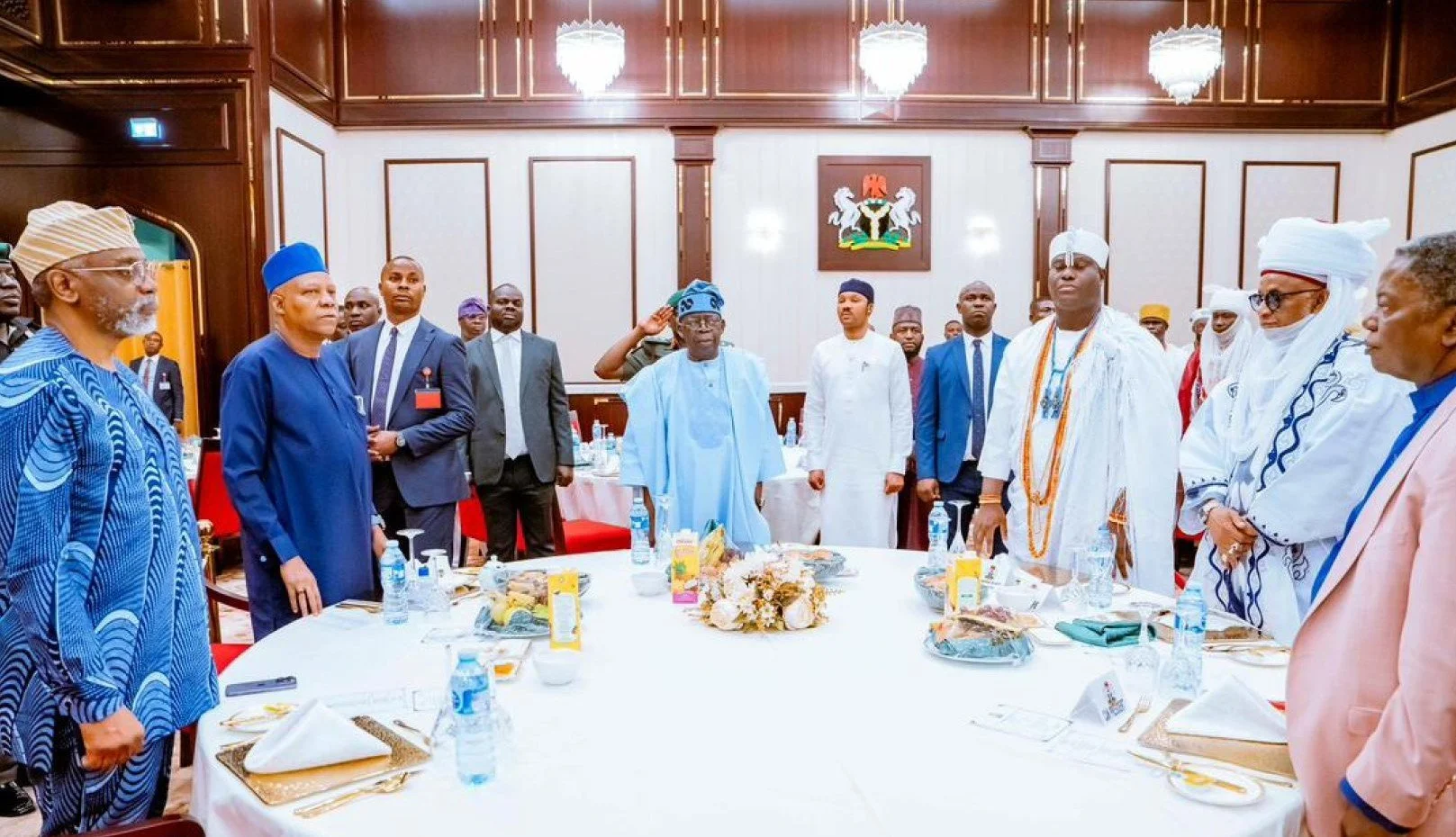
The President made the remarks while hosting religious and traditional leaders for an interfaith breaking of the fast at the Presidential Villa in Abuja. He said fiscal reforms introduced since 2023 have strengthened government finances and improved the fiscal position of sub-national governments.
According to Tinubu, the reforms have helped stabilise the economy after what he described as a difficult transition period.
“Today I can say with pride and joy that we have survived. No governor in this country is running around the banks to borrow money to pay the salaries of their workers,” the President said.
Economic Reforms and Fiscal Adjustments
Tinubu’s administration introduced several major economic reforms shortly after taking office, including the removal of fuel subsidies and adjustments to foreign exchange policies.
These measures were designed to reduce fiscal pressure on the federal government, improve public finances, and increase revenue allocations to states.
Analysts note that the end of petrol subsidy payments significantly increased funds available in the Federation Account, resulting in higher monthly allocations to state governments.
Higher allocations have enabled several states to strengthen budget implementation, clear salary backlogs and improve funding for infrastructure and social services.
Improved Fiscal Position of States
Nigeria’s 36 state governments rely heavily on allocations from the Federation Account, which distributes revenue generated from oil, taxes and other sources among federal, state and local governments.
When federal revenue expands, the distributable pool also increases, giving states greater fiscal capacity.
According to the Presidency, the improved revenue environment has reduced the need for states to rely on short-term borrowing to meet salary obligations and other recurrent expenditures.
Tinubu also said pensioners were beginning to receive relief as the government works to address longstanding welfare issues affecting retirees.
Commitment to Economic Stability
The President reaffirmed his commitment to sustaining economic reforms and improving national development outcomes.
He said the administration would continue to prioritise investments in critical sectors such as agriculture, education and infrastructure to support long-term growth and employment.
Tinubu also acknowledged ongoing security challenges but assured Nigerians that the government remains determined to restore stability and protect national unity.
Outlook
The President’s remarks come amid continuing debate about the economic impact of recent reforms. While government officials argue that fiscal adjustments are improving public finances, critics say the policies have also contributed to rising living costs.
For policymakers and investors, the key question remains whether fiscal stabilisation and structural reforms will translate into sustained economic growth, improved state finances and broader improvements in living standards across Nigeria.
