
Strengthening Nigeria’s Economy: Tinubu and World Bank Discuss Infrastructure and Fiscal Reforms
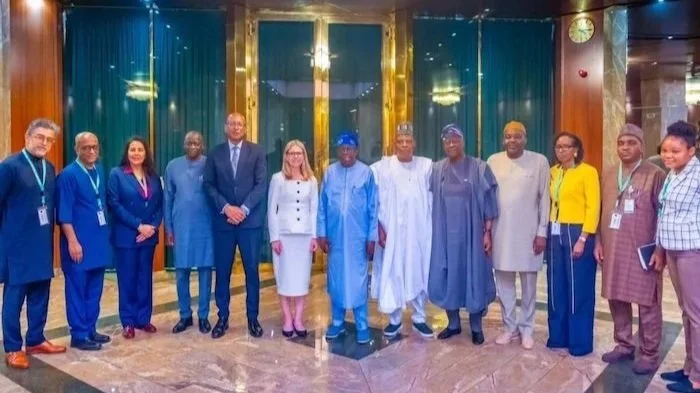
Tinubu Reaffirms Commitment to Economic Reforms, Assures World Bank of No Reversal
President Bola Tinubu has reinforced his administration’s dedication to Nigeria’s structural economic reforms, providing formal assurance to the World Bank that the government will not rescind its current policy direction despite prevailing domestic challenges. During a high-level consultative meeting at the State House on Tuesday, the President met with a World Bank delegation led by Anna Bjerde, Managing Director of Operations, to discuss the trajectory of the nation’s macroeconomic stability and long-term growth objectives.
President Tinubu characterized the reform agenda as a vital mechanism for stabilizing Africa’s largest economy and creating sustainable opportunities for its expanding population. He acknowledged that while the initial phase of these reforms has introduced significant hardship for Nigerian citizens, abandoning the path now would jeopardize the nation’s long-term developmental prospects. The administration remains focused on a firm policy course intended to deliver inclusive growth through strategic interventions in infrastructure, agriculture, and fiscal management.
A central component of the discussions involved the administration’s boldest fiscal moves to date: the removal of the fuel subsidy and the unification of the foreign exchange market. According to President Tinubu, these decisions were necessary to correct decades of structural distortions. The President noted that recent data indicates inflation is beginning to decelerate and the Naira is exhibiting increased stability milestones he attributed to consistent policy implementation and enhanced transparency in public resource management.
Responding to the President’s briefing, Anna Bjerde commended the Nigerian government’s resolve. She noted that Nigeria has become a global reference point for policymakers, as many nations often retreat from difficult reforms when faced with public pressure. Bjerde highlighted that the World Bank’s current public sector portfolio in Nigeria stands at approximately $17 billion, positioning the country as one of the institution’s largest global clients.
The World Bank’s engagement strategy remains aligned with Nigeria’s ambition to achieve a $1 trillion economy and a seven per cent annual growth rate. Key areas of future collaboration identified during the meeting include:
Agricultural Modernization: Expanding mechanized farming and improving access to high quality seedlings and fertilizers.
Youth Employment: Leveraging digital innovation and human capital investment to address the needs of a growing youth demographic.
Innovative Financing: Exploring new models to reduce investment risks and bypass excessive intermediaries to ensure funds reach critical sectors directly.
Bjerde further disclosed that the World Bank is preparing a new Development Policy Operation (DPO) to provide direct support for Nigeria’s budget and reform agenda. This instrument is designed to bolster the government’s efforts in poverty reduction and infrastructure development.
In his concluding remarks, President Tinubu reiterated that while Nigeria will continue to engage with international partners like the World Bank and the International Finance Corporation (IFC), the government maintains full ownership of its reform agenda. He emphasized that the nation's future prosperity is contingent upon the continued discipline and courage of its leadership in the face of global and domestic economic pressures.
