Nigeria Signs Comprehensive Partnership with UAE to Boost Non-Oil Exports
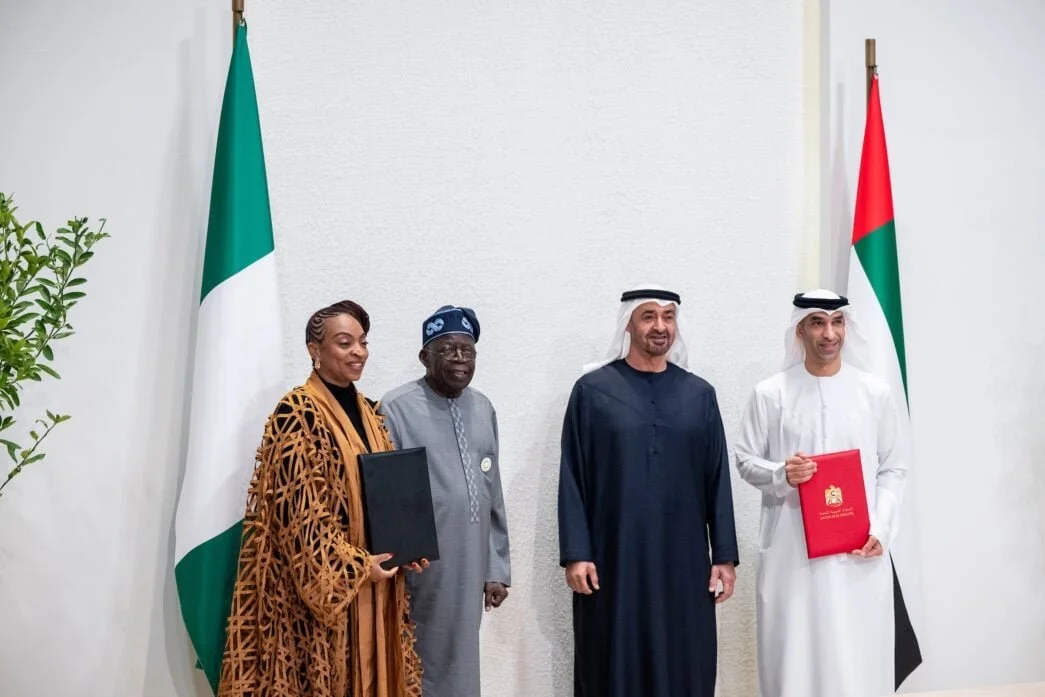
Nigeria and the United Arab Emirates (UAE) signed a historic Comprehensive Economic Partnership Agreement (CEPA)
On January 13, 2026, the Federal Republic of Nigeria and the United Arab Emirates (UAE) signed a historic Comprehensive Economic Partnership Agreement (CEPA) designed to transform bilateral economic ties. The agreement, witnessed by President Bola Tinubu and UAE President Sheikh Mohamed bin Zayed Al Nahyan on the sidelines of the Abu Dhabi Sustainability Week, will liberalise over 7,000 Nigerian products for duty-free entry into the UAE market. This strategic accord marks one of Nigeria's most ambitious bilateral trade efforts to date, aiming to significantly boost non-oil exports, attract high-quality foreign direct investment (FDI), and create sustainable jobs for Nigeria’s youthful population.
Tariff Elimination and Market Access
The CEPA establishes a clear roadmap for the removal of trade barriers between the two nations. Under the agreement, a total of 13,558 products will see tariff reductions or complete elimination over the next five years.
The UAE’s Tariff Commitments: The UAE will eliminate tariffs on 7,315 products imported from Nigeria. The schedule for this liberalisation includes:
Immediate Elimination: 2,805 products (38.3%), including fish, seafood, cereals, oilseeds, cotton, and pharmaceuticals.
Three-Year Phase-out: 1,468 products (20.1%).
Five-Year Phase-out: 3,042 products (41.6%), covering machinery, vehicles, and apparel.
Nigeria’s Tariff Commitments: Reciprocally, Nigeria will liberalise 6,243 products imported from the UAE, focusing on industrial inputs to strengthen domestic manufacturing:
Immediate Elimination: 3,949 products (63.3%).
Five-Year Phase-out: 2,294 products (36.7%).
Excluded Items: Nigeria has excluded 123 sensitive products to protect local industries, and the national Import Prohibition List remains in full effect.
Deepening Trade in Services and Investment
Beyond the trade of physical goods, the CEPA introduces extensive commitments in the services sector. Nigeria has opened 99 subsectors across 10 key industries, including:
Professional Services: Business, communication, and financial services.
Infrastructure & Logistics: Transport, construction, and environmental services.
Social & Lifestyle: Health, tourism, and recreational services.
To facilitate ease of doing business, the agreement allows Nigerian enterprises to establish a commercial presence in the UAE through subsidiaries or branches. Furthermore, Nigerian business visitors can now stay in the UAE for up to 90 days within a 12-month period, while intra-corporate transferees (managers and specialists) can relocate for renewable three-year terms.
Strategic Alignment and Economic Impact
Minister of Industry, Trade and Investment, Dr Jumoke Oduwole, emphasised that the CEPA provides a "clear and competitive pathway" for Nigerian industrial exports into one of the world's most dynamic trading hubs. The agreement also includes a dedicated Rules of Origin chapter to ensure that only goods genuinely produced in either Nigeria or the UAE benefit from the preferential tariffs, thereby preventing trade deflection from third-party nations.
The pact is expected to anchor significant infrastructure deals, with UAE investors already signaling interest in projects such as the Lagos–Calabar Coastal Road. President Tinubu described the deal as a practical step toward industrialisation, stating that it "gives UAE investors clearer confidence to back Nigeria's productive economy."
Conclusion
The Nigeria-UAE CEPA represents a pivotal shift in Nigeria's economic diplomacy, moving the nation closer to its goal of $30 billion in annual climate and green industrial finance. By securing duty-free access to a major global logistics hub, Nigeria is not only incentivising domestic manufacturers to scale production for export but also solidifying its position as the preferred gateway for international investors targeting the 1.4 billion-person African Continental Free Trade Area (AfCFTA). Effective implementation by the Nigeria Customs Service and other agencies will be critical to ensuring that the private sector fully capitalises on these newly opened corridors.