
CBN NEC Briefing: Cardoso Highlights Policy Gains, Warns Excess Liquidity and 2027 Election Risks
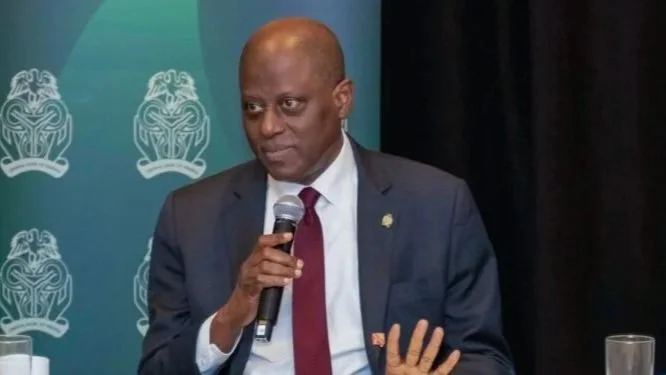
Central Bank of Nigeria Governor Olayemi Cardoso
At the National Economic Council (NEC) Conference on 10 February 2026, Central Bank of Nigeria (CBN) Governor Dr Olayemi Cardoso delivered a detailed update on the state of Nigeria’s economy, outlining key performance metrics, ongoing monetary reforms, and forward-looking risks particularly excess liquidity and fiscal pressures related to the upcoming 2027 general elections. His remarks emphasised both structural progress and persistent vulnerabilities that require coordinated policy responses.
Sharp Reduction in Ways & Means Financing
Governor Cardoso reported a dramatic decline in Ways & Means financing the short-term overdraft facility the CBN provides to the Federal Government from 8.68% of GDP in 2022 to 0.69% in 2025. This sharp contraction reflects an explicit effort to curtail deficit financing that historically undermined monetary control and contributed to inflationary pressures.
Long-Term Growth Context
Cardoso contextualised monetary developments against Nigeria’s long-term growth record, noting that the economy has averaged just 1.8% annual growth over the past 18 years. This rate lags Nigeria’s population growth and highlights structural constraints such as low productivity, infrastructure deficits and limited diversification beyond oil exports.
Money Supply Growth and Policy Tightening
The CBN Governor disclosed that money supply expanded by 13%, indicating continued liquidity pressures within the financial system. To counter inflationary risks, the Monetary Policy Rate (MPR) has been raised cumulatively by 875 basis points, signalling a sustained commitment to tightening monetary conditions.
Historic Intervention Levels and Policy Shift
Direct interventions by the Central Bank reached an unprecedented ₦10.93 trillion, Cardoso said, underscoring the scale of prior quasi-fiscal activity designed to stabilise markets. However, he emphasised that the CBN has now phased out quasi-fiscal development interventions and is returning to orthodox monetary policy focused squarely on price stability and inflation control.
External Reserve Accretion Signals Confidence
In addition to liquidity and policy shifts, Cardoso reported that Nigeria’s external reserves rose to around $49 billion as of early February 2026, reflecting improved investor confidence and stronger balance-of-payments fundamentals under the current policy regime. The figure represents a notable increase from prior reserve levels and supports the CBN’s ability to defend the naira and manage external shocks.
Persistent Excess Liquidity and Election Cycle Risks
Despite these gains, Governor Cardoso cautioned that excess liquidity remains a core macroeconomic risk. Elevated volumes of money circulating in the banking system can reignite inflationary pressures and weaken monetary policy transmission if not tightly controlled. He specifically warned that the 2027 general election cycle could inject large sums of liquidity into the economy, potentially undermining reform gains if fiscal discipline wanes.
Cardoso reiterated that monetary policy alone cannot ensure sustained stability. He highlighted structural drivers such as food supply shocks, high energy costs and infrastructure deficits that weaken policy effectiveness, and called for enhanced fiscal discipline, revenue mobilisation, efficient public spending and stronger coordination between fiscal and monetary authorities.
Subnational Influence and Policy Coordination
An additional theme of the NEC briefing was the rising influence of sub-national governments on macroeconomic stability. With state governments controlling roughly half of federation revenues, Cardoso stressed that their fiscal behaviours significantly influence liquidity conditions, price stability and broader economic outcomes.
Forward Outlook
Governor Cardoso’s NEC briefing presented a holistic view of Nigeria’s macroeconomic trajectory, significant progress in policy normalisation, robust foreign reserves, and leaner deficit financing; but ongoing risks from liquidity overhang, structural cost pressures, and political-economic dynamics playing out as the 2027 elections approach. For investors, policymakers and analysts, the CBN’s messages underscore the critical importance of policy consistency, fiscal discipline and cross-institutional coordination in safeguarding Nigeria’s stability gains while advancing growth and structural transformation.
