NGX Crosses ₦100 Trillion Market Capitalisation as Concentrated Blue-Chip Rally Lifts Investor Confidence
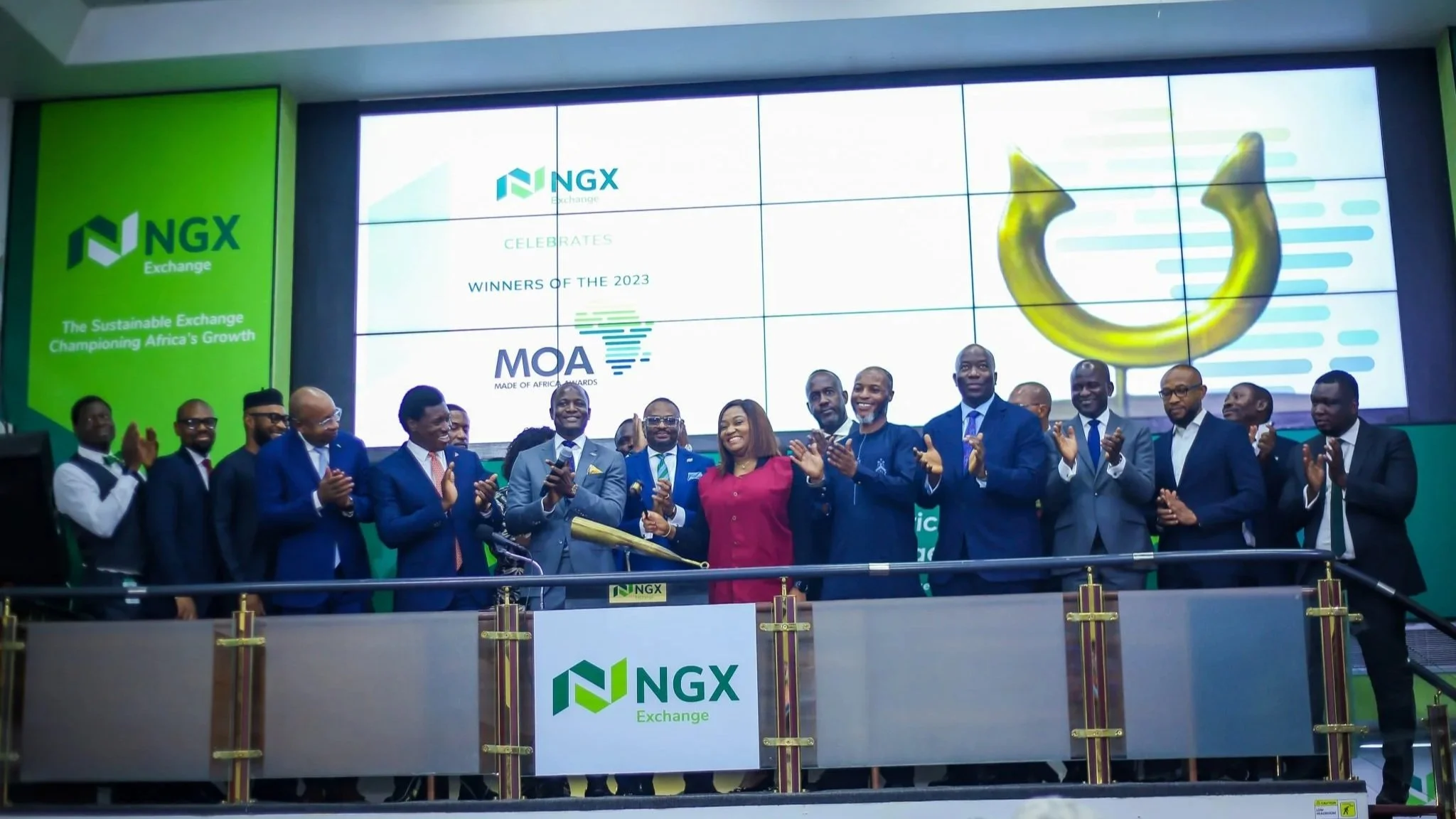
NGX Crosses ₦100 Trillion Market Capitalisation
Nigeria’s equities market has entered a new valuation phase, with the Nigerian Exchange (NGX) surpassing the ₦100 trillion market capitalisation threshold for the first time, underscoring renewed investor appetite and a strong start to the year driven by large-cap stocks and broad-based participation.
Market data from the Nigerian Exchange show that total equity capitalisation expanded by approximately ₦1.9 trillion within the first week of trading in January, lifting the market firmly above the ₦100 trillion mark. In dollar terms, equities also recorded gains, reflecting both price appreciation and improving investor sentiment amid a stabilising macroeconomic backdrop.
The milestone represents a structural shift for Nigeria’s capital market, signalling deeper liquidity, improved price discovery, and increasing relevance within emerging market portfolios. According to NGX data, the rally has pushed year-to-date equity returns above two per cent, reversing cautious sentiment that characterised much of the prior year.
Market Breadth Signals Broad Participation
Beyond headline valuation growth, market internals point to a rally supported by widespread buying interest rather than isolated stock movements. Advancing stocks significantly outnumbered decliners during the period under review, reflecting strong market breadth and reinforcing the sustainability of the uptrend.
Analysts attribute the momentum partly to the traditional “January effect,” where institutional and retail investors rebalance portfolios early in the year, alongside selective accumulation in fundamentally strong stocks across consumer goods, healthcare, banking, and industrial segments.
Capital Concentration Remains a Defining Feature
Despite the broad rally, valuation data highlight a high level of market concentration. Fourteen listed companies currently account for nearly half of the total equity market capitalisation, collectively valued at about ₦48 trillion.
The concentration is led by dominant industrial and consumer players, including cement and food manufacturers, energy firms, and tier-one banks. Conglomerates controlled by prominent Nigerian business groups continue to anchor market performance, reflecting investor preference for scale, earnings visibility, and balance-sheet strength in a still-evolving macroeconomic environment.
While concentration raises long-term questions around market depth and diversification, it also reflects the role of large-cap stocks in attracting institutional capital, particularly pension funds and foreign portfolio investors.
Banking, Industrial and Consumer Stocks Drive Momentum
Sectoral performance shows strong traction in banking, industrial goods, and consumer stocks, supported by rising trading volumes and selective demand. Market participants point to improving earnings expectations, inflation moderation signals, and policy reforms as key drivers supporting valuations in these sectors.
Trading data indicate increased activity by value in major banking and industrial names, even as overall transaction value moderated slightly, suggesting more selective positioning rather than speculative excess.
Investor Confidence Extends Beyond Equities
The broader capital market landscape remains stable, with fixed-income market capitalisation holding steady and the exchange-traded funds (ETF) segment recording incremental growth. This reflects sustained investor interest across asset classes, particularly among institutional investors balancing yield, capital preservation, and equity exposure.
According to NGX officials, collaboration between market operators, regulators, and policymakers has improved transparency, strengthened investor protection, and enhanced market resilience factors increasingly critical in attracting long-term domestic and foreign capital.
What This Means for Investors
Crossing the ₦100 trillion threshold is more than a symbolic achievement. It positions Nigeria’s equities market as a more credible platform for capital mobilisation at a time when policymakers are seeking to channel long-term funds into infrastructure, housing, manufacturing, and energy.
For investors, the rally highlights both opportunity and caution: while large-cap stocks continue to dominate performance, expanding participation and improving market depth could unlock value across mid-cap and under-researched segments over time.
Outlook
Sustaining the momentum will depend on macroeconomic stability, earnings delivery, regulatory consistency, and continued reform execution. If these conditions hold, the NGX’s new valuation territory could mark the beginning of a more mature growth phase for Nigeria’s capital market one increasingly aligned with long-term economic development objectives.