
Lagos State Targets ₦3 Trillion Revenue Boost from Undocumented Land Assets
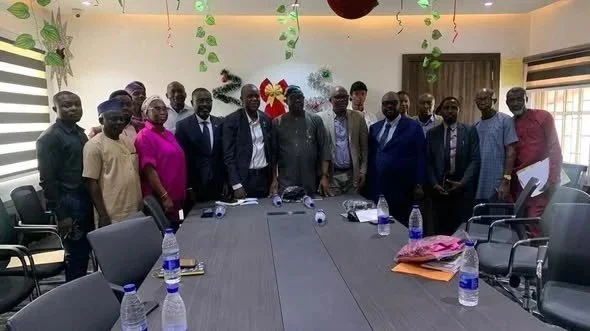
Lagos State Government Stakeholders
The Lagos State Government has inaugurated a statewide initiative to identify, document, and formalise informal land assets estimated to be worth approximately ₦3 trillion. This strategic move, approved by Governor Babajide Sanwo-Olu, is designed to integrate undocumented land into the formal economic system, curbing misuse and unlocking significant dormant value for both the state and private landholders.
Strategic Expansion and Mapping
According to official statements from the Lagos State Valuation Office, the project’s scope has significantly expanded since its inception. Initially targeting 2,000 hectares, the initiative now covers 3,744 hectares of undocumented land across various high-value locations. The exercise involves extensive mapping, valuation, and the integration of land parcels that have historically remained outside the government's official records.
The Permanent Secretary of the Office of Physical Planning, Engr. Olumide Sotire, described land as the state’s most critical resource. He emphasized that formalisation is essential for attracting investment, improving urban planning, and addressing the infrastructure deficit. Octragon Multi Projects has been appointed as the lead consultant to coordinate the exercise alongside relevant Ministries, Departments, and Agencies (MDAs).
Unlocking 'Dead Capital' for Economic Growth
A primary objective of this drive is the conversion of "dead capital" into bankable assets. Without formal documentation, landholders are unable to use their property as collateral for credit, which stifles small business growth and limits real estate development. By bringing these assets into the formal sector, the government aims to:
Boost Internally Generated Revenue (IGR): The state expects a substantial increase in land-related taxes, fees, and charges.
Enhance Security of Tenure: Formal documentation will provide legal protection for landowners, potentially reducing the frequency of land disputes.
Facilitate Investment: Registered titles increase investor confidence, particularly in the housing and commercial sectors.
This initiative follows a report from the Commissioner for Finance, Mr. Abayomi Oluyomi, who noted that Lagos recorded a 45% increase in IGR in 2024, reaching ₦1.3 trillion. The ₦3 trillion land project is viewed as a critical pillar for maintaining this fiscal momentum into 2025 and 2026.
Alignment with National Land Reform
The Lagos state initiative aligns with the Federal Government of Nigeria’s broader land formalisation agenda. Supported by a World Bank partnership announced in late 2024, the national goal is to register all land titles in Nigeria within five years. Currently, over 90% of land nationwide remains undocumented, representing an estimated $300 billion in untapped economic value. Lagos’ proactive mapping and valuation drive positions it as a lead implementer of this national framework.
The ₦3 trillion land formalisation project marks a decisive step in Lagos State’s transition toward a more transparent and data-driven land administration system. By addressing the inefficiencies in land titling and property valuation, the administration seeks to provide a stable foundation for urban renewal. For investors and policymakers, the successful execution of this project will be a benchmark for how sub-national governments can leverage dormant assets to fund large scale infrastructure and social services.
