Sanwo-Olu to Tackle Abandoned Buildings in Lagos and Deliver More Homes Under the 2026 Housing Framework
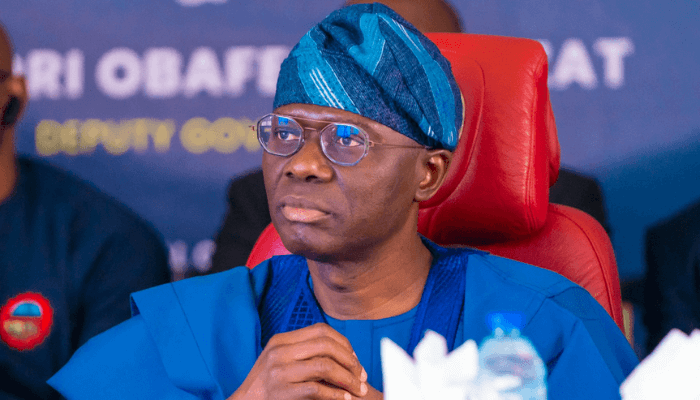
The Lagos State Government's 2026 housing roadmap represents a dual approach of new construction and asset recovery.
The Lagos State Government has intensified its efforts to address the housing shortfall in the metropolis, reaffirming a strategic goal to complete over 14,000 residential units by the first quarter of 2026. During a recent ministerial appraisal of the 2025 fiscal year, the Commissioner for Housing, Mr. Moruf Akinderu-Fatai, emphasized that the administration of Governor Babajide Sanwo-Olu remains committed to scaling up the state's housing stock through both direct budgetary funding and strategic public-private partnerships (PPPs).
Progress Report: Milestone Deliveries in 2025
The Ministry of Housing reported significant progress in the preceding year, marked by the successful commissioning of several key residential schemes. Notable among these are:
Akinsanya Sunny Ajose Housing Estate (Ajara, Badagry): A 420-unit development providing modern infrastructure and over 1,200 direct and indirect jobs.
Abraham Adesanya Housing Estate (Ajah), Parcels A and B: Delivered 233 mixed-type apartments through a partnership with Urban Shelter Limited.
These projects have contributed to the administration's total delivery of approximately 11,000 home units over the past six years, serving a demographic range that includes low-, medium-, and high-income earners.
2026 Project Pipeline and Execution Standards
To reach the projected target of 14,022 total units by early 2026, the Ministry has directed project teams to prioritize the completion of existing high-impact sites. The Commissioner identified several critical projects currently in the pipeline:
Sangotedo Phase II: Located in Eti-Osa East, this scheme consists of 528 units.
Egan-Igando Clusters II and III: Projected to provide 576 homes upon completion.
Ibeshe Phase II (Igbogbo-Baiyeku): A 192-unit development currently undergoing accelerated construction.
Mr. Akinderu-Fatai stressed that quality standards and excellence in execution are non-negotiable, urging departmental heads to ensure that all joint-venture housing projects align with the administration’s THEMES Plus development agenda.
New Policy on Abandoned Buildings and Urban Safety
In a strategic shift to maximize existing urban resources, the Permanent Secretary of the Ministry of Housing, Abdulhafis Toriola, disclosed plans to address the growing concern of abandoned buildings across the state. Leveraging existing legal frameworks, the government intends to facilitate the completion of these structures. This move is expected to:
Increase Housing Supply: By converting stagnant assets into habitable residences.
Enhance Urban Safety: Reducing the presence of uncompleted structures that often serve as havens for criminal activity.
Improve City Aesthetics: Eliminating architectural blights and promoting urban renewal.
Collaborative Frameworks and Public Service Values
The state’s housing strategy hinges on the "Lagos Home Ownership Mortgage Scheme" (Lagos HOMS) and Rent-To-Own programs, which aim to make homeownership accessible via flexible payment plans. The Ministry continues to seek collaboration with financial institutions and private developers to provide the requisite capital and technical expertise for large-scale developments.
The Lagos State Government's 2026 housing roadmap represents a dual approach of new construction and asset recovery. By targeting a total of 14,022 units by the first quarter of 2026 and implementing stricter oversight on abandoned properties, the Ministry of Housing aims to significantly reduce the housing gap. As these projects move toward commissioning, the focus remains on professionalism and the institutionalisation of public service values to ensure long-term sustainability in the state’s built environment.