
Lagos Luxury Real Estate: Property Values Triple Amid Naira Devaluation
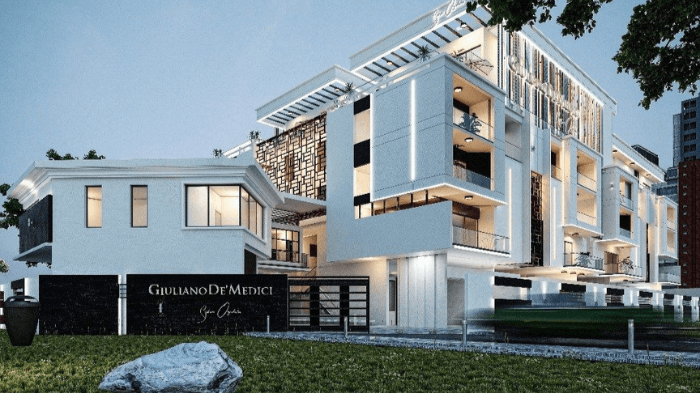
Lagos Real Estate Market Analysis: Demand and Devaluation Drive Record Growth
The value of luxury real estate in Lagos has experienced a sharp ascent, with prime assets in elite neighbourhoods more than tripling in value over the past year. According to data compiled by BusinessDay, a portfolio of 10 investment properties saw its collective valuation surge to ₦25.6 billion by February 2026, up from ₦9.3 billion in December 2024.
This appreciation is largely attributed to the dual forces of sustained demand and the significant devaluation of the naira, which has repositioned real estate as a critical hedge against inflation for both local and diaspora investors.
Ikoyi Remains the Epicentre of Growth
The most aggressive price gains are concentrated in Ikoyi, Nigeria’s premier residential and commercial district. Properties in this area recorded appreciation rates ranging between 132% and 176%. Specific assets, such as a prime parcel on Sapara Williams, saw its value jump to ₦4.02 billion from ₦1.73 billion. Similarly, a property on Macdonald Road surged to ₦3.15 billion from ₦1.14 billion.
Experts note that Ikoyi’s limited land availability has led to a trend of "redevelopment investment," where older structures are demolished to make way for modern high-rise buildings. David Mbah, CEO of MDS Properties, confirmed to BusinessDay that the neighbourhood remains the "first port of call" for luxury real estate, with only Eko Atlantic City offering comparable competition.
Macroeconomic Drivers and Replacement Costs
The surge in property values is not merely a reflection of prestige but a direct response to economic instability. The successive naira devaluations between 2023 and 2025 which saw official rates move from approximately ₦460/$1 to over ₦1,600/$1 have drastically increased the cost of imported building materials.
"Property values move with inflation even though real estate is a hedge," stated Ubosi Eleh, a leading industry expert. He highlighted that land in Ikeja GRA now commands ₦1.5 million per square metre (sqm), a significant jump from ₦600,000/sqm in early 2024.
The "replacement cost" phenomenon means that as the cost of new construction rises due to inflation, the value of existing inventory is adjusted upward to reflect current market realities.
Rental Market Hyper-Inflation
The rental segment has outpaced even sales appreciation in certain nodes. In Banana Island, the average rent for a duplex now ranges between ₦80 million and ₦100 million per annum. On the mainland, three-bedroom flats in Ikeja GRA have seen rents rise to ₦15 million per annum from ₦5 million just two years prior.
This "landlord inflation gap" is driven by a massive housing deficit estimated at 3.396 million units in Lagos alone and the influx of roughly 6,000 to 1,000 new residents daily.
Market Outlook: 2026 and Beyond
While the luxury market remains resilient, analysts from Estate Intel suggest a potential shift in the supply-demand dynamic. With over 700 ultra-luxury units currently under construction and a total pipeline of nearly 1,400 units expected by 2029, the market may see a price adjustment or "softening" by 2027 as these projects reach completion.
For now, however, the market remains a seller’s domain. Investors continue to view Lagos real estate as "gold that upgrades itself," prioritizing hard assets to preserve purchasing power in a high-inflation environment.
