
FG Initiates New Strategy to Curtail Vandalism of National Assets and Infrastructure
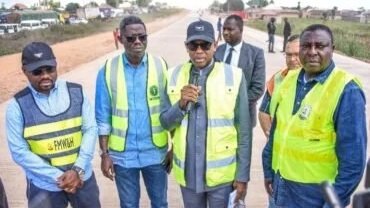
Nigeria’s New Infrastructure Protection Strategy
The Federal Government has intensified its efforts to secure Nigeria's critical infrastructure, citing the protection of these assets as a non-negotiable priority for national security and economic stability. During a strategic stakeholder summit held on 17 February 2026, in Lagos, the Director of the Directorate of Critical National Assets and Infrastructure Protection (DCNAIP) at ONSA, Air Vice Marshal Enabong Effiom, outlined a renewed "whole-of-government" approach to asset protection.
The meeting, organised in collaboration with the Lagos State Command of the Nigeria Security and Civil Defence Corps (NSCDC), focused on identifying field-level challenges that have historically hindered the effective policing of national assets such as rail lines, telecommunications towers, and power grids.
Targeting the Scrap Metal Value Chain
A central pillar of the new strategy involves the aggressive regulation of the scrap metal industry. Security agencies have identified the unregulated trade in "iron condemn" as the primary economic incentive for the theft of railway tracks, manhole covers, and electrical cables.
"If there are no avenues for these scavengers to sell these vandalised items, they will not have any reason to vandalise," stated AVM Effiom.
The Federal Government is calling on state authorities to implement stricter oversight of scrap metal dealers, effectively cutting off the market for stolen public property.
Closing the "Ignorance Gap"
The ONSA directorate announced a partnership with the National Orientation Agency (NOA) to launch a nationwide public enlightenment campaign. The initiative aims to educate citizens on the socio-economic impact of infrastructure theft, transforming local communities from passive observers into active "first responders" and informants.
This grassroots engagement is complemented by a "Trusted Information Sharing Network" (TISN), a multi-disciplinary framework designed to facilitate real-time intelligence exchange between private sector operators such as telecom and oil firms and government security agencies.
Deployment of Advanced Surveillance Technology
Reinforcing the physical security measures, the Minister of Works, David Umahi, recently confirmed that President Bola Tinubu has directed the installation of CCTV surveillance systems on major federal highways. This follows successful pilot deployments on the Third Mainland Bridge, which have already led to the arrest of several vandals attempting to strip reinforcement components from the structure.
Key Infrastructure Risks Identified (2026)
The summit highlighted several critical sectors currently under significant threat:
Transportation: Systematic dismantling of the Warri-Itakpe and Lagos-Ibadan rail tracks.
Digital Economy: An average of 1,700 weekly attacks on telecommunications infrastructure reported across the country.
Power: Persistent vandalism of transmission towers and cables, which continues to threaten grid stability.
Forward-Looking Perspective
While the Federal Government is pivoting toward technology-driven surveillance and stricter regulation, experts suggest that the long-term success of these measures depends on inter-agency synergy. The 2026 budget appraisal has already seen calls from the Chief of Defence Staff, General Oluyede, to significantly bolster the capacity of the NSCDC and the Nigeria Police Force to provide "static protection" for assets once the military has cleared hostile zones.
