
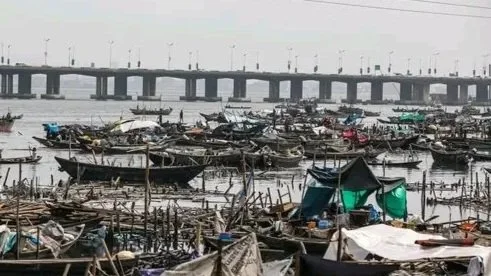
Relocation Plan Emerges After Makoko Waterfront Demolition
The Lagos State House of Assembly has recommended relocating residents displaced by recent demolitions in waterfront communities including Makoko, Oko-Agbon, and Sogunro to a proposed low-cost housing estate in Agbowa, Epe Local Government Area.
The recommendation followed the adoption of a report by the Assembly’s Committee on Rules and Business after reviewing petitions submitted by affected residents and conducting oversight visits to the demolished communities.
Lawmakers said the relocation proposal aims to provide alternative housing for families displaced during demolition exercises carried out along Lagos’ waterfront areas.
Background to the Makoko Demolition
Demolition of structures in parts of Makoko and surrounding waterfront settlements began in December 2025, with the Lagos State Government citing safety concerns and environmental risks.
Authorities stated that several structures were built under high-tension electricity lines or within restricted setbacks along waterways, posing potential risks to residents and critical infrastructure.
The operation resulted in the destruction of homes and displacement of thousands of residents, including women, children and elderly people living within the densely populated fishing community.
Affected residents subsequently staged protests and submitted petitions to the Assembly, requesting intervention, resettlement and compensation for lost homes and businesses.
Legislative Investigation and Findings
Following the complaints, the Lagos Assembly ordered a temporary suspension of further demolitions while lawmakers investigated the matter.
The House Committee on Rules and Business, chaired by Noheem Adams, held multiple meetings with community representatives and visited the affected areas alongside government agencies before presenting its findings to the legislature.
The committee concluded that the demolitions had significantly disrupted livelihoods and worsened living conditions in the affected communities.
Lawmakers noted that most residents rely on fishing as their primary occupation and traditionally live near the waterfront to sustain their economic activities.
Proposed Housing Development in Epe
As part of its recommendations, the Assembly urged Governor Babajide Sanwo-Olu to approve the construction of a low-cost housing estate in Agbowa, Epe, where displaced residents could be resettled.
The proposed relocation site is intended to provide structured housing while allowing affected families to continue fishing and other water-based economic activities.
Lawmakers also recommended that the state government verify enumeration data submitted by the affected communities to determine the number of residents eligible for resettlement.
Broader Urban Planning Context
The Makoko community, often described as one of Lagos’ largest waterfront settlements, has long faced periodic demolition threats linked to urban planning policies and environmental concerns.
Authorities argue that redevelopment and enforcement of planning regulations are necessary to improve safety, reduce environmental risks and modernise the city’s waterfront areas.
However, civil society organisations and community advocates frequently raise concerns about the humanitarian impact of demolitions and the need for adequate resettlement plans for displaced residents.
Outlook
The Assembly’s recommendation now places the decision before the Lagos State Government, which must determine whether to implement the proposed relocation plan.
If approved, the development of low-cost housing in Epe could form part of broader efforts to address housing shortages and manage informal waterfront settlements in Lagos, while balancing urban development objectives with social protection for vulnerable communities.
