
Gbenga Daniel, Lawmakers Intervene in 50-Year Ogun Community-Army Land Dispute
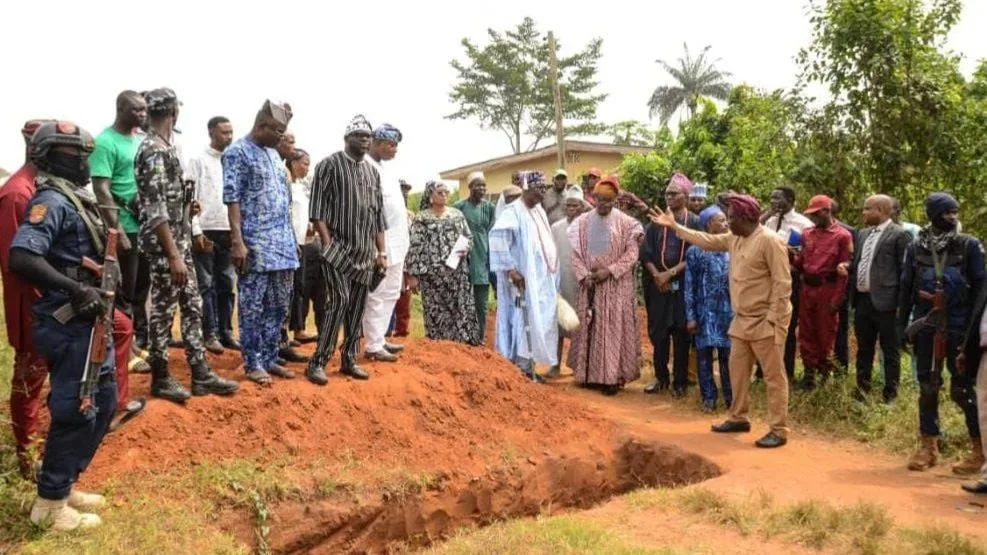
Gbenga Daniel Addresses the people of Ijebu state over land Dispute
Former Ogun State Governor and current Senator for Ogun East, Otunba Gbenga Daniel, alongside the Ogun State House of Assembly, has intervened in a long-standing land dispute between 16 communities in Apunren-Ijebu and the Nigerian Army. The intervention, initiated on 11 January 2026, follows an escalation in hostilities marked by alleged military-led demolitions of residential homes, churches, and farm settlements in the Ijebu-North East Local Government Area.
The crisis, which dates back to a 1977 land allocation for a military base, has reportedly resulted in the displacement of over 7,000 residents and recent trauma-related deaths, including that of a local village head. Lawmakers and community leaders are now calling for a permanent legislative resolution to define the boundaries of the military acquisition.
Historical Origins and Legal Discrepancies
The dispute stems from the initial allocation of 1,791 acres of land to the Nigerian Army in 1977. Community representatives, led by Secretary General Adeoluwa Adenike, assert that the military has exceeded these original boundaries, encroaching on ancestral lands that have been inhabited for over 600 years.
Central to the conflict is a breakdown in administrative documentation. According to the Speaker of the Ogun State House of Assembly, Rt. Hon. Oludaisi Elemide, an earlier review intended to reduce the military's land portion was never properly gazetted. This legal vacuum was further complicated by a controversial 1987 gazette that reinstated the larger expanse, plunging the 16 affected communities including Apunren and villages near Erunwon into decades of land tenure insecurity.
Legislative Action and Oversight
Senator Gbenga Daniel has pledged to escalate the matter to the Nigerian Senate for a formal investigation within three weeks. During his visit to the aggrieved communities, Daniel emphasised the need for a political solution, noting that the intervention of the federal executive would be crucial to halting further demolitions.
Simultaneously, the State House of Assembly has conducted an on-the-spot assessment of the affected areas. Key legislative objectives include:
Compiling Findings: Lawmakers are documenting the extent of the recent destructions to present a formal report to Governor Dapo Abiodun.
Federal Engagement: The Assembly plans to engage both the executive and legislative arms at the federal level to reconcile the conflicting gazettes.
Surveyor-General Audit: The State Surveyor-General, Oladele Ewulo, has been tasked with conducting an inquiry to guide a sustainable boundary resolution.
Humanitarian and Economic Impact
The "indiscriminate" military acquisition has had a profound impact on the local economy and social fabric. Community leaders report that abandoned farms have led to spreading hunger, while the destruction of schools and hospitals has disrupted essential services. Retired Major General S. A. Odunsi, representing the community's interests, has urged the government to declare 2026 a "year of jubilee" to finally restore ancestral lands to the people.
As the dispute approaches its 50th anniversary, the coordinated intervention by Senator Daniel and the Ogun State House of Assembly represents a critical effort to balance national security needs with civilian property rights. The resolution of this crisis will likely depend on the Federal Government’s willingness to formalise the previously agreed-upon land reductions. For investors and residents in the Ijebu-North East corridor, the outcome of the Senate’s upcoming deliberations on 27 January 2026 will be a decisive factor for the region's stability and future development.
