
FMBN Hits Historic ₦152 Billion NHF Collection in 2025 Under Osidi’s Leadership
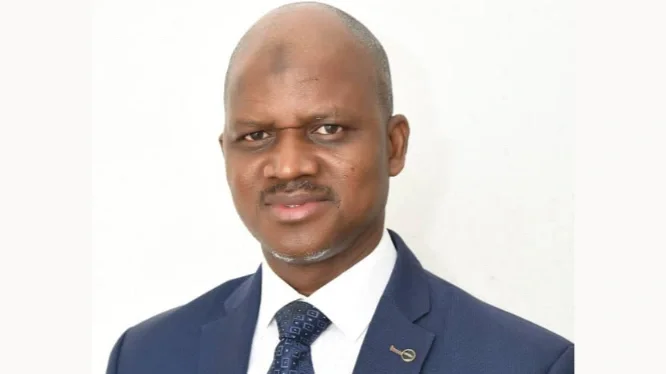
Osidi’s Strategies Behind the ₦152 Billion NHF Milestone
The Federal Mortgage Bank of Nigeria (FMBN) has achieved a significant milestone in its revenue mobilization efforts, with collections for the National Housing Fund (NHF) reaching an unprecedented ₦152 billion for the 2025 fiscal year. This figure represents a substantial leap from the ₦103 billion recorded in 2024, signaling a surge in taxpayer confidence and institutional efficiency under the leadership of Managing Director and Chief Executive, Shehu Usman Osidi.
Since assuming office in February 2024, Osidi has spearheaded a series of "Process Re-Engineering" initiatives designed to deepen the bank’s financial base and address the nation’s persistent housing deficit.
Strategic Drivers of the ₦152 Billion Milestone
The nearly 50% year-on-year growth in NHF generation is attributed to several aggressive reform pillars implemented throughout 2025:
Reintegration of State Civil Services: A major catalyst for the 2025 growth was the successful return of several states to the NHF fold. Notably, the Kano State Government reintegrated its workforce of over 160,000 employees into the scheme after a 24-year hiatus, significantly boosting the monthly contribution pool.
Informal Sector & Diaspora Engagement: The FMBN expanded its reach beyond formal payrolls. Through the NHF Diaspora Mortgage Loan (launched in partnership with NiDCOM) and tailored products for artisans and traders, the bank tapped into previously underserved segments of the economy.
Digital Transformation: The full deployment of the bank’s Core Banking Application in late 2024 and early 2025 streamlined the remittance process. This automation reduced bureaucratic leakages and provided employers with a more transparent platform for processing staff contributions.
Financial Performance and Operational Surplus
The increase in NHF collections has directly impacted the bank’s bottom line. Building on the ₦11.58 billion operational surplus recorded in 2024 the first in the bank’s 30-year history FMBN reported an interim surplus of ₦13 billion in the first half of 2025 alone.
"Our focus has been on institutional reforms and stronger stakeholder collaboration," Osidi stated during a performance review. "The increase in NHF contributions demonstrates renewed trust and participation in the scheme by Nigerian workers."
Impact on Affordable Housing Delivery
The ₦152 billion liquidity surge has enabled the FMBN to scale its primary mandate: providing low-interest mortgages. In 2025, the bank significantly increased its approvals for:
Home Renovation Loans: Targeting low-income earners who require smaller sums to upgrade existing structures.
Rent-to-Own Schemes: Allowing contributors to move into FMBN-funded homes and pay via monthly or annual rent at single-digit interest rates.
Renewed Hope Cities: Providing off-taker guarantees for large-scale federal housing projects, such as the 3,112-unit Karsana project in Abuja.
Conclusion and 2026 Outlook
As the FMBN enters 2026, the focus shifts toward sustaining this momentum. While the ₦152 billion collection is a record high, Osidi has noted that the bank still requires a ₦500 billion recapitalisation to truly meet the scale of Nigeria's housing needs.
The 2025 performance serves as a proof of concept that transparency and digital adoption can unlock domestic capital for infrastructure. For 2026, the bank aims to further optimize its recovery task teams to reclaim outstanding loan arrears, ensuring that the NHF remains a revolving and sustainable fund for future generations of Nigerian homeowners.
