
Cardoso Advocates for Climate-Resilient Industrialization and Job Creation Across Africa
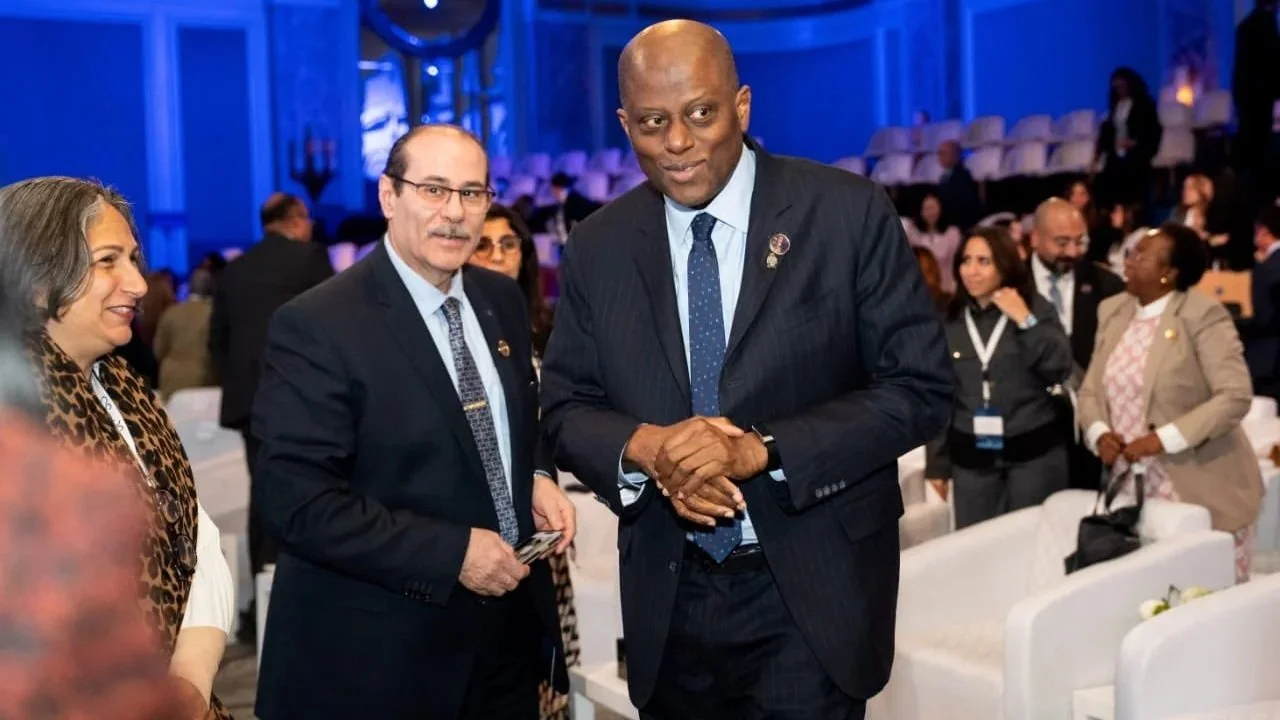
CBN’s Cardoso Champions Climate-Resilient Growth and Industrialization for Africa
The Governor of the Central Bank of Nigeria (CBN), Mr. Olayemi Cardoso, has asserted that African nations must pursue a dual-track strategy of aggressive industrialization and climate resilience to ensure long-term economic stability. Speaking as the keynote guest at the Egypt 30by30 Programme on Wednesday, February 18, 2026, Cardoso emphasized that the continent's future hinges on its ability to lift millions out of poverty while simultaneously decarbonizing its expanding economies.
The 30by30 initiative, organized by the Central Bank of Egypt in collaboration with the International Finance Corporation (IFC), serves as a World Bank Group framework designed to strengthen financial market capacity and increase funding for green, resilient, and competitive projects across the continent.
Integrating Climate and Financial Stability
In his address, Governor Cardoso categorized climate change not merely as an environmental concern but as a core fiscal imperative. He argued that the vulnerability of African economies to climate shocks necessitates a paradigm shift in how central banks manage risk.
"Climate risk is financial risk," Cardoso stated. "It affects sovereign ratings, the cost of capital, inflation dynamics, food security, insurance markets, and ultimately, fiscal sustainability. To build resilient financial systems, we must anchor our economies on trustworthy institutions, credible policies, and risk-aware innovation."
He noted that while Africa contributes the least to global carbon emissions, it bears a disproportionate share of the costs. However, he balanced this by highlighting the continent's untapped potential in renewable energy, biodiversity, and its rapidly evolving financial markets.
Strengthening Macroeconomic Fundamentals
Reflecting on the Nigerian context, Cardoso linked institutional credibility to economic resilience. He noted that "disciplined and transparent reforms" currently being implemented in Nigeria are reinforcing macroeconomic fundamentals. These reforms, he argued, are essential for boosting investor confidence and laying the groundwork for the sustainable, green growth necessary to compete in a changing global economy.
The CBN Governor called for deeper cooperation among African central banks and development finance institutions (DFIs). He advocated for:
Green Finance Frameworks: Establishing standardized protocols to attract international climate capital.
Cross-Border Cooperation: Enhancing financial integration to allow African nations to innovate for resilience as a unified bloc rather than as isolated entities.
Infrastructure Resilience: Scaling investments in water and energy efficiency to protect industrial hubs from global disruptions.
Continental Vision for 2026 and Beyond
Cardoso described the 30by30 initiative as emblematic of a "shared continental vision" where economic progress is inextricably linked to environmental responsibility. He reaffirmed the CBN’s commitment to building a risk-conscious financial architecture that positions Nigeria and Africa at large not just to survive global shocks, but to thrive despite them.
By focusing on job creation through industrial expansion that respects climate limits, Cardoso suggested that Africa can leverage its young population and natural resources to become a leader in the global green economy.
The engagement in Cairo underscores a defining mandate for African monetary authorities in 2026: the alignment of financial stability with environmental sustainability. As Nigeria continues its path of fiscal reform, the CBN’s advocacy for a "Climate-Smart" continental alliance signals a strategic move to de-risk African markets and attract the large-scale investment required for industrial transformation.
