
FCTA Demolishes Illegal Buildings on Land Allocated to Embassies in Katampe
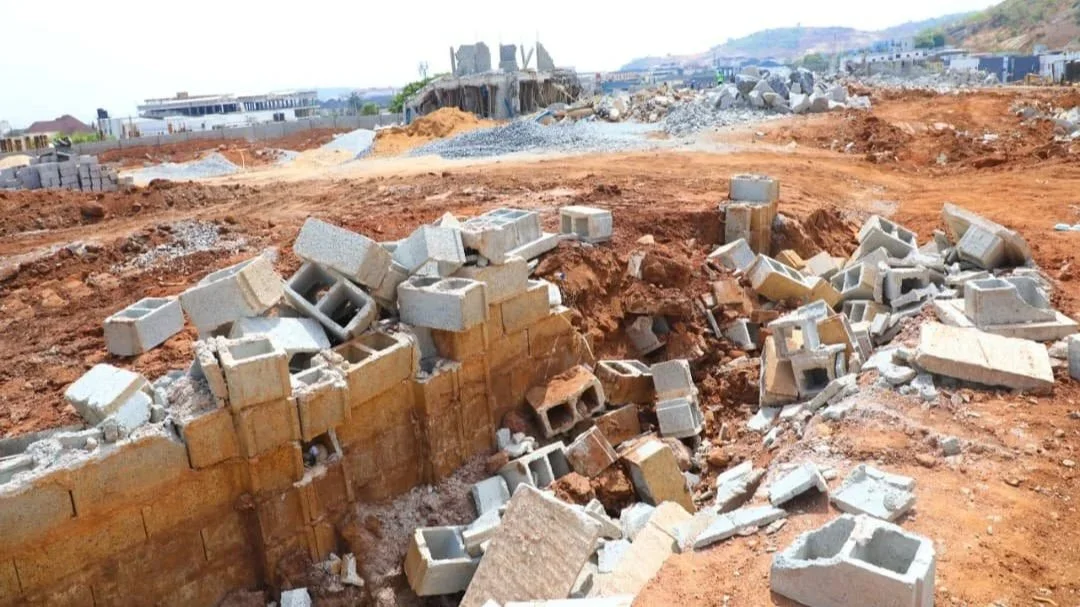
Government Reclaims Katampe Land Allocated to Embassies After Illegal Constructions
The Federal Capital Territory Administration (FCTA) has demolished several illegal structures constructed on plots designated for foreign embassies in Katampe District, Abuja, as part of ongoing efforts to enforce the Abuja Master Plan and protect diplomatic land allocations.
Officials from the FCTA Development Control Department carried out the enforcement exercise after identifying unauthorised buildings erected on land officially reserved for diplomatic missions. Authorities stated that the demolition was necessary to reclaim the plots and ensure that the designated allottees can take possession of their land.
Enforcement of the Abuja Master Plan
The demolition forms part of broader measures by the FCTA to restore compliance with the Abuja Master Plan, which governs land use, infrastructure development, and zoning across Nigeria’s capital city.
Officials explained that the illegal structures were built without valid approvals and violated the development guidelines for the district. Such encroachments, authorities said, undermine orderly urban planning and could compromise the long-term development strategy of the capital.
Urban planning enforcement has intensified across Abuja in recent years as the FCTA moves to address widespread cases of unauthorised construction, land grabbing, and encroachment on government-allocated plots.
According to the News Agency of Nigeria (NAN), enforcement teams inspected the affected sites before marking the buildings for demolition in line with regulatory procedures.
Diplomatic Land Allocation and Urban Planning Concerns
Katampe District is one of Abuja’s rapidly developing areas and includes plots reserved for diplomatic missions and high-profile developments.
Authorities emphasised that land designated for embassies forms part of Nigeria’s diplomatic infrastructure and must remain protected from illegal occupation or development.
Encroachment on such plots not only violates planning regulations but can also delay or disrupt the establishment of diplomatic facilities intended to strengthen Nigeria’s international engagement.
Urban development experts note that preserving land allocated to foreign missions is critical to maintaining Abuja’s status as a planned capital city with clearly defined diplomatic zones.
Broader Crackdown on Illegal Developments
The latest demolition exercise reflects a wider enforcement campaign targeting illegal construction across Abuja.
The FCTA has previously removed thousands of unapproved structures in different parts of the Federal Capital Territory to reclaim government land and restore compliance with city planning regulations. According to officials from the Development Control Department, such enforcement measures aim to prevent the proliferation of informal developments and ensure that legitimate landowners can access their allocated plots.
Authorities have repeatedly warned developers and land speculators against purchasing or building on plots without proper title documentation and planning approvals.
Implications for Abuja’s Urban Development
The demolition highlights ongoing challenges in land administration and urban planning enforcement within Nigeria’s capital.
Rapid population growth, strong demand for housing, and speculative land transactions have contributed to increasing cases of unauthorised developments across several districts.
Urban policy analysts note that strict enforcement of the Abuja Master Plan remains essential to maintaining infrastructure integrity, protecting designated land uses, and sustaining investor confidence in the city’s real estate market.
Outlook
The FCTA has reiterated its commitment to reclaiming all government-allocated land that has been illegally occupied or developed. Authorities also urged prospective developers and property buyers to conduct proper due diligence before acquiring land in the Federal Capital Territory.
As enforcement actions continue, policymakers and investors will closely monitor how regulatory measures shape land governance and urban growth in Abuja’s emerging districts.
