
Estate Surveyors Advocate for Digital Transformation of FCT Land Governance
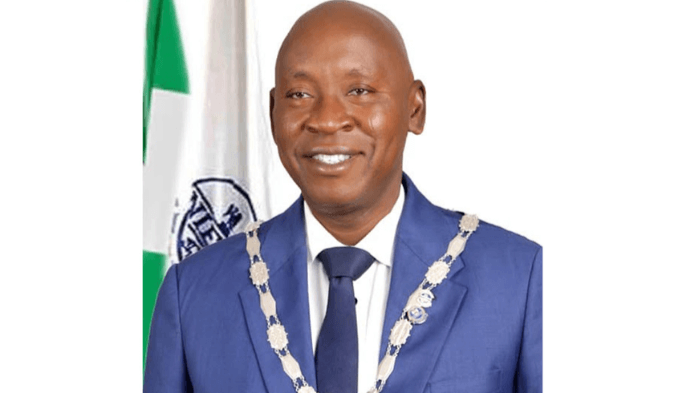
NIESV Urges Abuja Land Policy Reforms to Unlock Investment and Revenue
The Nigerian Institution of Estate Surveyors and Valuers (NIESV) has called on the Federal Government to overhaul the land governance framework of the Federal Capital Territory (FCT). During the 32nd Annual Johnwood Ekpenyong Memorial Lecture held in Abuja on 4 February 2026, the institution warned that fragmented administration, poor titling systems, and weak inter-agency coordination are currently deterring investors and limiting the FCT’s revenue potential.
The Case for Integrated Governance
Delivering the memorial lecture titled “From Compliance to Competitiveness: Positioning Abuja Land Governance Framework for Investment Confidence and Revenue Growth,” Johnbull Osarume, the Immediate Past President of NIESV, emphasised that land governance must evolve from a mere regulatory hurdle into a market-supporting infrastructure. He argued that the current fragmentation across various land-related agencies creates inconsistencies and delays that erode market confidence.
To address these systemic bottlenecks, Osarume proposed the creation of a Land Governance Coordination Council. This body would oversee inter-agency compliance and dispute resolution. Furthermore, he urged the Minister of the Federal Capital Territory to issue a harmonisation directive to establish unified data standards and service timelines across all land-related institutions.
Digital Transformation and Transparency
A central pillar of the NIESV recommendation is the full automation of Abuja’s land records. The institution advocates for an end-to-end digital land market that encompasses:
Land allocation and titling.
Valuation and consent processes.
Automated payment platforms with comprehensive audit trails.
According to NIESV, integrating cadastral, planning, and valuation data into a real-time market intelligence system would eliminate current inefficiencies and reposition land as an active economic asset rather than a dormant resource.
Unlocking "Dead Capital" in Peri-Urban Areas
The President of NIESV, Victor Alonge, highlighted a critical economic drain: the lack of formal titles for land in peri-urban areas surrounding the capital. Alonge noted that over 90 per cent of land in Nigeria remains unregistered, describing it as "dead capital" that cannot be leveraged for credit or formal investment.
To bring these areas into the formal economy, NIESV recommends:
Simplified, low-cost titling frameworks to encourage registration.
Area-based registration and phased documentation processes.
Professional integration of estate surveyors into the design and execution of land policies to ensure ethical standards and technical accuracy.
Comparative Analysis and Outlook
Drawing comparisons with rapidly developing global cities such as Singapore, Kigali, and Riyadh, Alonge pointed out that efficient land systems are the backbone of urban growth and revenue mobilisation. He asserted that Abuja’s revenue potential remains largely untapped due to its reliance on antiquated administrative processes.
The institution maintains that by adopting these reforms, the Federal Government can foster a transparent environment that attracts both domestic and foreign direct investment. As the FCT continues to expand, the transition from a compliance-heavy system to a competitive, digital-first framework is viewed by experts as essential for sustainable economic productivity in Nigeria’s capital.
