
Shettima: Dangote Refinery to Transform Nigeria into Net Exporter of Refined Fuel
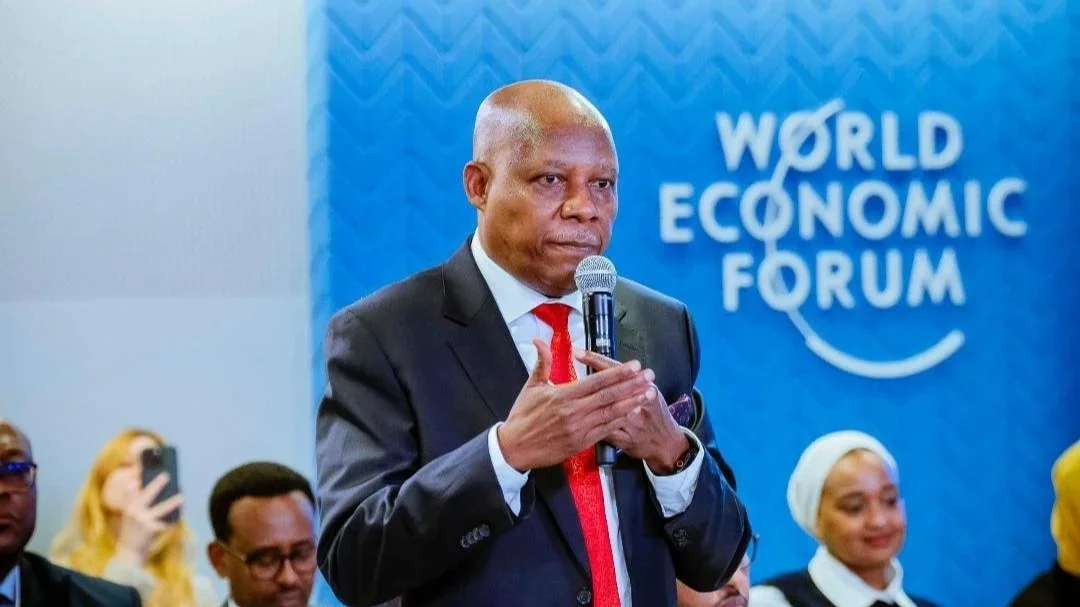
Vice President Kashim Shettima at World Economic Forum 2026
Vice President Kashim Shettima has reaffirmed that the $20 billion Dangote Petroleum Refinery is the primary catalyst for Nigeria’s transition from a fuel-importing nation to a net exporter of refined petroleum products. Speaking at a high-level engagement in January 2026, the Vice President characterised the 650,000 barrels-per-day (bpd) facility as a strategic national asset capable of permanently addressing Nigeria’s energy security challenges.
The Vice President noted that the facility's operations have already begun to disrupt long-standing global trade flows, with locally refined products reaching international markets as far as the United States. This shift marks the end of a multi-decade era where Africa’s largest crude producer relied almost exclusively on foreign refineries for its domestic energy needs.
Economic Sovereignty and Industrial Stability
Shettima emphasised that the refinery is not merely a private commercial venture but a pillar of Nigeria’s "economic parliament." He praised Alhaji Aliko Dangote for channelling massive capital into the domestic economy rather than seeking lower-risk investments in foreign technology sectors. According to the Vice President, the refinery’s success is intrinsically linked to the stability of the Naira and the reduction of foreign exchange pressure.
"Aliko Dangote is an institution," Shettima stated, noting that the refinery must be "jealously protected and promoted" by all Nigerians. He highlighted that the facility was financed through a complex mix of equity and debt, necessitating uninterrupted operations to service these financial obligations and maintain national industrial harmony.
Impact on Domestic Supply and Pricing
Since the end of 2025, the refinery has significantly upscaled its distribution of Premium Motor Spirit (PMS). Current data from the refinery indicates:
Direct Supply: Daily loading from the gantry has consistently ranged between 31 million and 48 million litres of PMS.
Pricing Benchmarks: The refinery’s December 2025 price adjustment to ₦739 per litre has established a new competitive floor, forcing other downstream operators to recalibrate their retail prices.
Accessibility: The introduction of a 10-day credit facility for marketers and the reduction of minimum purchase volumes to 250,000 litres have improved the "Ease of Doing Business" for independent petroleum marketers.
Security and Labour Relations
The Federal Government has waded into recent industrial disputes between the refinery and labour unions, such as PENGASSAN, to ensure that operations remain insulated from localized rifts. Vice President Shettima urged labour and the organised private sector to embrace "restraint and patriotism," asserting that the refinery’s continued productivity is a matter of national security that outweighs individual labour grievances.
The Dangote Refinery represents the most significant shift in Nigeria’s macroeconomic landscape in recent years. By fulfilling the dual role of domestic supplier and international exporter, the facility provides the structural support needed for the Federal Government’s energy transition and fiscal reform plans. As the refinery reaches full operational capacity throughout 2026, its ability to maintain competitive pricing and consistent supply w
