
Rivers State Lawmakers Criticise Fubara Administration Over Public infrastructure Amid N600bn State Funds
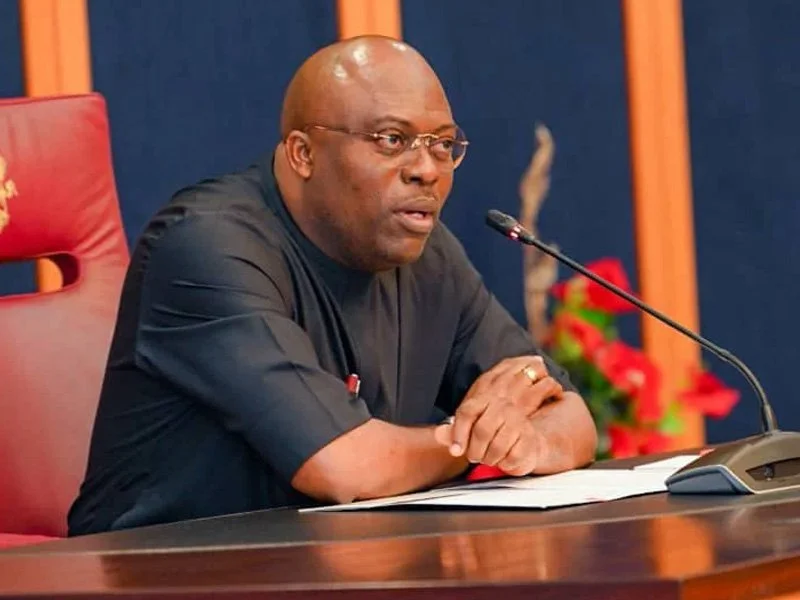
Rivers State Lawmakers Criticise Fubara Over Public School Infrastructure Despite N600bn in State Funds
A dispute has emerged between the Rivers State House of Assembly and Governor Siminalayi Fubara over the state of public school infrastructure, despite over N600 billion left in state accounts by the previous Sole Administrator, Rear Admiral Ibok-Ete Ibas (retd.), following a six-month emergency rule in 2025.
The Assembly has highlighted severe neglect in public schools, particularly in Port Harcourt’s Township School 1 and 2 along Moscow Road, citing overcrowded classrooms, lack of basic amenities, and overstretched teachers. Igwe Aforji, Chairman of the House Committee on Education, reported that one teacher is forced to instruct two separate classes simultaneously in a single room, while schools remain without electricity, functioning toilets, or adequate security.
Speaker Martin Amaewhule described the situation as unacceptable, noting that despite substantial financial reserves inherited from the previous administration, students and teachers continue to face challenging conditions. “It is an aberration that in 2025, one teacher teaches two classrooms under one roof with no basic facilities,” he stated.
Governor Fubara Responds, Prioritises Education in 2026 Budget
Governor Fubara acknowledged the deteriorating state of schools, attributing much of the decline to years of underinvestment predating his tenure. He assured that education remains a central focus of his administration, noting that the sector will receive the highest allocation in the forthcoming 2026 budget.
Fubara emphasised strategic planning and reform, drawing on his background in public administration to address infrastructure deficits while advancing broader state development objectives. He also pointed to ongoing improvements in healthcare, including upgrades to zonal hospitals, and reiterated commitment to job creation initiatives, such as the planned 10,000 employment opportunities, to be implemented in accordance with state needs rather than political considerations.
Political Context and Legacy of Emergency Rule
The current tensions are situated within the broader political history of Rivers State. Following the political crisis of 2023, which involved disputes between Fubara and his predecessor Nyesom Wike, President Bola Tinubu imposed a six-month emergency rule, appointing Ibas as Sole Administrator. The emergency period concluded in September 2025, allowing the governor and lawmakers to resume duties and pledge collaboration.
Governor Fubara reflected on the crisis, noting that meaningful administrative progress was only possible after the emergency rule concluded. He commended traditional rulers for their role in maintaining stability and fostering cooperation during the political impasse.
Conclusion
The confrontation between the Rivers State House of Assembly and Governor Fubara underscores persistent challenges in public school infrastructure despite significant state financial resources. Addressing these issues will require sustained political will, strategic budgetary allocations, and close monitoring of implementation. Experts argue that bridging the gap between resource availability and tangible improvements in public services is critical to ensuring equitable access to education and maintaining social trust in governance.
