
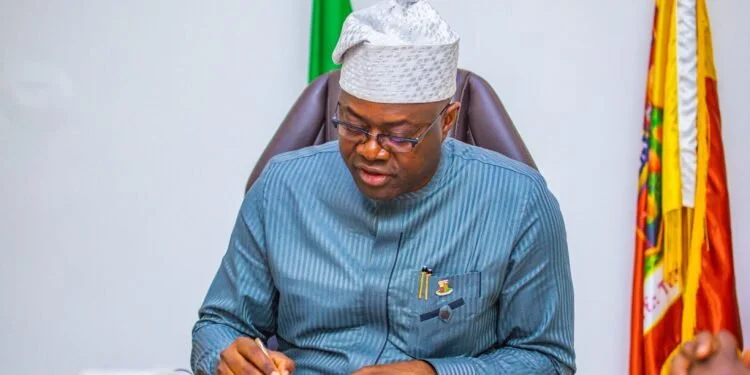
Oyo State Governor, Seyi Makinde, has signed the ₦892 billion 2026 Appropriation Bill into law, setting the fiscal framework for the state’s economic and development priorities in the coming year.
The 2026 budget, described by the state government as a Budget of Economic Expansion, places strong emphasis on capital investment, infrastructure delivery, and productivity-driven growth, with direct implications for housing development, urban expansion, and real estate activity across Oyo State.
Strong Focus on Infrastructure and Capital Projects
A significant share of the ₦892 billion budget is allocated to capital expenditure, reinforcing the government’s commitment to long-term infrastructure development. Key focus areas include road construction and rehabilitation, urban connectivity, and public infrastructure, all of which play a critical role in shaping housing markets and land values.
Improved road networks are expected to enhance access between residential communities, commercial centres, and industrial zones, making new and existing neighbourhoods more attractive for housing development and private investment.
Implications for Housing and Real Estate Growth
Infrastructure spending remains one of the strongest drivers of real estate demand, and the 2026 budget signals continued government support for this relationship. Expanded road networks and upgraded transport corridors are likely to unlock new development zones, particularly around peri-urban and growth corridors linking Ibadan to surrounding towns.
Developers and investors typically respond to such infrastructure commitments by accelerating residential estate development, rental housing projects, and mixed-use schemes, especially in areas where access and mobility improve.
Urban Expansion and Planning Benefits
The budget’s capital-heavy structure also supports better urban planning outcomes, reducing congestion in core city areas while encouraging orderly expansion into emerging districts. As infrastructure reaches new areas, demand for serviced land, housing units, and community facilities is expected to rise.
For residents, this translates into improved living conditions, shorter commute times, and increased access to essential services, factors that directly influence housing desirability and property values.
Fiscal Strategy and Economic Impact
Governor Makinde noted that the 2026 budget is designed to prioritise production over consumption, aiming to strengthen Oyo State’s economic base and reduce vulnerability to external shocks. Infrastructure investment sits at the centre of this strategy, providing the foundation for private sector growth, job creation, and long-term housing demand.
The signing of the budget into law ensures that project implementation can begin early in 2026, offering certainty to contractors, developers, and investors planning projects within the state.
What It Means for Property Stakeholders
For property buyers, developers, and landlords, the 2026 budget sends a clear signal of continued government backing for infrastructure-led growth. Areas benefiting from new roads and public works are likely to see increased interest, rising land values, and higher housing demand over time.
As implementation unfolds, the pace and execution of infrastructure projects will be closely watched as key indicators of how the budget translates into tangible improvements across Oyo State’s housing and real estate landscape.