
Nigeria Proposes Consolidated 2024–2025 Budget Amid 2026 Fiscal Uncertainty
The Federal Government has proposed a consolidated 2024–2025 fiscal framework as it seeks to streamline Nigeria’s budgeting process and address persistent revenue shortfalls, raising questions over the timing and feasibility of the 2026 budget.
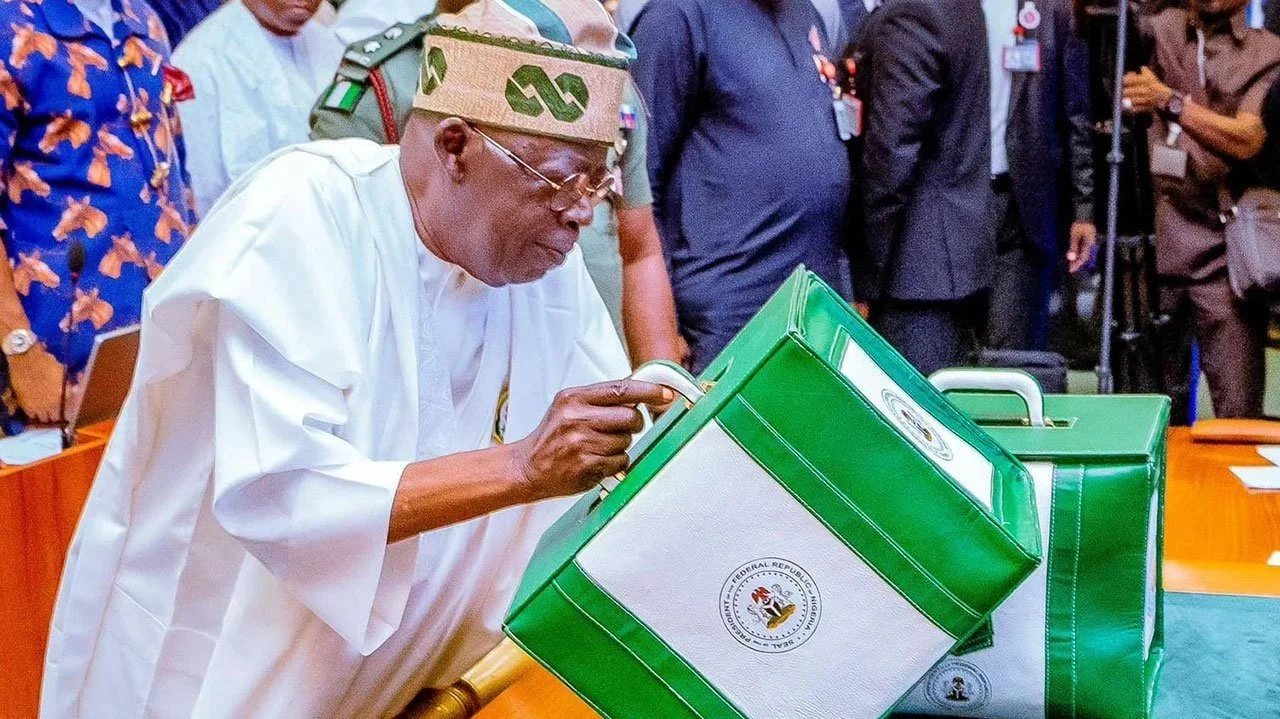
President Bola Ahmed Tinubu has requested the National Assembly to approve the Appropriation (Repeal and Re-enactment) Bill covering both 2024 and 2025, proposing a combined spending plan of ₦43.56 trillion. The move aims to harmonise budget execution and mitigate the complications arising from running multiple budgets concurrently a practice that has marked the past three fiscal years.
The bill stipulates that all appropriated funds be allocated strictly according to approved schedules, with any reallocation requiring prior National Assembly consent. It also introduces provisions for accurate reporting of excess revenue and establishes mechanisms to enhance fiscal discipline and accountability in public expenditure.
Senate Review and Fiscal Breakdown
The Senate has passed the bill for second reading, outlining a framework comprising ₦1.74 trillion for statutory transfers, ₦8.27 trillion for debt servicing, ₦11.27 trillion for recurrent expenditure, and ₦22.28 trillion for capital projects and development funds. Key finance officials, including the Ministers of Finance and Budget, and the FIRS Chairman, have been summoned to provide clarifications on the proposed allocations.
Amid ongoing fiscal consolidation, the government continues to grapple with a widening revenue gap. Federal revenue performance in 2025 has lagged significantly, with projections indicating a shortfall of approximately ₦30.1 trillion. Weak earnings from petroleum profit tax, company income tax, and other revenue streams have amplified the need for reform.
To address this, the administration has introduced a revised tax regime aimed at broadening the revenue base while protecting low-income earners. Individuals earning ₦800,000 or less and small businesses are exempted from personal and corporate income tax, while higher-income earners and larger corporations are expected to contribute more. Critics, however, have called for broader consultations and social safeguards to prevent the reforms from disproportionately impacting vulnerable groups.
Medium-Term Fiscal Planning and Oil Benchmarks
The 2026–2028 Medium-Term Expenditure Framework and Fiscal Strategy Paper (MTEF/FSP) remains a point of contention. While the Senate has endorsed the plan, the House of Representatives has deferred action due to disagreements over the oil benchmark, proposing a reduction from $64.85 to $60 per barrel in response to market volatility and geopolitical risks.
The outcome of these deliberations will influence the 2026 budget, projected at ₦54.46 trillion, and determine the feasibility of implementing new fiscal policies alongside the consolidated 2024–2025 appropriations.
Economic Implications and Expert Perspectives
Economists warn that simultaneous execution of multiple budgets complicates monitoring, evaluation, and fiscal accountability. Dr Muda Yusuf, CEO of the Centre for the Promotion of Private Enterprise, emphasised that legal authorisation alone does not ensure effectiveness, noting that realistic assumptions and sound fiscal foundations are crucial for implementation. Former central banker Dr Bature Yunana and investment banker Tolulope Alayande highlighted operational and evaluation challenges posed by the evolving budget structure.
Observers note that unresolved revenue crises, coupled with overlapping budget cycles, risk undermining economic stability, investor confidence, and public sector efficiency. Experts advocate for transparent fiscal planning, stringent revenue projections, and strategic prioritisation of capital projects to mitigate these risks.
Political and Social Considerations
Opposition groups, including the National Opposition Movement (NOM), have raised concerns over the tax reform measures, warning that premature implementation could exacerbate poverty and social inequities. The Yoruba Ronu Leadership Forum echoed these sentiments, highlighting the potential consequences of inconsistent fiscal messaging and excessive taxation.
Conclusion
Nigeria’s fiscal landscape faces heightened complexity as the government navigates overlapping budgets, a constrained revenue base, and structural reforms. The consolidation of the 2024–2025 appropriations represents a strategic attempt to restore fiscal discipline and streamline expenditure, yet the success of the 2026 budget will hinge on resolving legislative disagreements, stabilising revenue streams, and implementing equitable tax reforms.
