
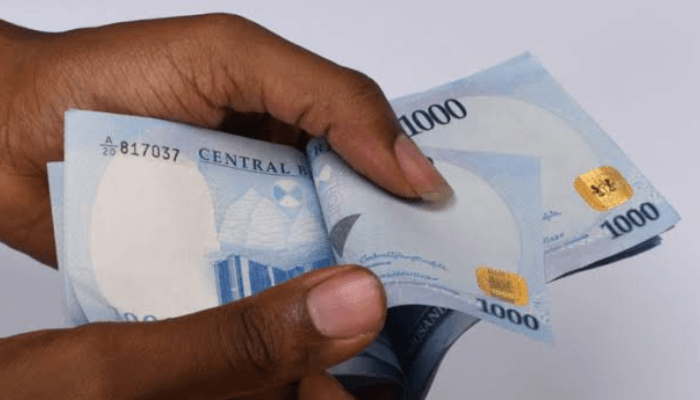
Naira Strengthens to ₦1,470 as Exchange Rate Gap Narrows Between Parallel and Official Markets
The naira appreciated in Nigeria’s parallel foreign exchange market on Monday, strengthening to ₦1,470 per US dollar, while official market rates reflected minor depreciation. Data from the Central Bank of Nigeria (CBN) show continued alignment between the parallel market and the Nigerian Foreign Exchange Market (NFEM), driven by improved liquidity conditions.
In the parallel market, the naira rose from ₦1,476 per dollar recorded over the weekend, signalling a modest recovery. Conversely, at the official NFEM window, the currency weakened slightly to ₦1,450 per dollar from ₦1,446.9 per dollar, representing a depreciation of ₦3.1.
These divergent movements reflect ongoing adjustments in response to supply-demand dynamics and monetary policy interventions. Analysts note that the narrowing of the gap between official and parallel rates indicates growing coherence in the FX market.
Exchange Rate Gap and Implications
The differential between the parallel market and NFEM has contracted to ₦20, down from ₦29.1 recorded last Friday. This narrowing suggests improved market efficiency and increased liquidity, reducing opportunities for arbitrage and stabilising the foreign exchange environment.
Market participants have attributed the adjustment to several factors, including enhanced FX inflows, policy guidance from the CBN, and gradual alignment of the official and parallel market rates.
Expert Analysis and Outlook
Financial analysts argue that sustained improvements in liquidity, coupled with consistent CBN interventions, may continue to stabilise the naira across both markets. They caution, however, that external shocks, oil price fluctuations, and fiscal pressures could affect the trajectory of the currency in the near term.
“The narrowing of the exchange rate gap is a positive indicator for investors and businesses, suggesting reduced volatility and more predictable FX conditions,” said an FX market strategist.
Conclusion
As Nigeria navigates evolving economic conditions, the convergence of the parallel and official FX markets is likely to enhance market confidence, support trade, and promote more transparent pricing mechanisms. Continued monitoring and targeted policy measures will be crucial to maintaining stability in the coming months.
