
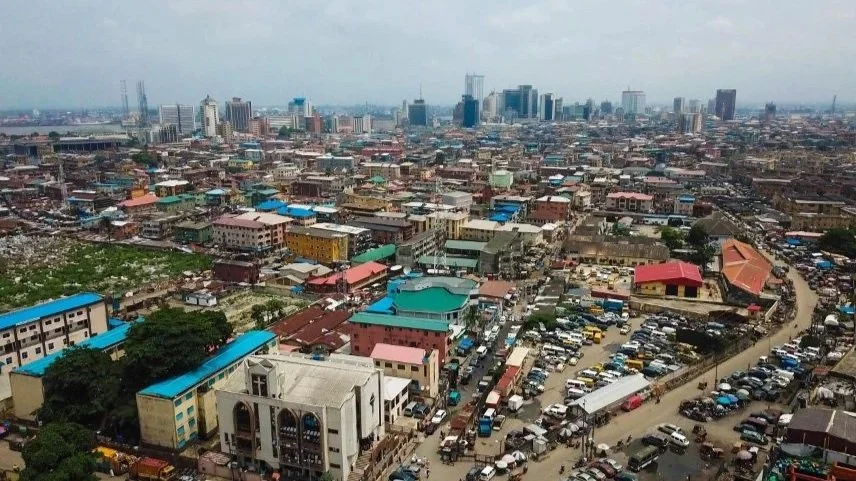
Development analysts have advised the Lagos State Government to adopt a more inclusive approach to its ongoing urban regeneration initiatives, warning that rapid redevelopment must not displace low-income communities or weaken the city’s social structure. The recommendations were made during the Lagos Economic Outlook 2026 Roundtable held in Ikeja, an event convened by the Ministry of Economic Planning and Budget to define policy priorities for the state’s next fiscal cycle.
Renewal Must Prioritise Social Equity, Experts Say
Presenting a paper on urban regeneration and liveability, Taibat Lawanson, Professor of Urban Management and Governance, emphasised that global best practice views regeneration as a tool for reducing multi-dimensional poverty, not intensifying it. She stated that successful revitalisation efforts prioritise egalitarian planning, protect existing communities and promote inclusive growth.
Lawanson argued that redevelopment must go beyond physical upgrades or the expansion of private real estate, noting that low-income residents often bear the brunt of poorly designed regeneration schemes. She called for programmes that safeguard livelihoods, support local economies and integrate environmental assets into planning decisions.
“Urban renewal is not an aesthetic exercise. It is a social obligation that should elevate deprived areas into equitable living conditions,” she said. She also stressed that empowering local businesses is fundamental to achieving long-term sustainability, adding that organic growth is only possible when existing enterprises are not displaced.
Economic Analysts Call for Intentional Wealth Creation
In a separate presentation, Professor Biodun Fadipe highlighted the need for deliberate wealth-creation policies to support Lagos’s ambition for an inclusive and resilient economy in 2026. He recommended targeted job-creation schemes, improved public sector wages and increased investment attraction efforts across technology, financial services and real estate.
Fadipe noted that Lagos must position itself as a competitive investment hub by engaging major industry players and encouraging deeper capital commitments. He argued that sustained economic expansion will only occur when the state aligns its policy reforms with the needs of high-growth sectors.
Prioritising Infrastructure, Innovation and Sector Diversification
Other speakers at the Roundtable underscored the importance of infrastructure improvement particularly road networks to strengthen commerce and accelerate economic transformation. They also urged the government to focus on innovation, diversification and people-centred development to enhance resilience in the state’s economic ecosystem.
Olufemi Shuaib, a professor at the University of Lagos, cautioned against the unchecked conversion of agricultural land to residential use, warning that such practices undermine long-term food security and spatial planning objectives.
Similarly, Abuchi Ugwu, Chief Executive Officer of Chocolate City, encouraged the state to expand its creative infrastructure in recognition of Lagos’s youthful and rapidly growing entertainment economy.
Government Reaffirms Commitment to Data-Driven Planning
In his keynote address, Commissioner for Economic Planning and Budget, Ope George, reiterated the state government’s commitment to evidence-based and future-focused planning as Lagos transitions into the 2026 fiscal year. He highlighted ongoing work in urban regeneration, creative industry development and the Omi-Eko waterways initiative, which aims to modernise and expand water-based transportation.
“This is not just a time to build back, but to build forward stronger, smarter and more inclusive,” he said.
Outlook
The discussions from the Roundtable signal growing consensus among development experts that Lagos must balance infrastructure expansion with strong social safeguards. As the state intensifies its regeneration agenda, the extent to which it integrates equity, environmental stewardship and economic inclusion will determine the long-term sustainability of its urban transformation.
