
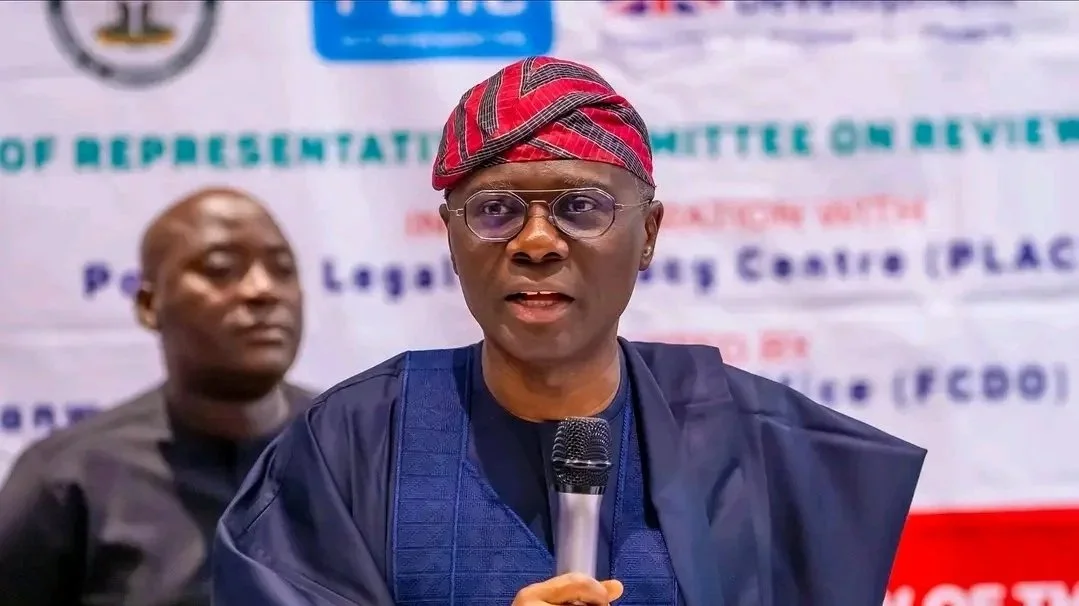
Sanwo-Olu Urges Private Sector Collaboration to Tackle Lagos Housing Shortfall
Lagos State Governor, Babajide Sanwo-Olu, has emphasised the critical role of private sector collaboration in tackling the city’s escalating housing shortage, noting that sustainable and inclusive urban development requires coordinated efforts between government, developers, and investors.
Addressing stakeholders at the Sixth Lagos Real Estate Marketplace Conference on Victoria Island, Sanwo-Olu highlighted that government-led initiatives alone are insufficient to meet Lagos’ housing needs. The governor emphasised the importance of structured financing, innovation, and private investment in delivering affordable and high-quality homes that align with residents’ income levels.
“Government must function as an enabler and regulator, leveraging private capital to ensure housing is both inclusive and sustainable,” Sanwo-Olu stated, emphasising that housing directly impacts economic productivity, social stability, and overall human dignity.
Integrating Infrastructure and Urban Planning
The governor noted that sustainable urban development necessitates the integration of housing with infrastructure and employment hubs, underlining the need for coherent city planning. Effective policy frameworks and regulatory oversight, he added, are essential to maintaining compliance, safety, and innovation in the real estate sector.
Lagos State Commissioner for Housing, Moruf Akinderu-Fatai, observed that ongoing infrastructure and housing initiatives have positioned Lagos as a leading megacity in Africa. He underscored the pivotal role of agencies in regulating and guiding sector growth while safeguarding public interest.
The Special Adviser to the Governor on Housing, Barakat Odunuga-Bakare, further highlighted that the conference provided a platform for government and private actors to explore innovative financing options, global best practices, and solutions for accelerating housing delivery. She revealed that a new tenancy bill is under review at the Lagos State House of Assembly, aimed at clarifying practitioner roles and streamlining property transactions.
Recent assessments indicate Lagos faces a housing deficit exceeding 3.3 million units, encompassing a substantial number of dwellings that are unsafe or lack essential services. Sanwo-Olu reinforced that bridging this gap requires targeted interventions, leveraging private sector expertise, investment, and innovative project delivery models.
Conclusion
The governor concluded that Lagos’ housing challenges present both an economic and social opportunity. Strategic partnerships with private developers, financial institutions, and investors will be central to delivering safe, affordable, and resilient housing while fostering economic growth and urban sustainability.
