
Housing Delivery at Risk as Contractors Demand Payment
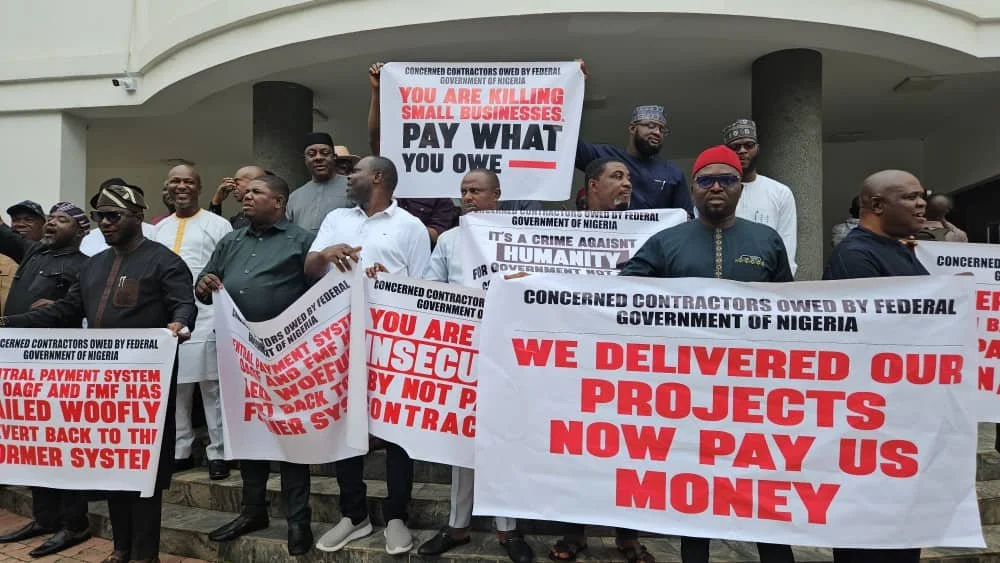
Former presidential candidate and ex Anambra State governor Peter Obi has criticised the Federal Government over its continued failure to pay contractors, despite reporting stronger revenue performance. His comments come as protests by housing and infrastructure contractors intensify across parts of the country.
Obi described the situation as unacceptable, arguing that a government that publicly celebrates rising revenue should not leave local contractors unpaid for completed work. He warned that the failure to meet payment obligations is worsening economic hardship for small and medium sized businesses that form the backbone of Nigeria’s construction and infrastructure delivery system.
Contractors Protest Unpaid Housing and Infrastructure Projects
Across several states, contractors involved in public housing, road construction, and urban infrastructure projects have staged protests over months of unpaid certificates. Many of these firms report completing government approved projects only to face prolonged delays in receiving payment.
For housing contractors, the impact has been severe. Unpaid work has forced several firms to suspend construction on residential estates, abandon partially completed public housing schemes, and lay off workers. Subcontractors and artisans have also been affected, with ripple effects spreading across local economies.
Impact on Housing Delivery and Infrastructure Development
The non payment of contractors is increasingly seen as a major risk to housing supply and infrastructure delivery. When payments are delayed, contractors struggle to service bank loans, pay suppliers, and remobilise to new sites. This pushes up construction costs and worsens housing affordability at a time when rents and home prices are already under pressure.
Industry stakeholders warn that continued payment delays could discourage private sector participation in government housing programmes and public private partnership projects. Developers may become reluctant to bid for public contracts, slowing down much needed investments in roads, water systems, and affordable housing.
Revenue Growth Without Project Completion
Obi questioned the credibility of government revenue claims when contractors responsible for delivering critical infrastructure remain unpaid. He noted that revenue growth should translate into real economic activity, job protection, and completed projects, not mounting arrears to service providers.
According to him, the situation reflects deeper issues in public finance management, where budget announcements and revenue figures fail to align with on ground execution and payment discipline.
What This Means for the Housing Sector
For Nigeria’s housing market, the contractor payment crisis adds another layer of risk. Delayed infrastructure affects access roads, drainage, and utilities that support residential developments. It also undermines confidence among developers and financiers who rely on predictable government payments to sustain long term projects.
As protests continue, housing and infrastructure stakeholders are calling for immediate settlement of outstanding contractor debts and clearer payment timelines. Without decisive action, analysts warn that project delays, higher construction costs, and reduced housing supply could persist well into the coming year.
The unfolding situation highlights a growing disconnect between fiscal policy headlines and the realities facing contractors on the ground, with direct consequences for Nigeria’s housing and infrastructure pipeline.