
Regional Trade and Banking Recapitalisation: Yemi Kale Outlines Africa’s Economic Roadmap
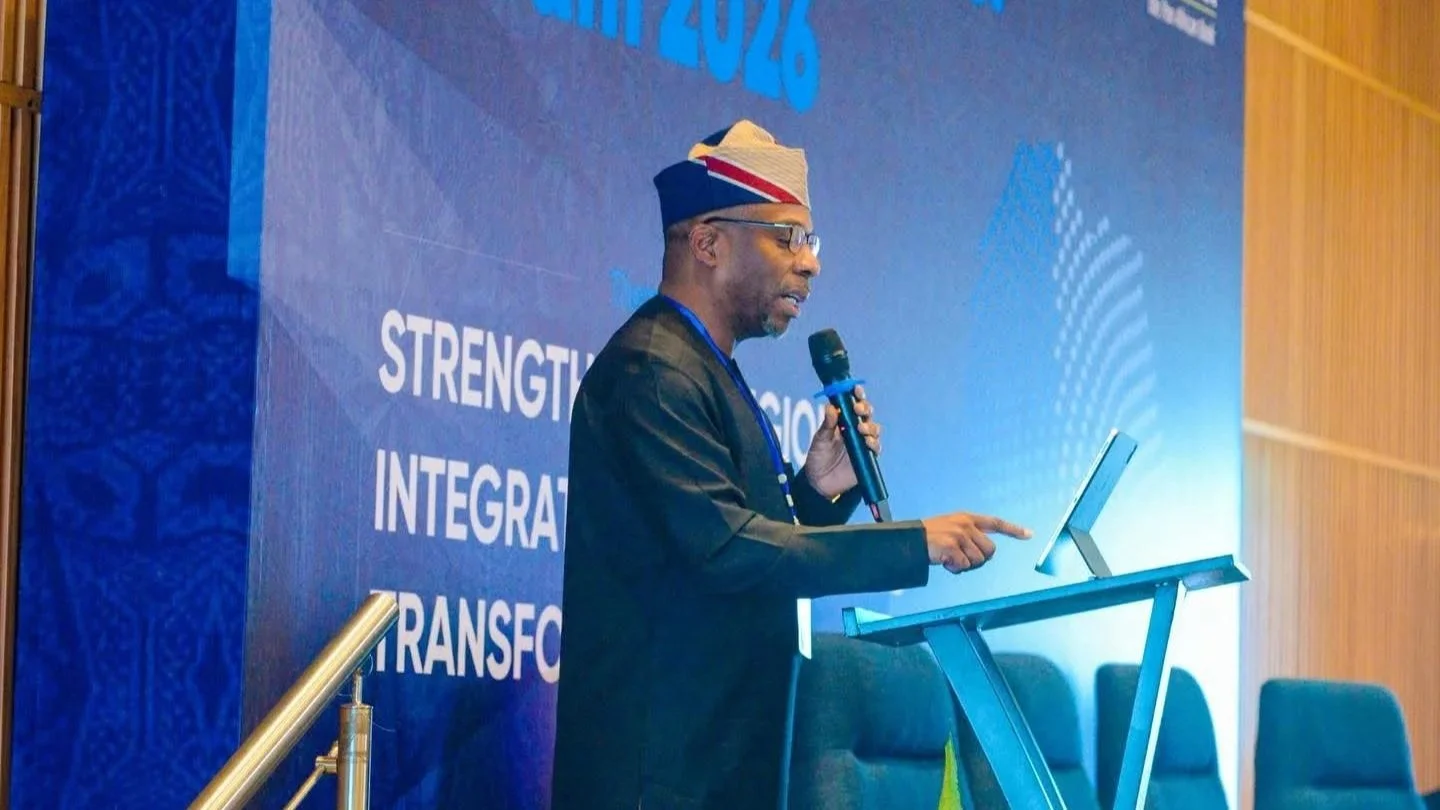
Kale on Transforming Africa’s Export Structure
Dr Yemi Kale, Group Chief Economist at the African Export-Import Bank (Afreximbank), has asserted that Africa’s path to economic prosperity lies in a fundamental shift from exporting raw commodities to fostering a robust regional trade and financial architecture. Speaking at the 2026 Ecobank Nigeria Customer Forum in Lagos on Tuesday, Kale emphasised that while trade agreements like the AfCFTA provide the framework, only a strong financial system can move goods across borders.
The forum, themed “Strengthening Regional Integration for Economic Transformation,” gathered policymakers and financial leaders to discuss strategies for accelerating the continent’s industrialisation.
Bridging the $120 Billion Trade Finance Gap
A central theme of Kale’s address was the critical necessity of bank recapitalisation in Nigeria and across the continent. He identified an annual trade finance gap in Africa estimated between $80 billion and $120 billion.
Kale argued that without deeper capital buffers, domestic banks cannot provide the "financial muscle" required for SMEs and exporters to scale.
“Recapitalisation of the banks is important. You cannot lend to businesses to grow, expand, or import machinery if you do not have enough capital,” Kale stated. “How do Nigerian banks support deepening intra-African trade if they do not have enough capital?”
Structural Challenges and High Logistics Costs
Despite decades of trade liberalisation, intra-African trade remains low, fluctuating between 14% and 16%, compared to over 60% in Europe and Asia. Kale attributed this to a "structurally extractive" trade architecture and significant infrastructure deficits.
He highlighted a stark reality: transport costs in certain African corridors can account for up to 40% of the final price of goods.
The Barrier: It is often more expensive to move goods within Africa than to ship them overseas.
The Impact: This structural weakness undermines the competitiveness of African manufacturers on the global stage.
The Shift to Value Addition
The former Statistician-General of the National Bureau of Statistics (NBS) warned that Africa's future will be defined by what it trades rather than the volume of trade. Currently, over 70% of Africa’s exports are primary commodities.
Kale urged a shift toward "green industrialisation" and mineral refining, citing the Dangote Refinery as a successful "proof of concept" for scaling production to meet domestic and regional demand. He challenged African nations to decide whether they would remain exporters of raw lithium and cocoa or become manufacturers of batteries and chocolate.
Digital Trade as a Shortcut
Looking ahead, Kale identified digital infrastructure and payment systems as the "shortcuts" to integration. He noted that technology reduces friction for small businesses and that Africa’s future trade routes will be platforms rather than just physical roads and ports.
With Africa projected to supply a quarter of the global workforce by 2050, Kale concluded that aligning policy with massive capital mobilisation is the only way to reach Nigeria’s $1 trillion economy target and ensure the continent moves from the margins of global value chains to the centre.
