
Two-Bedroom Flats Emerge as the Backbone of Nigeria’s 2026 Property Market
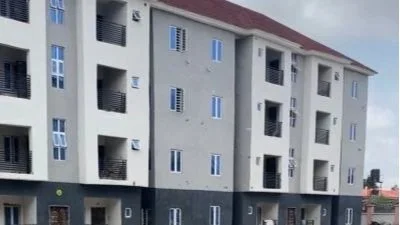
A picture of several units of Two Bedroom Apartment
A comprehensive market analysis for early 2026 reveals that two-bedroom flats have firmly established themselves as the most dominant and sought after asset class in Nigeria’s residential property sector. Driven by a mix of high inflation, urban migration, and a growing demand for "purpose-built" communities, these units are outperforming larger residential configurations in both the rental and short-let markets.
The Investor’s Edge: High Yields and Quick Turnover
For developers and landlords, the shift toward two-bedroom units is fueled by superior "cost-to-income" dynamics. Data indicates that while larger 3-to-4-bedroom units incur significantly higher construction costs, their rental income does not scale proportionally. In high-demand areas like Port Harcourt, a two-bedroom unit can command ₦2.5 million annually compared to ₦3 million for a three-bedroom making the smaller unit far more profitable per square meter.
Key statistics from the 2026 outlook include:
Portfolio Weight: Leading developers report that two bedroom units now account for up to 90% of new flat-style portfolios.
Short-Let Dominance: Two bedroom configurations make up over 70% of the active inventory in the short-let segment, catering to business travelers and young professionals.
Rental Yields: Mid market apartments in areas like Yaba, Ikeja, and Ajah are delivering impressive 7% to 10% rental yields.
The Tenant’s Perspective: Functionality Over Space
The "shrinking wallet" phenomenon, caused by persistent inflation and naira volatility, has forced many middle-income earners to downsize. Tenants are increasingly prioritizing "ensuite" features and reliable infrastructure such as backup power and security over raw square footage.
Real estate analysts observe that two-bedroom flats provide a "practical middle ground" for Nigeria’s younger workforce. They offer sufficient space for small families or work-from-home setups without the maintenance burden of larger houses. In premium Lagos districts like Ikoyi and Victoria Island, where rents can reach ₦15.5 million annually, the two-bedroom unit remains the entry point for corporate professionals.
Future Outlook: Infrastructure as the Catalyst
As we move further into 2026, the demand for these units is expected to accelerate along new infrastructure corridors. Areas linked to the Lagos-Ogun border and Abuja’s expansion districts (like Katampe Extension) are projected to see price appreciations of 15% to 18%.
Experts advise that "location and access to infrastructure" now matter more than ever. The market is maturing, with data-driven investing replacing the speculative "land banking" of previous decades. For the foreseeable future, the two-bedroom flat remains the "backbone" of the industry, offering the most resilient hedge against economic uncertainty.
