
Surulere Residents Allege Police-Backed Demolitions in Lagos Housing Dispute
Federal Housing Authority Disavows Surulere Demolitions Linked to Task Force
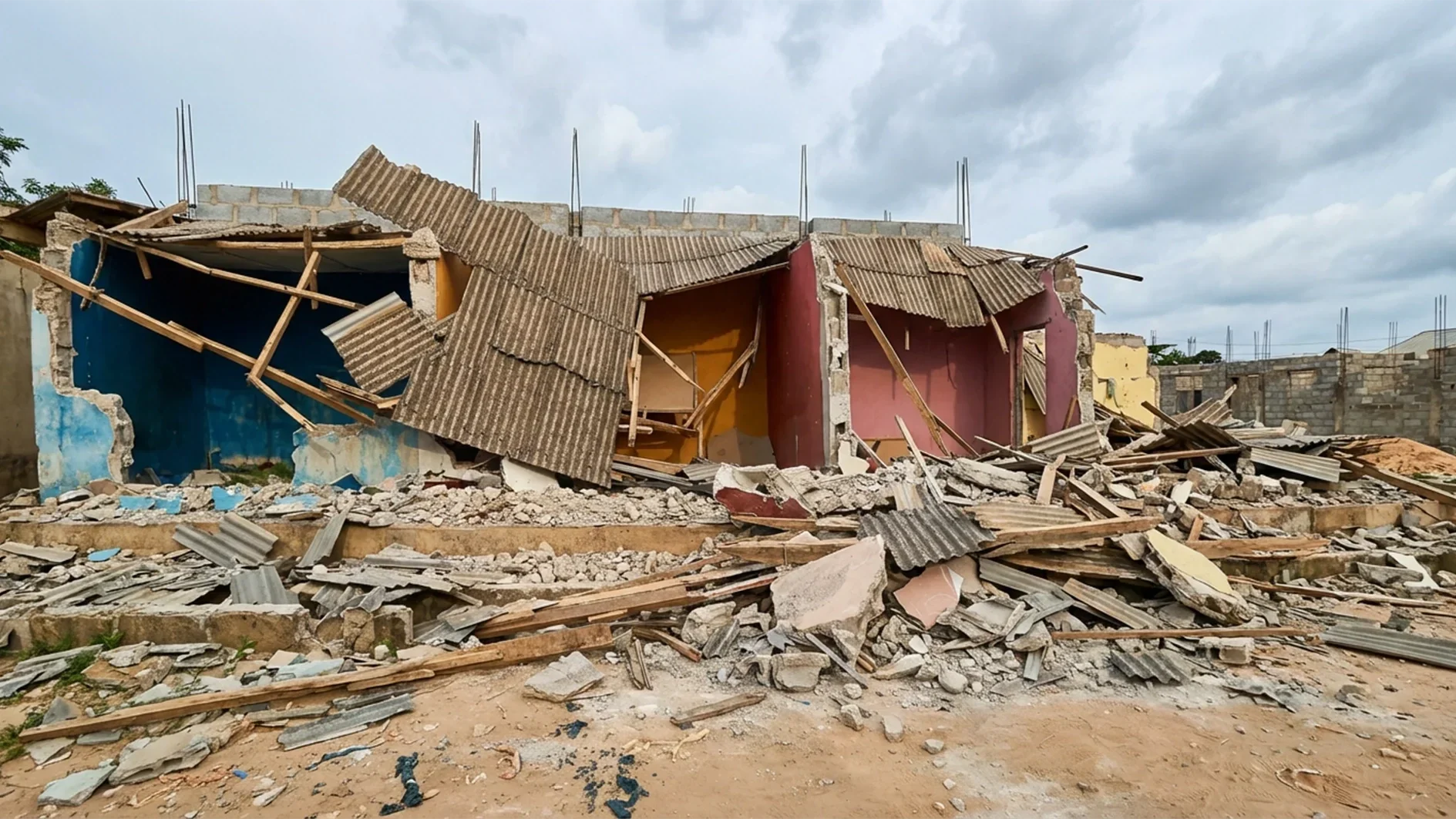
Residents of Surulere in Lagos have accused individuals allegedly backed by officers of the Nigeria Police Force of carrying out a forceful demolition of residential properties in the area. The incident, which reportedly displaced multiple households, has intensified debate around property rights enforcement, due process, and the broader implications for investor confidence in Nigeria’s urban real estate market.
According to accounts from affected residents reported by Housing TV Africa, the demolition involved armed individuals described as thugs, who were allegedly accompanied by police personnel. Property owners claim the action occurred without adequate notice or lawful documentation authorising the exercise.
Allegations and Residents’ Claims
Affected homeowners assert that the demolition took place abruptly, leaving families to salvage belongings amid confusion. Several residents contend they possess valid documentation establishing ownership or long-term occupancy of the properties in question. They argue that no court order was presented at the time of demolition.
The presence of alleged security operatives has heightened tensions. Residents maintain that uniformed officers either supervised or failed to prevent the destruction of homes. These claims, if substantiated, raise serious concerns about procedural compliance and the rule of law in land administration.
As of the time of reporting, there has been no publicly detailed response from the police authorities addressing the specific allegations.
Legal and Regulatory Context
Land ownership and urban development in Lagos operate under the framework of the Land Use Act of 1978, which vests land in state governors to hold in trust for citizens. The Act empowers state authorities to revoke land for overriding public interest, including infrastructure development. However, such revocations must follow clearly defined legal procedures, including formal notice and compensation.
Urban renewal initiatives have accelerated in Lagos over the past decade as authorities seek to address housing deficits and infrastructure strain. According to the National Bureau of Statistics, Nigeria faces a housing shortfall estimated at over 17 million units. Lagos, as the country’s commercial capital, carries a disproportionate share of this deficit due to rapid population growth and urban migration.
While redevelopment and regeneration projects remain essential to long-term housing supply expansion, enforcement actions that appear opaque risk undermining regulatory certainty.
Implications for Property Investors and Developers
For investors and developers, security of title remains a foundational consideration. Allegations of extrajudicial demolition or contested enforcement actions increase perceived risk in affected districts.
Institutional investors, both domestic and foreign, typically assess land tenure clarity, regulatory transparency, and dispute resolution mechanisms before committing capital. Where due process appears inconsistent, financing costs may rise, and project timelines may lengthen due to heightened legal scrutiny.
Furthermore, contested demolitions can trigger protracted litigation, delaying redevelopment objectives and creating reputational exposure for both public authorities and private sector participants.
Governance and Urban Planning Considerations
The situation in Surulere underscores the need for transparent communication between state authorities, developers, and host communities. Clear documentation, public disclosure of redevelopment plans, and adherence to court-backed enforcement processes are essential to maintaining public trust.
Urban regeneration strategies must balance infrastructure expansion with safeguards for lawful occupants. Where compulsory acquisition is necessary, compensation mechanisms and relocation frameworks should be clearly articulated and implemented in line with statutory requirements.
The reported demolition in Surulere highlights ongoing tensions at the intersection of urban redevelopment and property rights enforcement in Lagos. Allegations of police-backed involvement elevate the seriousness of the claims and call for transparent investigation.
For policymakers and investors alike, the incident reinforces a critical principle: sustainable urban transformation depends not only on infrastructure delivery but also on credible institutions, enforceable legal protections, and consistent due process.
