Wike-Fubara Rivalry: How Political Power Struggles Are Reshaping Investor Confidence and Urban Renewal in Rivers State
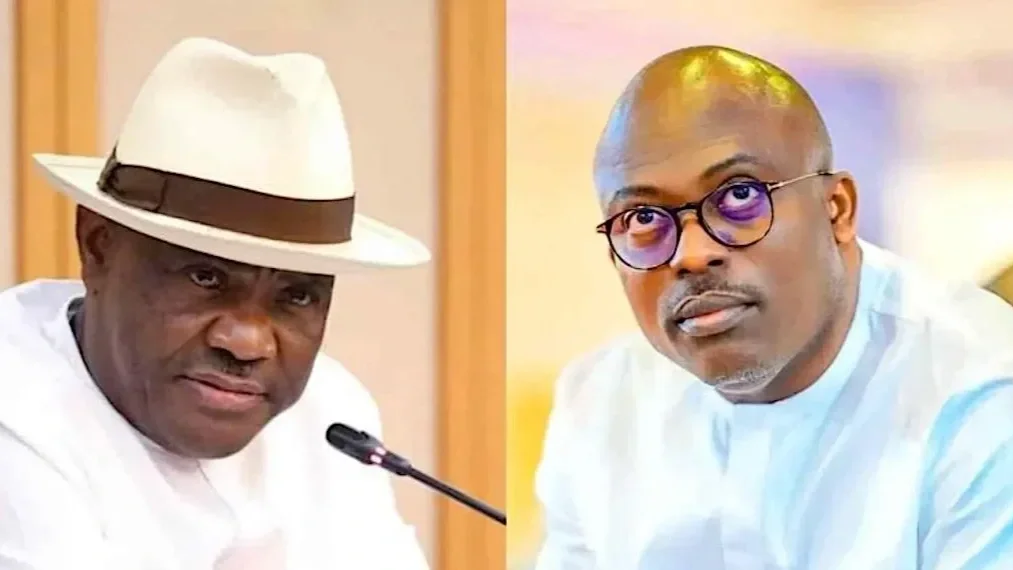
As the race to 2027 gains momentum, Rivers State has become the ground zero for a power struggle that transcends mere party labels.
In Rivers State, politics has once again spilled beyond party lines and campaign rhetoric into the foundations of bricks, mortar, and land titles. As 2026 opens, the escalating rivalry between Governor Siminalayi Fubara and Federal Capital Territory (FCT) Minister Nyesom Wike has evolved into more than a contest for political relevance, it has become a defining stress test for investor confidence, urban renewal, and the future shape of one of Nigeria’s most valuable subnational economies.
What is unfolding is not merely a clash of personalities ahead of the 2027 elections. It is a struggle over control of political structures, development institutions, and the unwritten rules that govern power succession in Rivers State. For the housing market, infrastructure pipeline, and broader investment climate, the cost of this rivalry is already being priced in.
Wike’s Strategic Return: ‘Thank You Visits’ or Political Re-Entry?
Fresh tensions resurfaced following a wave of so-called “thank you” visits by Nyesom Wike to Rivers State between late December 2025 and early January 2026. Framed publicly as gratitude tours, the visits were widely interpreted by political observers as a calculated reassertion of influence by the former governor, one designed to test loyalty, consolidate grassroots structures, and challenge Governor Fubara’s authority well ahead of 2027.
Wike’s engagements spanned key political and demographic blocs, including Obio/Akpor, Port Harcourt City, Emohua, Ikwere, and the Ogoni axis. At each stop, his messaging followed a consistent theme: power is neither automatic nor transferable without negotiation.
His repeated assertion that “power is not for dash” signalled a clear rejection of any assumption that political succession equates to permanent control. Equally pointed was his remark that the political “mistakes of 2023” would be corrected language that many analysts read as a direct challenge to the legitimacy and durability of the current power arrangement in the state.
Rather than projecting retreat, Wike’s posture suggested a political godfather unwilling to fade quietly, determined to remind both supporters and adversaries that his political machinery in Rivers State remains active, organised, and formidable.
A Fragile Truce Gives Way to Renewed Hostility
The renewed confrontation comes despite a fragile peace brokered by President Bola Tinubu in September 2025, following months of intense political instability. That intervention, driven largely from Abuja, was intended to reset relations between both camps and allow governance to regain priority.
However, insiders indicate that key elements of the agreement were either inconsistently implemented or quietly abandoned. While Governor Fubara adopted a more restrained public posture and sought to project a focus on governance, the underlying struggle for political control continued beneath the surface.
What has changed since then is the perceived alignment of federal power. Governor Fubara’s political recalibration most notably his movement into the APC fold has reportedly earned him recognition among influential national actors. Public affirmations from APC leadership positioning him as the party’s leader in Rivers State, alongside signals of approval from senior security and presidency-linked figures, have been interpreted as tacit federal support.
Wike, however, has dismissed claims that party structures have shifted decisively, maintaining that his own political network remains dominant. His remarks on loyalty and ingratitude reflect a deeper grievance: the erosion of informal political agreements that once underpinned his influence.
The Succession Red Line
The most unambiguous signal of how high the stakes have become came during Wike’s visit to Okrika, where he drew a political red line declaring that his political career would effectively end if Governor Fubara were allowed to secure a second term.
This statement elevated the rivalry from tactical manoeuvring to an existential contest. A second term for Fubara would symbolise not just independence from Wike’s influence, but the complete dismantling of the political architecture that sustained Wike’s dominance for over a decade.
In effect, Rivers State has become a live case study of Nigeria’s evolving godfatherism debate: a seasoned power broker seeking to preserve relevance versus a sitting governor increasingly determined to assert autonomy.
Economic and Investment Fallout: Lessons from the 2023 Crisis
The danger, analysts warn, is a slide back into the instability that paralysed Rivers State in 2023. That crisis marked by legislative paralysis, violent confrontations, and the burning and demolition of the State House of Assembly complex had immediate economic consequences.
Investor confidence weakened, projects stalled, governance slowed, and Rivers lost ground to more politically stable states aggressively courting capital. For a resource-rich state with ambitions of urban expansion and housing delivery, the cost of instability proved severe.
Abuja’s Calculus and the 2027 Equation
At the centre of the standoff lies Abuja’s strategic balancing act. By accommodating Governor Fubara within the broader “Renewed Hope” political framework, the presidency has expanded its leverage in Rivers State. This recalibration appears to have unsettled Wike, whose visits and declarations of loyalty to President Tinubu are widely viewed as efforts to reinforce relevance at the federal level.
Both camps are now mobilising political structures in support of the president ahead of 2027 publicly aligned on national loyalty, while fiercely divided at the state level. For investors, this duality introduces uncertainty: alignment at the centre does not automatically translate into stability on the ground.
Governance Under Strain and Institutional Risk
A lingering budget dispute between the executive and legislature has further exposed the depth of institutional fracture. Analysts argue the disagreement is less about fiscal priorities and more about positioning ahead of the succession battle.
Legal and policy experts warn that prolonged dysfunction among the executive, legislature, and judiciary risks undermining effective governance. When any arm becomes impaired, the ripple effects extend into service delivery, regulatory clarity, and investor confidence.
Civil society groups have also raised concerns, noting that sustained instability could attract international scrutiny and reputational consequences if democratic norms continue to erode.
NHM Outlook: Stability as the Deciding Variable
From an NHM perspective, Rivers State’s fundamentals remain strong but its political risk premium is rising. Capital, particularly long-term housing and infrastructure investment, is acutely sensitive to uncertainty.
As 2027 approaches, the central question is no longer who controls the political machinery, but whether Rivers State can afford another prolonged power struggle.
For the housing market, urban renewal agenda, and broader economy, the stakes are clear. Stability is not a political luxury it is an economic necessity. Without it, Rivers risks further erosion of its competitive position, at a time when Nigerian cities are locked in an increasingly fierce battle for investment, talent, and growth.
As politics accelerates toward 2027, the ultimate cost of this rivalry will be borne not just by political actors, but by the people, projects, and opportunities caught in between.