
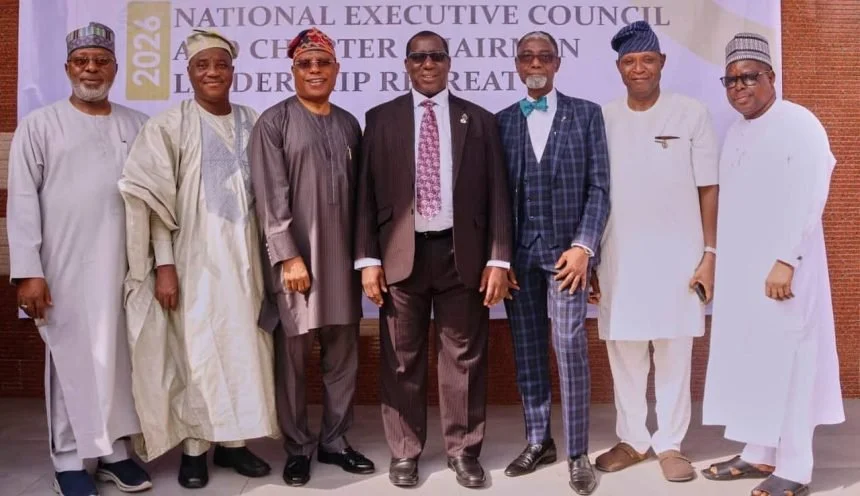
NIQS Partners with Housing Ministry to Enhance Construction Cost Transparency
The Nigerian Institute of Quantity Surveyors (NIQS) has called for a strategic, data-driven partnership between professional bodies and the federal government to ensure the delivery of sustainable and affordable housing across the federation. During a recent advocacy visit to the Ministry of Housing and Urban Development, NIQS leadership emphasised that precise cost management and collaborative planning are essential to mitigating the high rate of abandoned projects and construction inflation.
Enhancing Cost Control through Professional Oversight
A primary focus of the NIQS recommendation is the integration of quantity surveyors in the earliest stages of housing policy implementation. The institute argues that the current volatility in building material prices requires a scientific approach to cost estimation to prevent budget overruns. By utilizing empirical data and market analytics, the NIQS aims to provide the Ministry with realistic financial benchmarks for the Renewed Hope Cities and Estates programme.
Professional quantity surveyors serve as the financial auditors of the construction process. Their involvement ensures that housing projects are not only structurally sound but also economically viable. According to the NIQS, failing to utilise professional cost experts leads to "financial leakages" that ultimately increase the cost of the final housing unit for the end user.
Data-Driven Decision Making in Urban Development
The call for collaboration extends to the creation of a national construction cost database. This repository would allow policymakers to track price fluctuations in cement, steel, and other essential materials in real-time. The NIQS maintains that such a database is a prerequisite for sustainable urban renewal, as it allows for more accurate long-term planning and reduces the risks associated with price speculation in the private sector.
Furthermore, the institute highlighted the importance of standardizing construction contracts. Adopting uniform procurement standards across all 36 states would facilitate smoother public-private partnerships (PPPs) and increase investor confidence in the Nigerian real estate sector.
Addressing Sustainability and Affordability
Sustainability in the Nigerian context involves more than environmental considerations; it encompasses the economic durability of housing schemes. The NIQS urged the government to focus on locally sourced materials to reduce import dependency, which currently drives up construction costs due to foreign exchange fluctuations.
By leveraging local resources and professional cost-monitoring, the NIQS posits that the government can lower the entry barrier for low to middle income earners. This approach directly supports the national goal of narrowing the housing gap, which some estimates place at over 20 million units.
The advocacy by the Nigerian Institute of Quantity Surveyors underscores a shift toward technocratic solutions for Nigeria’s housing challenges. As the Ministry of Housing and Urban Development continues its nationwide construction drive, the adoption of data-driven cost management and inter-professional collaboration will be vital. For policymakers and investors, these recommendations provide a roadmap for ensuring that infrastructure investments yield long-term social and economic returns.
